When a rental property needs a serious refresh, the last thing any landlord wants is another expensive job on the list.
New tenants are waiting, repairs are piling up, and suddenly that renovation budget is looking rather nervous.
But before you rip out old wooden floors and order replacements, consider this.
Could you restore the flooring you already have instead?
That’s exactly the question behind a recent property renovation project in Great Barton, near Bury St Edmunds in Suffolk.
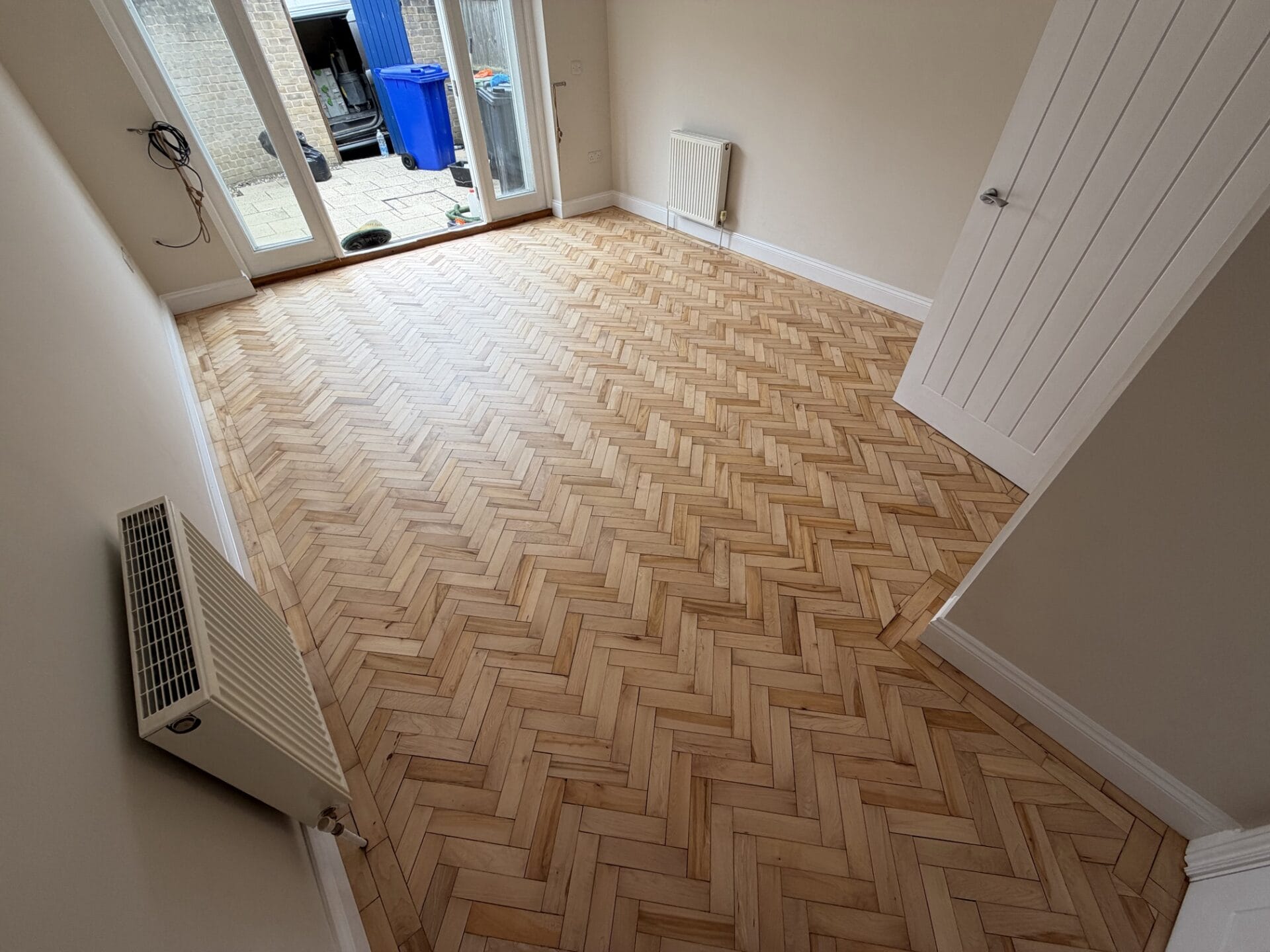
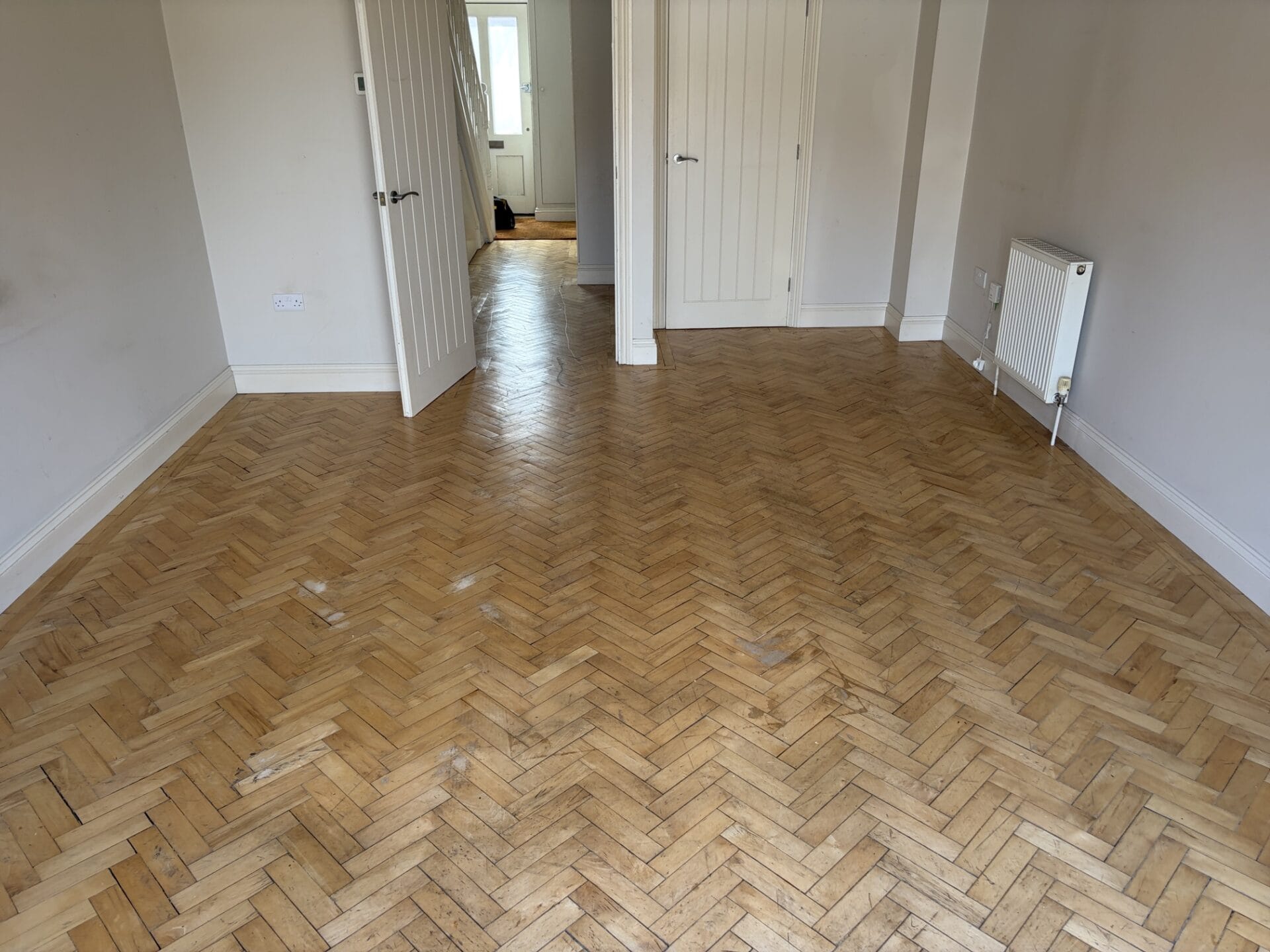
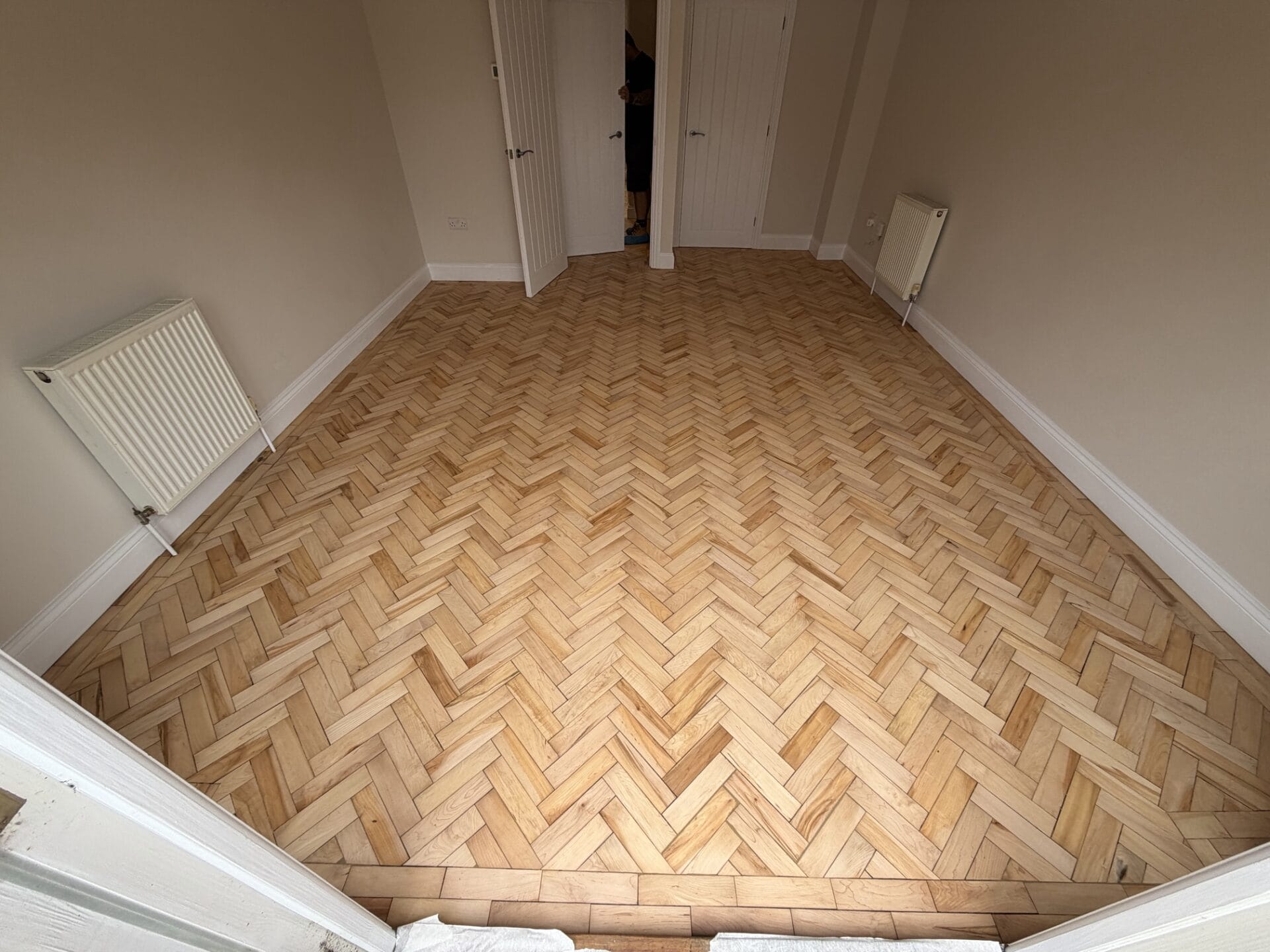
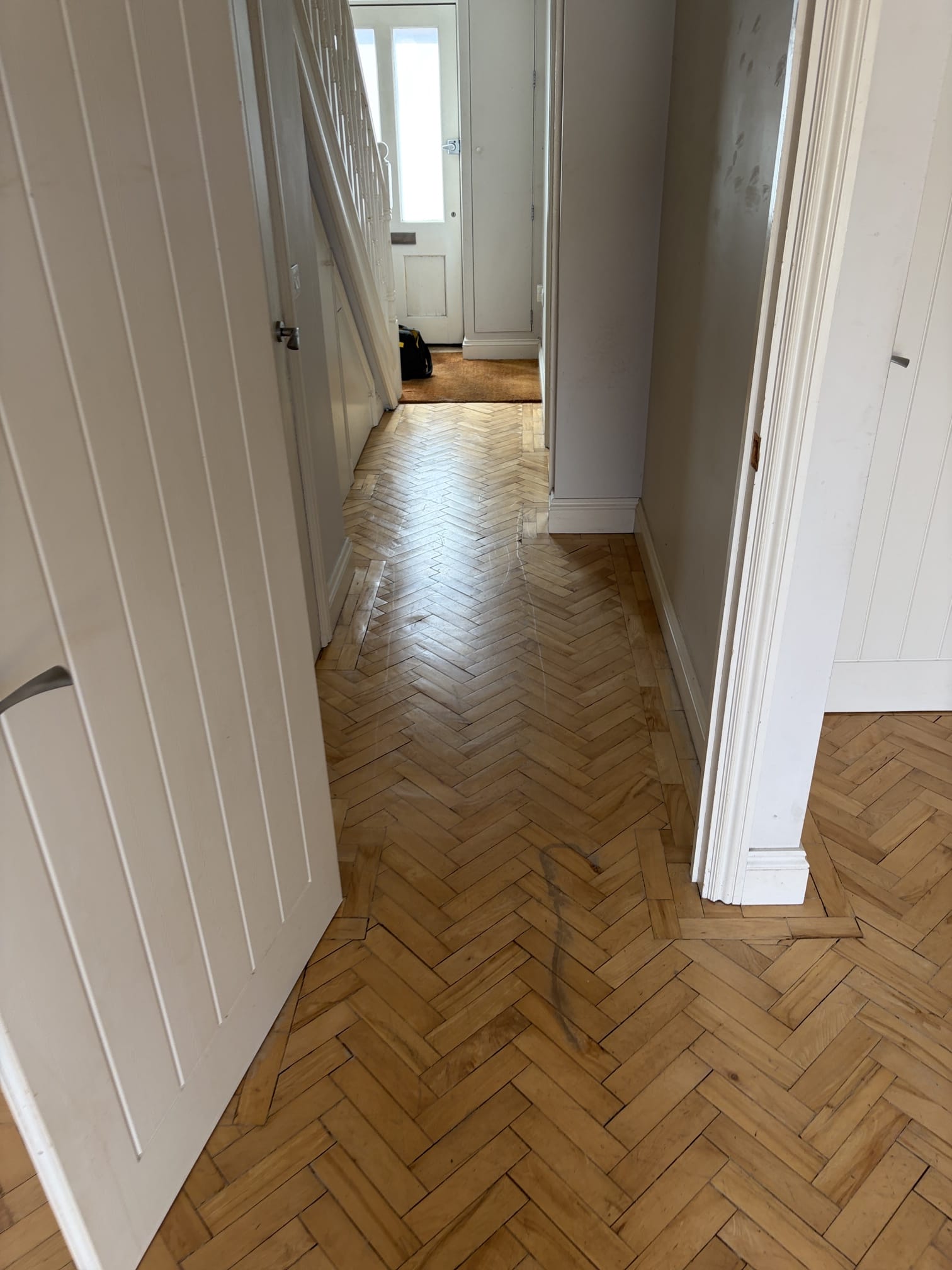
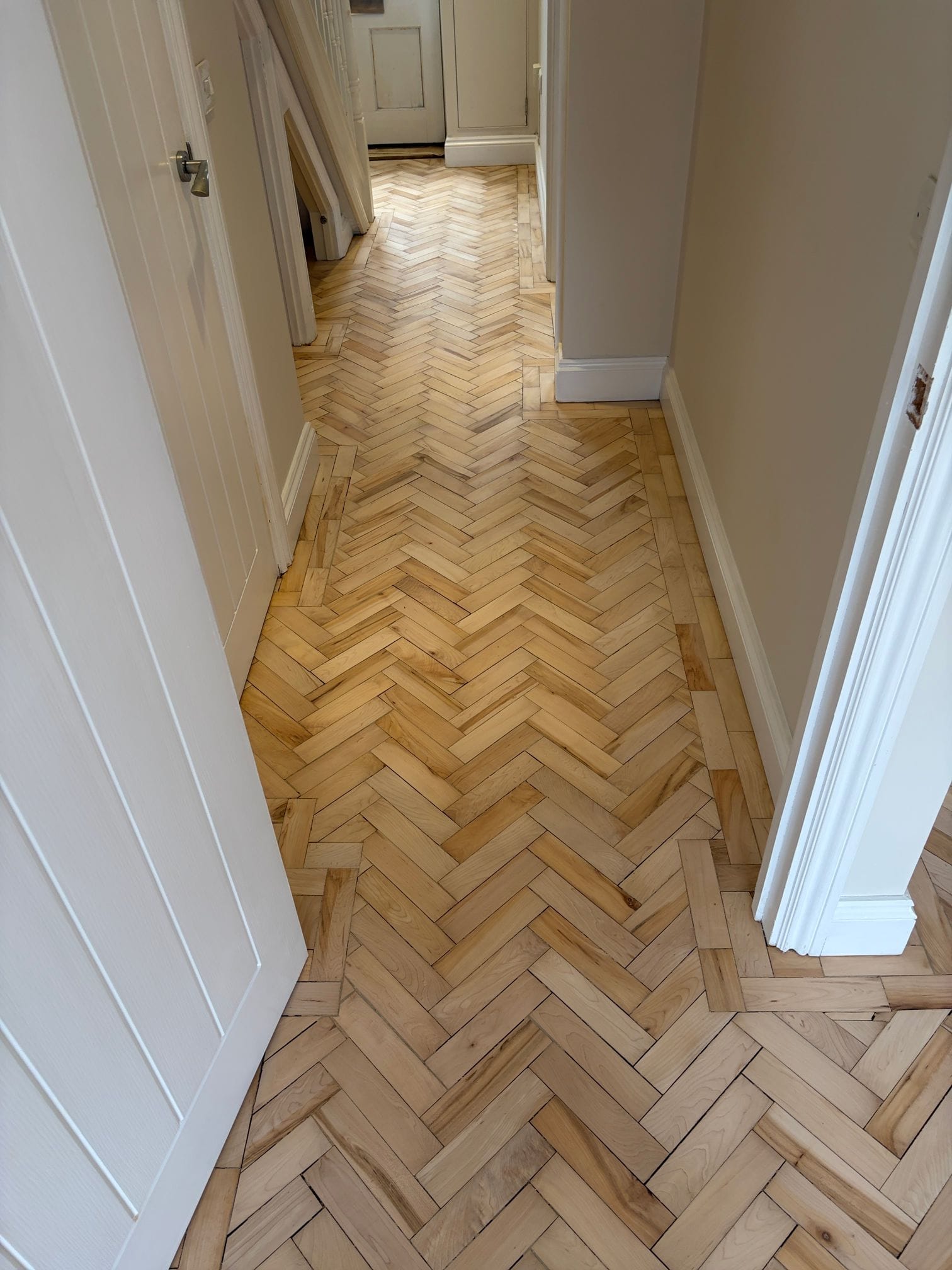
The property had been rented for nine years and needed considerable attention before it could start its next chapter. Areas needing work included the parquet flooring and wooden worktops.
And with several other parts of the house needing repairs, the owner had to think carefully about where the renovation budget would go.
Let’s look at why restoring existing wood can be worth investigating and how to decide whether it’s the right choice for your property.
A Rental Property in Great Barton That Needed Some TLC
Nine years is a long time for any property to be occupied, particularly when maintenance and everyday wear have taken their toll.
In this Great Barton property, the landlord was facing several renovation jobs at once.
The parquet floor needed re-sanding, while the wooden worktops also required attention.
The difficulty? The budget was already stretched.
And let’s face it, when you’re renovating a property, the costs can soon add up faster than you can say, “Oh, that’s another thing that needs fixing!”
The owner approached the project with a clear priority: getting the property back into good condition while keeping spending under control.
Our team was asked to look at the wooden surfaces as part of that wider renovation.
This is a situation many landlords will recognise, but the same decisions apply to homeowners renovating a tired property.
Is It Cheaper to Restore Parquet Flooring Than Replace It?
Often, yes. But the condition of the existing floor makes all the difference.
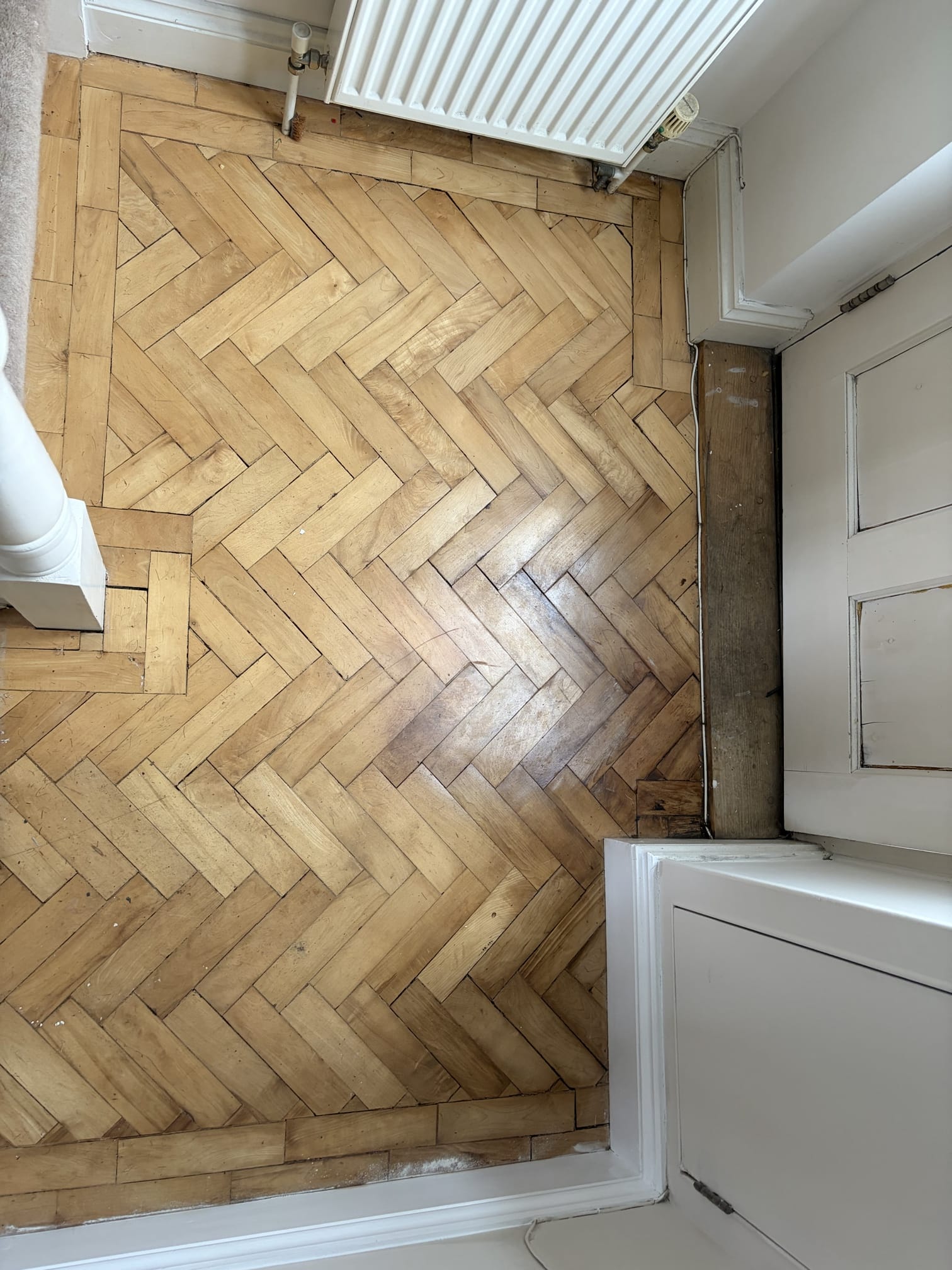
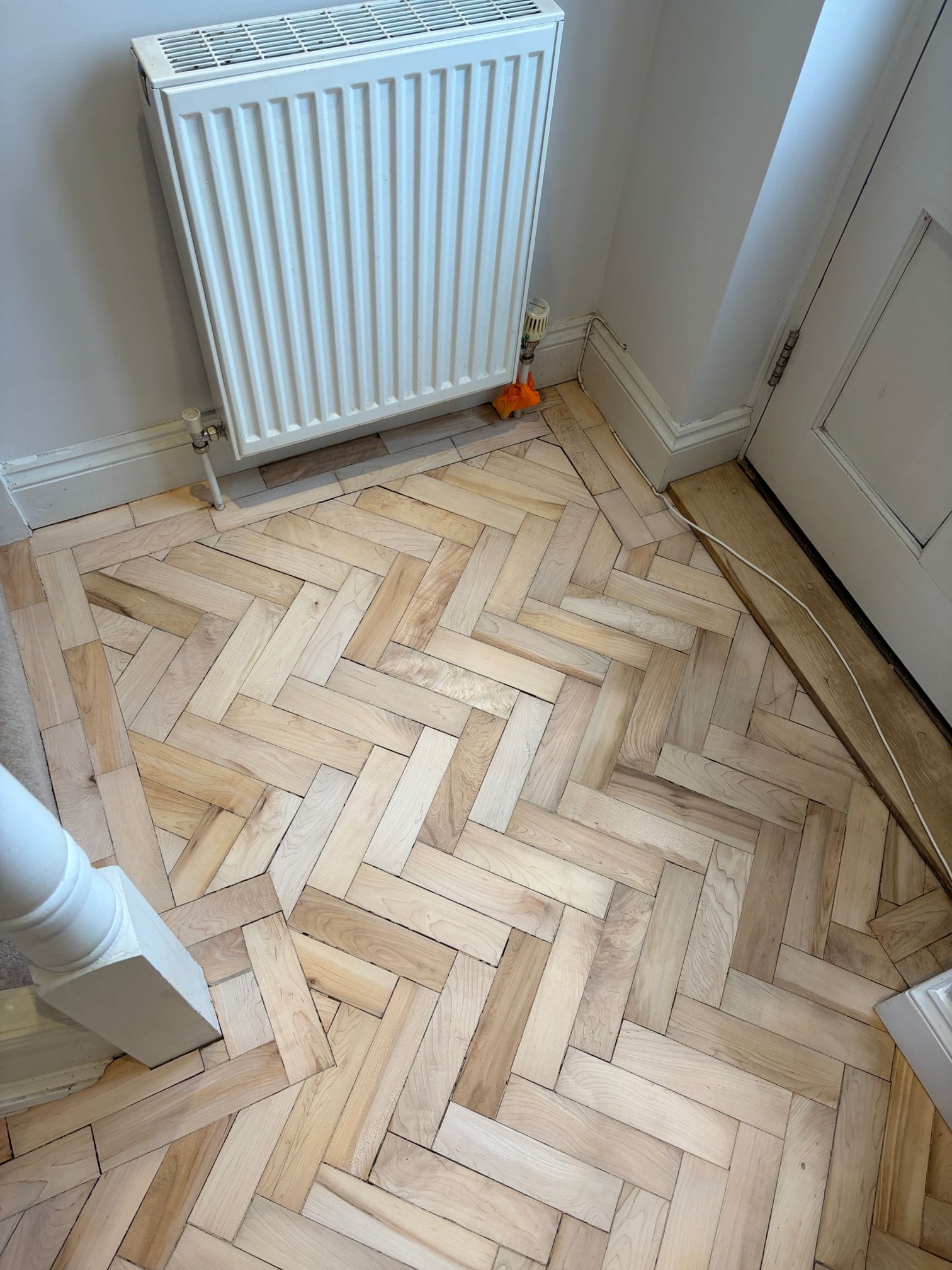
Parquet flooring is made from individual wooden blocks arranged in a decorative pattern. If the blocks are sound and there is enough timber available for sanding, professional restoration can be a sensible alternative to replacement.
You may avoid some of the costs of removing the existing floor, disposing of materials, and buying new flooring.
However, restoration is not automatically the cheapest option.
If large areas are loose, badly damaged or affected by moisture, repairs can add to the overall cost.
Before deciding, compare quotes that include the complete job rather than just the price of sanding or the price of new flooring.
For more detail, read our guide to wood floor repair costs in Suffolk.
What Can Floor Sanding Actually Fix?
This is where things get interesting!
A wooden floor can look rather sorry for itself without necessarily being beyond saving.
Professional sanding can often improve:
- Surface scratches from furniture and foot traffic.
- Worn or patchy protective finishes.
- Dull areas that no longer respond to normal cleaning.
- Some shallow marks and surface discolouration.
- Minor surface unevenness, where the floor is otherwise sound.
Sanding removes a controlled amount of timber from the surface, taking away the old finish and some imperfections.
Then apply a suitable protective finish.
But sanding has limits.
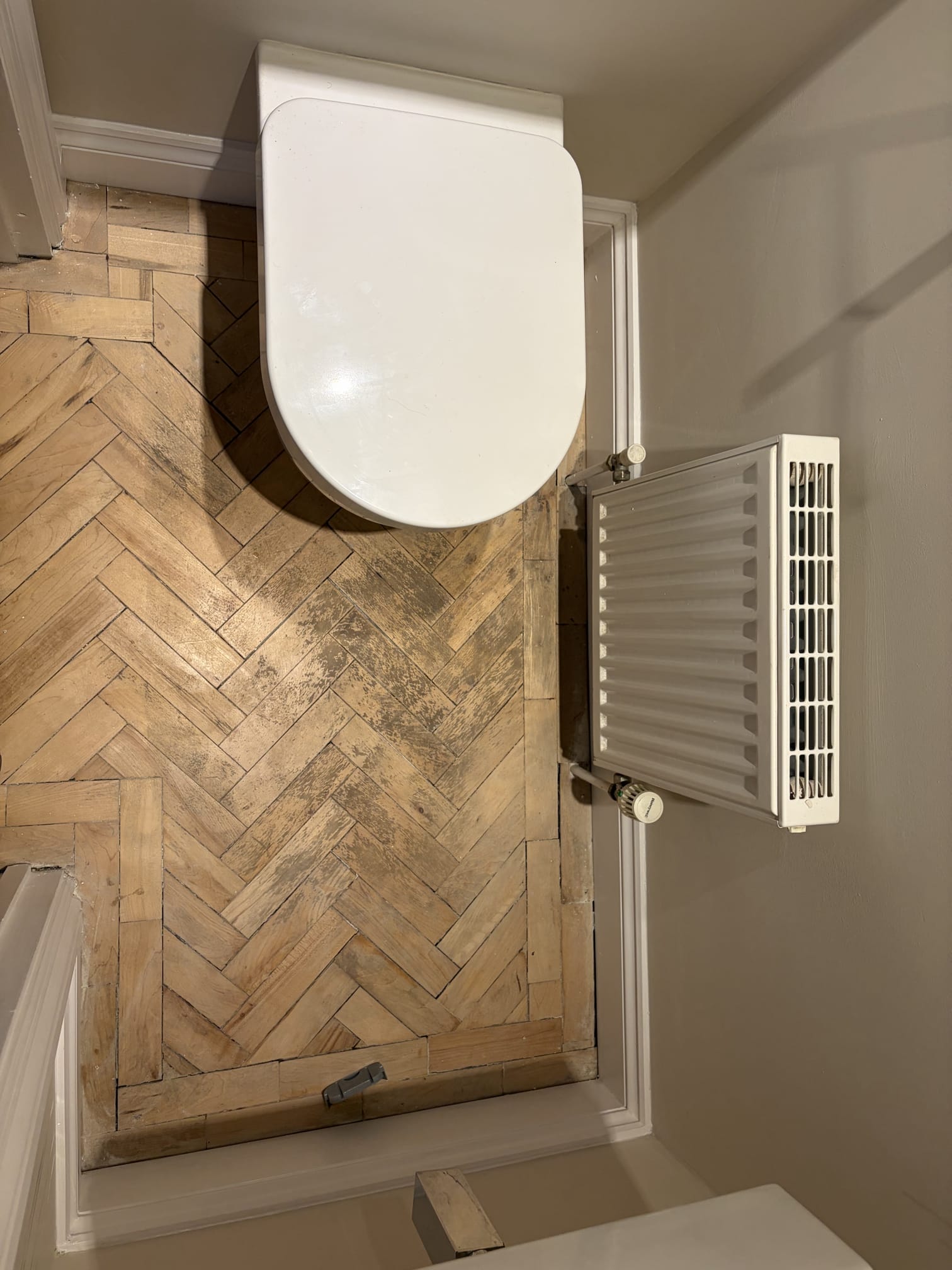
Deep water damage, severe movement, unstable blocks and structural problems may need repairs before any sanding takes place.
If you’re concerned about individual parquet blocks moving, our article on restoring parquet flooring with loose blocks explains what needs checking.
The golden rule? Don’t assume a floor needs replacing just because it looks terrible. But don’t assume sanding will fix everything either!
Don’t Forget Those Wooden Worktops!
Now, here’s something people often overlook when renovating.
The floor might be the largest wooden surface in the room, but what about the worktops?
Wooden kitchen worktops can suffer from scratches, worn finishes, water marks and general everyday use.
And in a rental property, they can certainly take a bit of a battering!
The Great Barton project included wooden worktops that needed attention alongside the parquet floor.
Depending on their condition, solid wooden worktops can sometimes be sanded and refinished rather than replaced.
However, this depends on several things, including whether the timber is sound, whether moisture has caused damage and whether the surface has previously been treated with unsuitable coatings.
A worktop with surface wear is a very different prospect from one that has become swollen, rotten or structurally unsound.
The important thing is to assess each surface individually.
Restoring an existing worktop could help preserve a usable feature of the property and reduce the need for new materials.
Renovating on a Budget? Decide What Really Needs Doing
When money is tight, it’s tempting to tackle the most visible problems first.
But a sensible renovation plan should start with safety and the property’s condition.
Start with anything that could affect the safety, security or suitability of the home, such as electrical faults, leaks, damp or unsafe flooring.
Once you’ve sorted those issues, you can start looking at all the cosmetic improvements.
For wooden floors, ask yourself…
- Is the floor structurally sound? If blocks are moving or the surface feels unstable, investigate before sanding.
- Is the damage mainly cosmetic? Scratches, dullness and worn finishes may be suitable for restoration.
- Does the entire floor need sanding? Some floors may only need localised repairs or maintenance, although this depends on the existing finish and condition.
- What will give the best long-term value? The cheapest immediate option isn’t always the most economical if it needs replacing again soon.
If you’re unsure where to begin, our guide to wood floor restoration explains the different stages and what to expect.
Choosing a Finish for a Rental Property
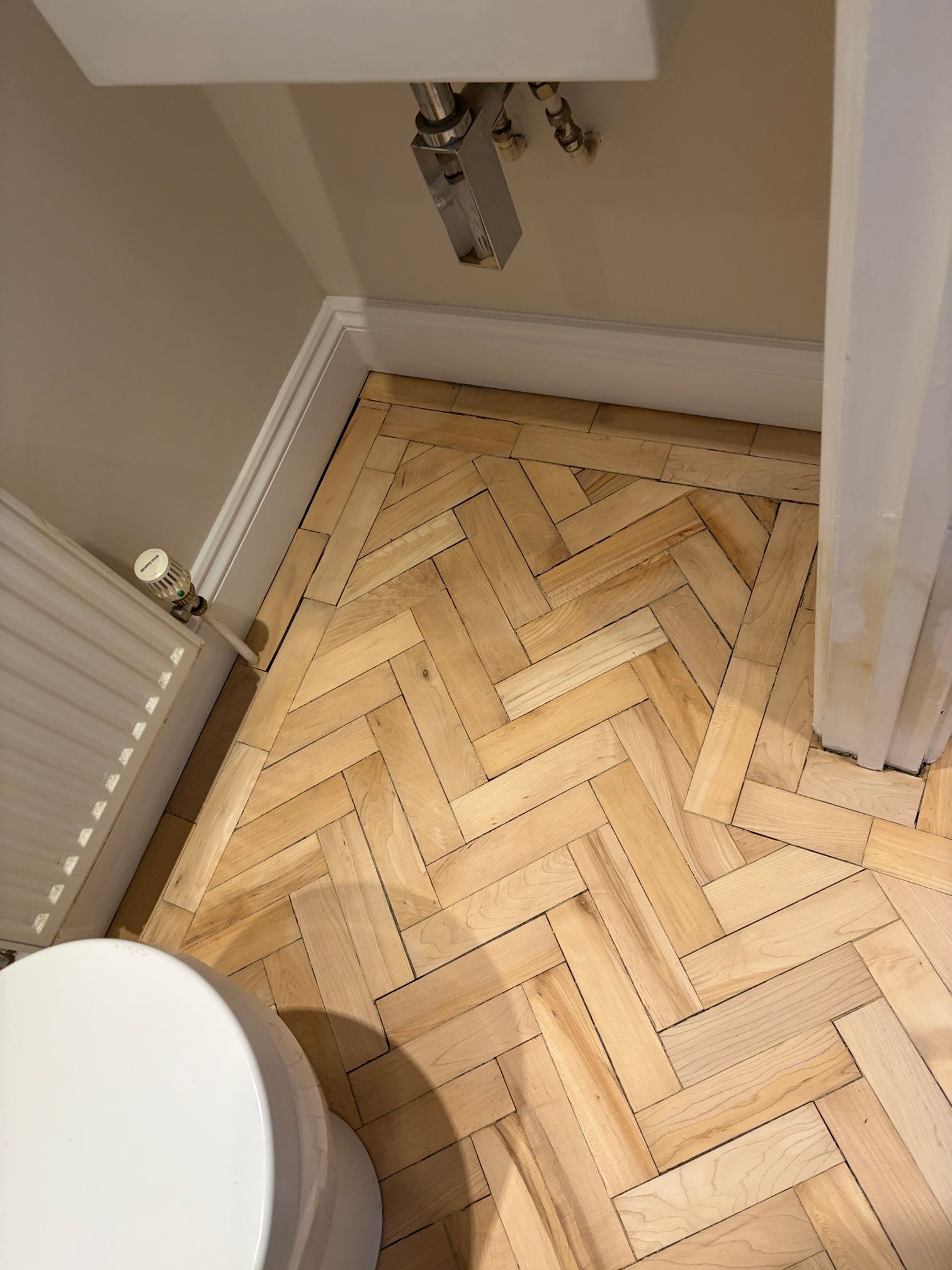
Once a wooden floor has been restored, the next decision is how to protect it.
Two common options are oil-based finishes and lacquer systems.
Oil finishes can give timber a natural appearance, and some systems allow localised maintenance or repairs.
Lacquer creates a protective surface coating and can be a practical option for floors that experience regular use.
Neither finish is automatically best for every rental property.
The right choice depends on the timber, how the room will be used, the maintenance requirements and the expected wear.
For landlords, consider how easy the finish will be for future occupants to care for.
Our wood sanding and oiling guide explains how to prepare and protect wooden flooring.
And one little tip: make sure your tenants know how to clean the finished floor properly. A soaking-wet mop and wooden flooring are rarely a happy combination!
Is Restoring Wooden Flooring Better for the Environment?
Keeping an existing wooden floor in use can also benefit the environment.
If a floor is suitable for restoration, you may avoid disposing of usable timber and buying a completely new floor.
Of course, sanding and refinishing still require equipment, materials and protective products, so restoration isn’t impact-free.
The environmental benefit depends on the work required and the alternatives being considered.
For owners of older properties, the Society for the Protection of Ancient Buildings is also a useful source of information about caring for traditional buildings and their original materials.
Thinking About Wood Floor Restoration in Great Barton?
Whether you’re a landlord preparing a rental property for new tenants or a homeowner giving your house some much-needed attention, don’t write off your existing wooden flooring too quickly.
That scratched parquet floor or tired wooden worktop might have more potential than you think.
And if there’s one thing we love, it’s helping people see what their wooden floors could become with the right professional care.
At Floor Sanding Newmarket, we help customers with wood floor sanding, repairs and restoration across Newmarket and surrounding areas, including Great Barton and the Bury St Edmunds area.
Before you spend money replacing your wooden flooring, why not find out whether restoration is possible?
Visit Floor Sanding Newmarket or call 01223 863632 to discuss your project.
We restore & you relax!
FAQs About Wood Floor Restoration in Great Barton…
-
Can badly scratched parquet flooring be restored?
Often, yes. Professional sanding and refinishing can often improve surface scratches and worn finishes. However, serious damage, loose blocks and moisture problems need assessing before work begins.
-
Is wood floor restoration worth it in a rental property?
It can be. If the existing flooring is sound, restoration may be more economical than removing and replacing it. It can also help preserve the appearance and character of the property.
-
Can your wooden kitchen worktops be restored at the same time as your parquet flooring?
Potentially, yes. We can look at both surfaces as part of the same renovation project. However, preparation, sanding, and finishing requirements may differ, so plan the work accordingly.
-
How long does parquet floor restoration take?
That depends on the size of the area, the condition of the blocks, the repairs required and the finishing system. Some smaller projects can be completed relatively quickly, while more extensive restoration takes longer. Always allow for the recommended drying and curing times before normal use.