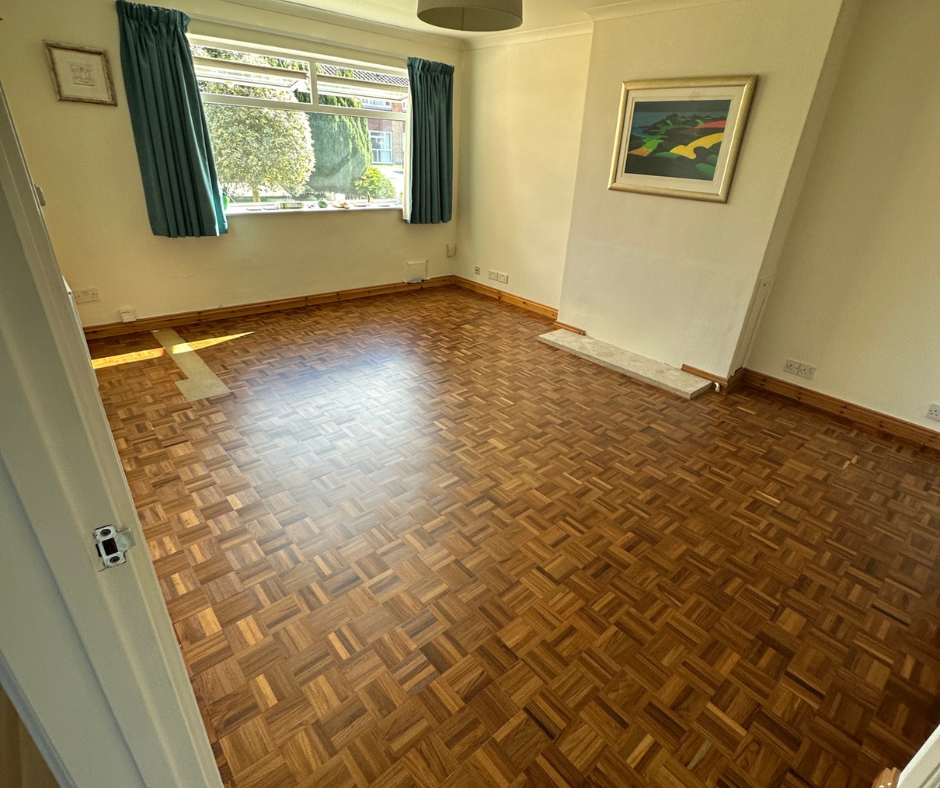
Parquet flooring has a way of making people pause.
Even when it is scratched, dull, uneven or partly loose, many homeowners can still see the shape of something worth saving. The pattern is there. The character is there. The worry is usually whether the floor has gone too far.
The short answer is yes, many parquet floors can be restored, even when some blocks are loose or uneven. But you need someone to assess the floor properly before sanding starts. Loose blocks, missing pieces, old adhesive, damp, movement and previous repairs can all affect what is possible.
At Floor Sanding Newmarket, we restore wooden floors across Newmarket and the surrounding area. Parquet restoration can be very rewarding, but it is not a floor to rush. The repair work matters just as much as the sanding and finishing.
What you will learn in this blog:
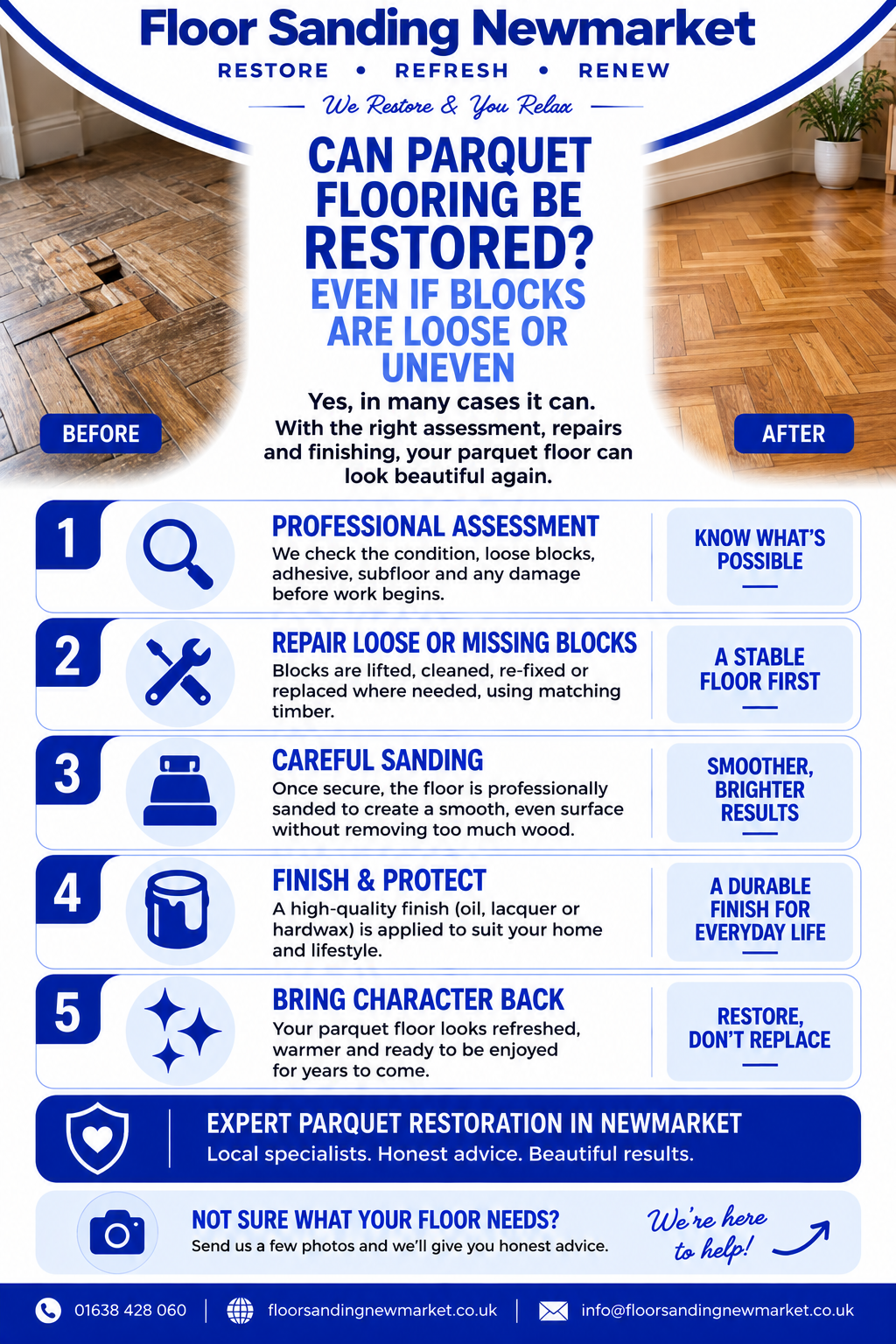
Why parquet floors become loose or uneven
Parquet floors are made from many small timber blocks, usually laid in a pattern such as herringbone, basket weave or brick bond. Because the floor is made up of individual pieces, movement in one area can affect the way the whole floor looks and feels.
Blocks may become loose because the old adhesive has failed, the subfloor has moved, moisture has affected the floor, or the blocks have been disturbed during building work. In older homes, we also see floors where carpets, underlay, old bitumen adhesive or previous repairs have hidden the condition of the parquet for years.
Sometimes the problem looks worse than it is. A few loose blocks may be lifted, cleaned, re-fixed and blended back into the floor before sanding. Other times, the loose area is a sign of a deeper issue underneath.
That is why a visit matters. A parquet floor should be checked before anyone promises a simple sand and finish.
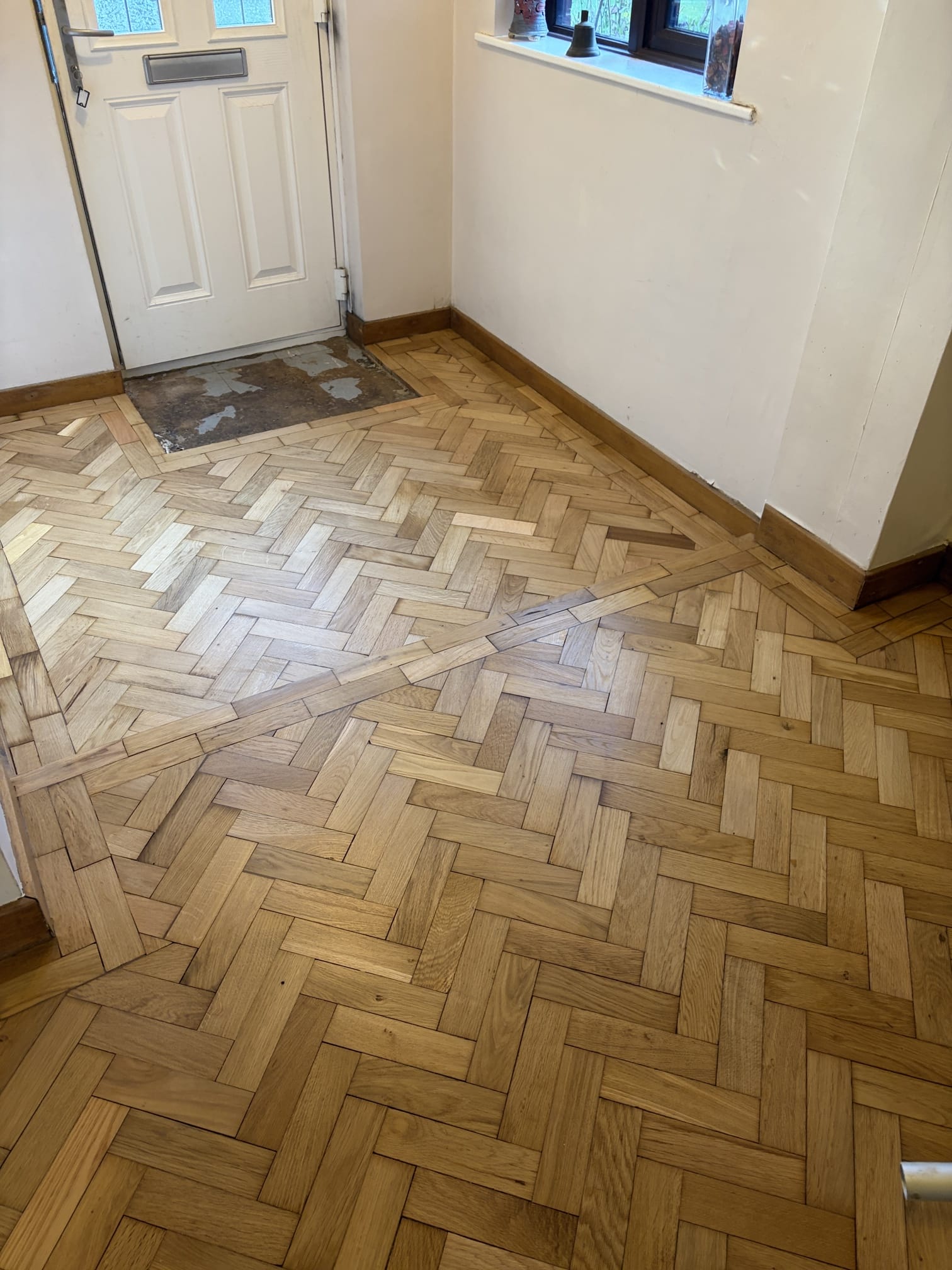
Can loose parquet blocks be fixed before sanding?
In many cases, yes.
You usually need to address loose parquet blocks before sanding begins. If you sand loose blocks while they are still moving, the finish may look uneven, and the repair may not last as well as it should.
The usual approach is to inspect the loose area, lift affected blocks where needed, clean away old adhesive as far as suitable, prepare the base and re-fix the blocks. If some blocks are missing or badly damaged, you may need replacements. Matching the timber, size, age, and colour takes care and judgement.
This is where parquet restoration becomes more than just sanding. The floor has to be made stable first.
Our wood floor services are built around preparation, sanding, finishing and repair, because a good result depends on what happens before the machines come out.
What if the parquet floor is uneven?
A slightly uneven parquet floor is not unusual, especially in older homes. The question is whether the unevenness is surface-level or structural.
You can improve some unevenness with careful sanding once the blocks are secure. However, sanding should not be used as a way to hide every problem. If the floor is badly out of level, blocks are rocking, or the subfloor has failed, you need to understand the cause first.
Sanding removes wood. It can smooth and refine the surface, but you shouldn’t use it heavily just to force an unstable floor into shape. Taking off too much timber can shorten the life of the floor and may still not solve the real issue.
A proper assessment looks at how the blocks are sitting, whether they are still bonded, whether there are hollow areas, whether damp may be involved and whether the floor has already been sanded before.
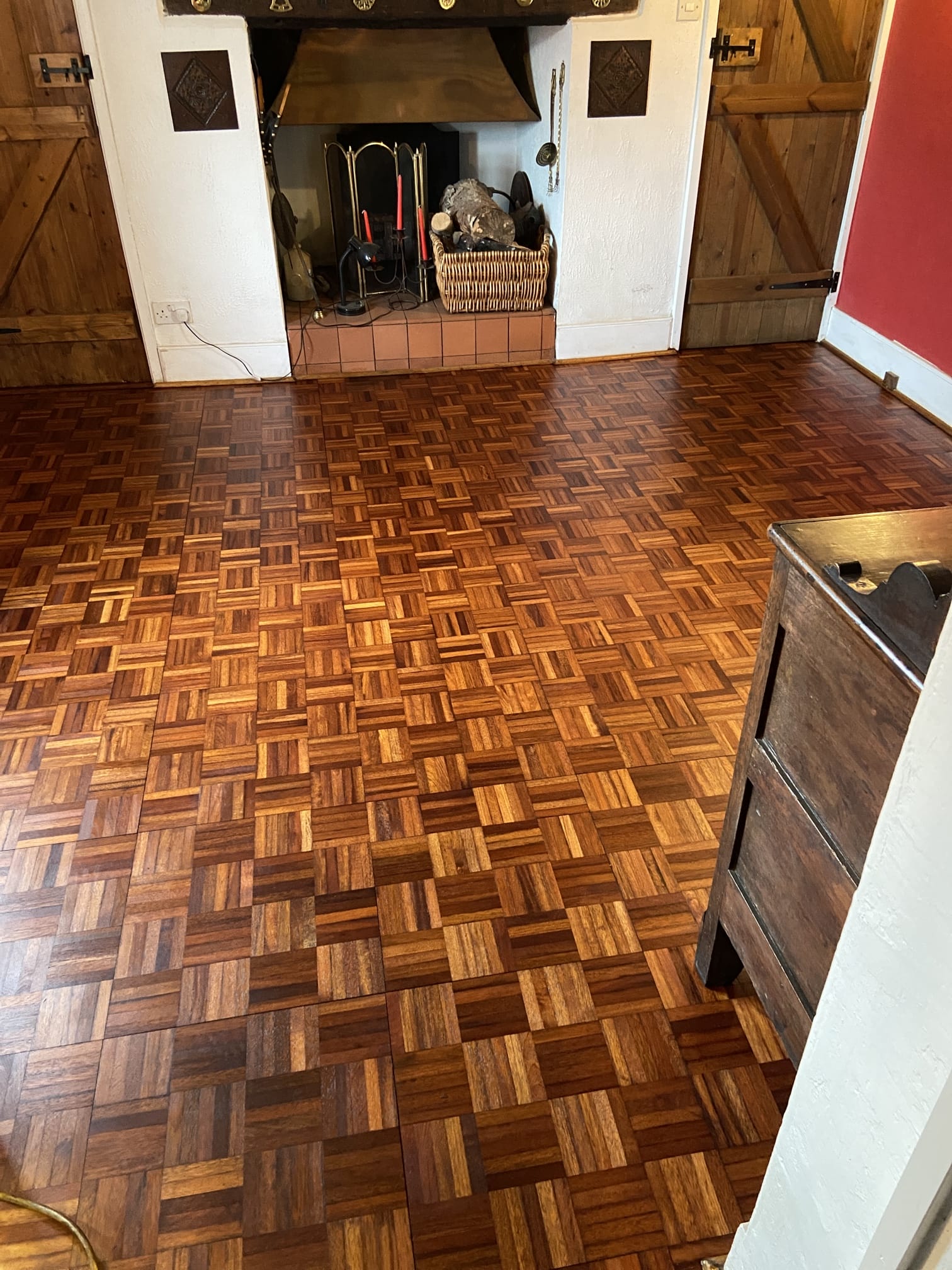
Old adhesive can change the job.
Older parquet floors may have been laid with adhesive that behaves very differently from modern products. In some homes, old bitumen adhesive may be present. In others, the adhesive may have become brittle, powdery or patchy over time.
This matters because the blocks need a sound base before they are re-fixed. If the old adhesive is failing across a wide area, repairing only the most obvious loose blocks may not be enough.
A few loose pieces can be a small repair. A large area of failed adhesive can become a bigger restoration decision.
This does not automatically mean the floor is beyond saving. It simply means you need to respect the condition underneath the blocks.
Can gaps between parquet blocks be filled?
Small gaps can often be improved as part of the restoration process, but filling is not a magic fix.
Parquet blocks expand and contract with changes in the room. If a floor is still moving, filler may crack or work loose over time. Wider gaps, missing pieces or damaged edges may need a more careful repair than simply filling the space.
The aim is to make the floor look cared for and stable, not artificially perfect. A restored parquet floor should still feel like a real wooden floor. Some signs of age may remain, especially in older homes, and that can be part of its character.
Will the colour be even after restoration?
Not always, and this is worth saying early.
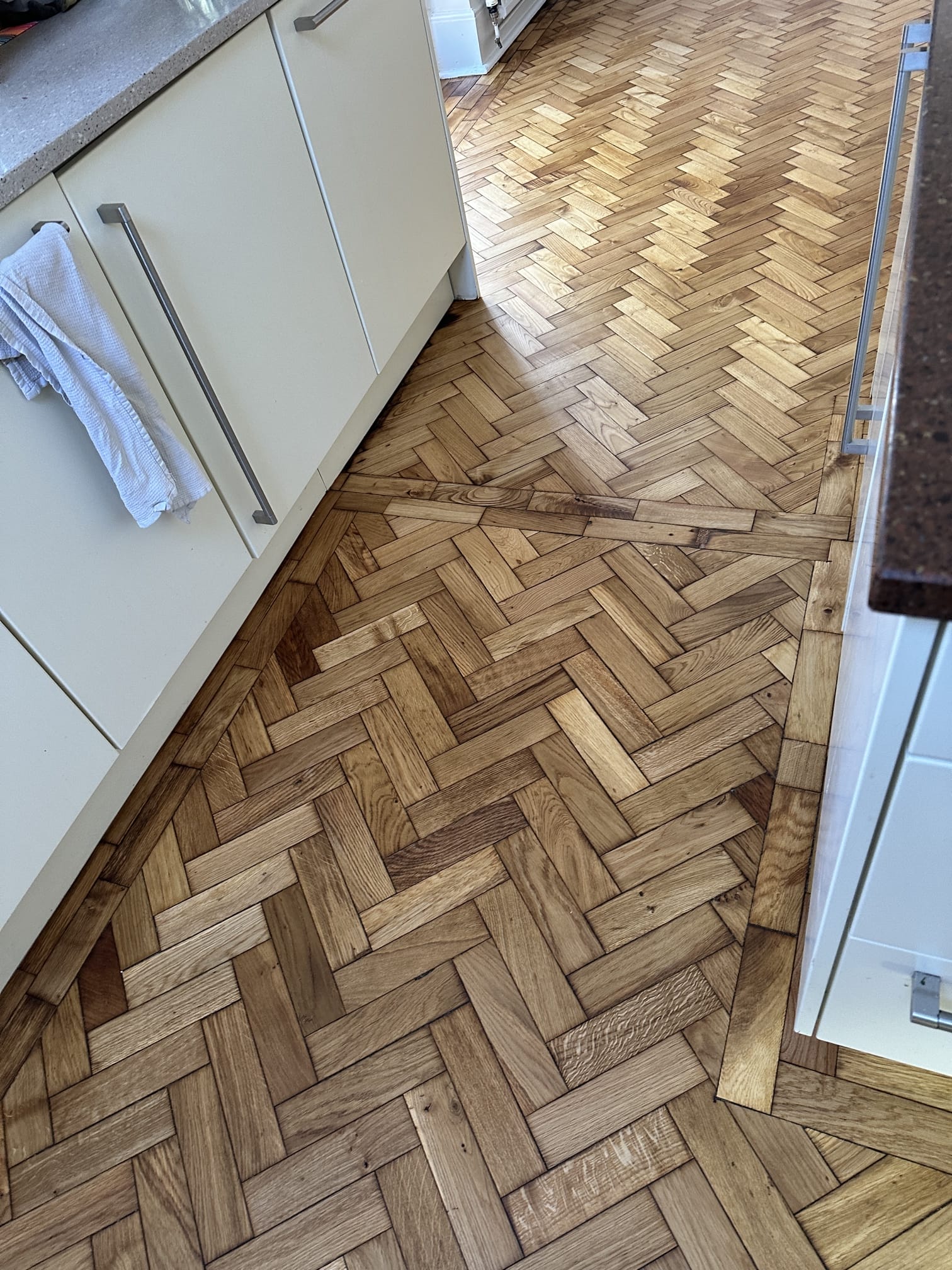
Parquet floors can have colour variation because different blocks have aged differently. Some areas may have been covered by rugs or furniture. Other areas may have been exposed to sunlight, wear, water marks or old finishes.
Once the floor is sanded, the timber will usually look cleaner and more even, but it may not become one flat colour. Replacement blocks may also take finish slightly differently from the original timber.
This is not necessarily a bad result. Many parquet floors look beautiful because of their variation. The important thing is to set the expectation before work begins.
The finish choice also affects the final look. Some floors suit an oiled finish, while others may be better protected with lacquer depending on the room, the timber and how the floor is used. You can read more about the options on our wood sanding and oiling and wood sanding and lacquer pages.
When might parquet not be suitable for full restoration?
Most people ask this quietly because they are worried the answer will be expensive.
Sometimes full restoration may not be the right route. For example, the blocks may be too thin from previous sanding, the subfloor may be unstable, damp may still be affecting the floor, or too many blocks may be missing or damaged to restore the floor in a sensible way.
There may also be situations where a smaller repair, a cleaner improvement or a staged approach is more suitable than a full sand and finish.
A good floor sanding company should be willing to say when sanding is not the first step.
That honesty matters. It protects the floor and helps you avoid spending money on work that will not give the result you expect.
Why parquet restoration should be assessed in person
Photos can help us understand the general condition of a parquet floor, but they do not tell the whole story.
An in-person assessment allows the technician to check movement, loose blocks, gaps, previous finish, adhesive issues, access, furniture, room use and the likely repair work needed before sanding.
This is especially important with parquet because the floor is not one continuous board. A small loose area can be simple. A larger pattern of movement can change the whole plan.
SPAB, the Society for the Protection of Ancient Buildings, also provides useful broader guidance on carefully repairing older timber floors and floor structures. Their advice is a helpful reminder that you should treat older floors with care rather than rushing into replacement. You can read their guidance on timber floor structures.
What happens during parquet floor restoration?
Every floor is different, but a careful parquet restoration will usually include an inspection first, followed by repair planning before sanding and finishing.
The process may include securing loose blocks, replacing damaged or missing pieces where suitable, dealing with gaps, sanding the floor evenly, removing fine dust and applying the chosen finish.
At Floor Sanding Newmarket, we use modern sanding equipment designed to reduce dust and disruption, but we still explain that no sanding work is completely dust-free. The aim is careful, controlled work with proper preparation.
Once the floor has been restored, aftercare matters. A good finish needs the right cleaning routine, sensible furniture protection and time to cure before normal use. Our wood floor maintenance page explains how ongoing care can help keep restored floors looking better for longer.
Should you restore parquet or replace it?
This depends on the floor.
If the blocks are mostly sound, the floor has enough thickness left, and the problems are repairable, restoration may keep far more character than replacement. It can also avoid the waste and disruption of lifting a floor that still has life left in it.
If the floor is unstable, badly affected by moisture or missing too much original material, replacement or partial replacement may need to be discussed.
The useful question is not “Can parquet always be saved?” It is “What is the sensible route for this floor?”
That is the question we help clients answer.
Thinking about restoring parquet flooring in Newmarket?
If your parquet floor is loose, uneven, scratched or hidden under an old finish, it may still be worth restoring. The first step is not to guess. The first step is to have the floor checked properly.
We can look at the condition of the blocks, the repair work needed, the likely finish options and whether restoration is a sensible choice for your home.
You can start by looking at our wood floor restoration guidance or contact the team through our get in touch page.
We will give you clear advice before promising a result, especially where loose blocks, old adhesive or uneven areas need proper assessment.