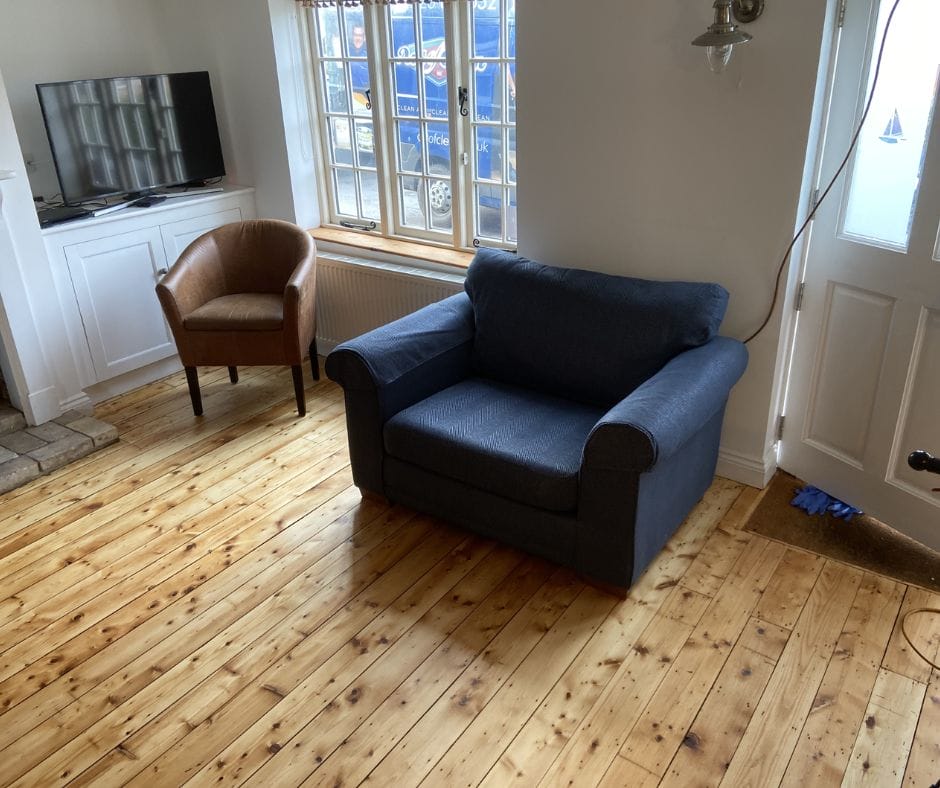
Pine in the living room, oak in the dining room, and two wooden floors that deserved a bit of TLC!
We love a good wooden floor transformation, especially when it means giving existing flooring another chance instead of replacing it.
Our floor sanding team travelled to Southwold, Suffolk, to work on two rooms in the same home. One was a lovely, spacious living room with pine flooring, and the other was a dining room with oak flooring.
Now, you might think wood is wood, right? Well, not quite!
Pine and oak have different characteristics, and understanding those differences matters when it comes to sanding and finishing them properly.
This was a sizeable job, with enough work for our team to stay overnight rather than make the long back-and-forth journey. And when you see what you can achieve with an existing wooden floor, you’ll understand why we enjoy this sort of work so much.
First up, the pine living room floor
Pine floors have a lovely character of their own. They’re often full of natural knots, grain patterns and little signs of a life well lived.
But here’s something worth knowing.
Pine is softer than oak, so it can pick up dents, scratches, and everyday wear more easily.
Think of furniture being moved, shoes coming through the room, or just years of people living their lives. It all adds up.
The living room in this Southwold home was a particularly generous size, so there was plenty of floor to work on. We also had to consider the furniture, because, of course, nobody lives in an empty house!
Furniture planning is one of those things people don’t always think about when considering wood floor restoration, but it can make a real difference to how smoothly a job goes.
Before sanding starts, the floor needs to be accessible, and any furniture moving should be agreed and planned. Large or awkward pieces can take a bit more thought.
And here’s the important bit: sanding isn’t about taking away as much wood as possible. It’s about removing what is necessary to prepare the floor for a suitable new finish.
After all, the idea is to look after the wood, not wear it away unnecessarily.
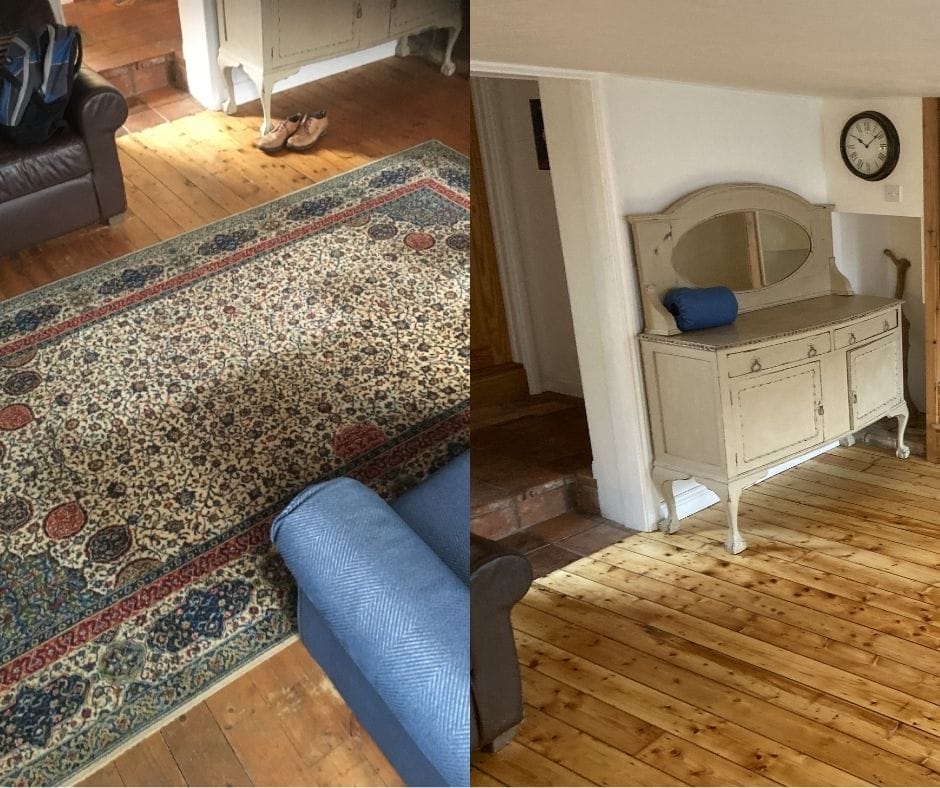
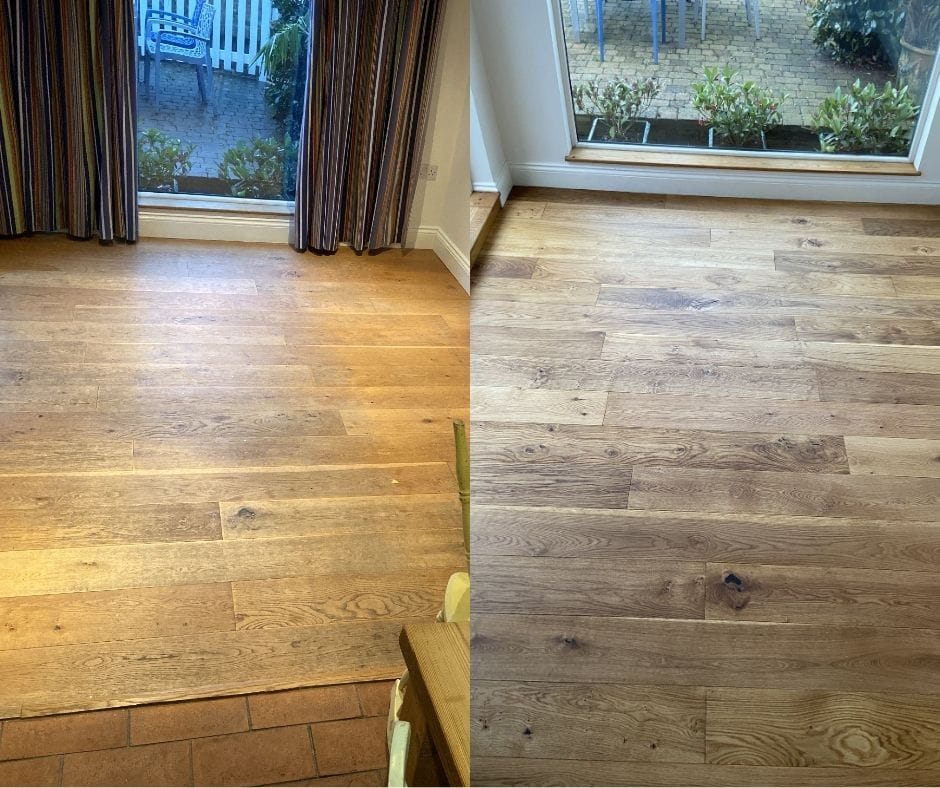
Then came the oak dining room, and what a lovely floor!
Now, oak is a different character altogether.
It’s generally harder than pine, with its own distinctive grain and natural appearance. It can be a wonderful choice for a dining room, especially where chairs are regularly pulled out, and people gather around the table.
But even a hard-wearing wood like oak isn’t indestructible.
Over time, a dining room floor can collect scuffs, marks and wear from everyday use. Chair legs are particularly good at reminding us that floors work for a living!
This Southwold dining room had a beautiful oak floor, and the finished result is one we’re especially pleased to share.
One of the nicest things about restoring a wooden floor is seeing the natural character of the timber become more noticeable again.
And the beauty of wood is that you don’t need every board to look identical. Different grain patterns and natural colour variations are part of what makes a real wooden floor interesting.
Why the finish matters just as much as the sanding
Here’s something we always think is worth explaining.
A beautifully sanded floor still needs the right finish to help protect it.
Sanding prepares the surface, but the finish is what helps the floor cope with everyday use.
For anyone who likes seeing the natural character of timber, wood sanding and oiling can be a lovely option.
The right oil finish can enhance the grain and give the wood a natural look. However, oil isn’t automatically the right choice for every floor.
The wood type, its condition, how the room is used, and the look you want all need consideration.
And this is where having someone who understands different woods really helps.
The right finish for a living room isn’t necessarily the right choice for every kitchen, hallway or dining room.
It’s worth having that conversation before committing to a particular look.
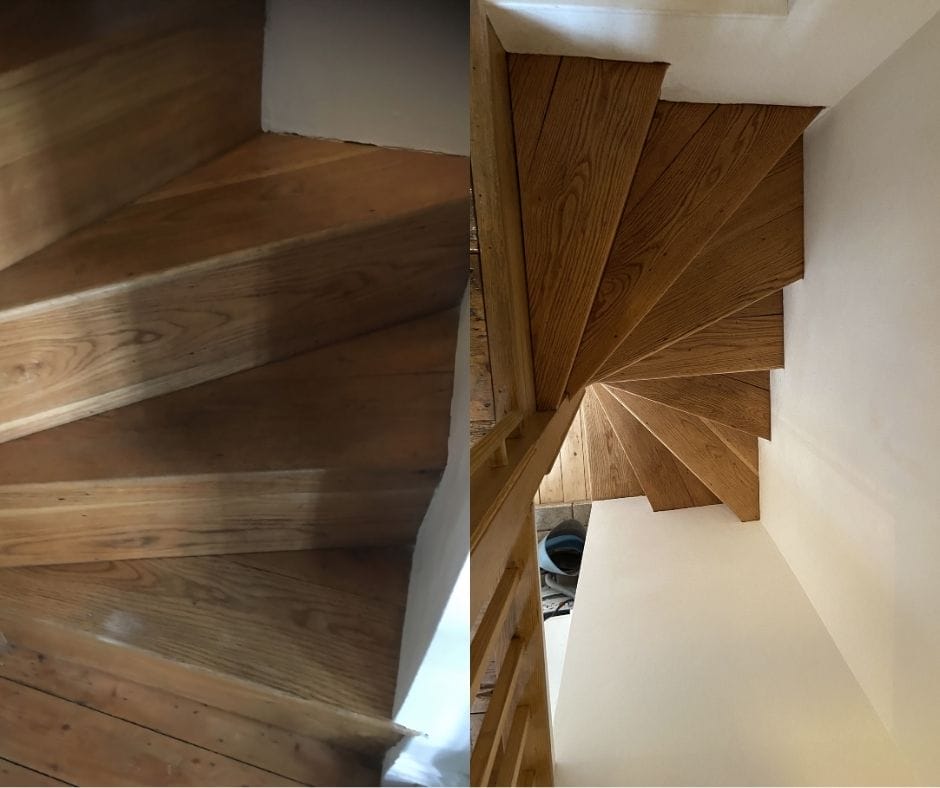
Thinking of sanding your own wooden floor? Read this first!
We understand the temptation.
You look at an old wooden floor, see a few scratches and think, “How hard can it be? I’ll just hire a sander!”
And sometimes, with the right knowledge and experience, DIY projects work out well.
But floor sanding is one of those jobs where mistakes can be difficult to undo.
Sand unevenly and you can leave dips or marks. Take off too much material, and you may shorten the useful life of the floor. Apply an unsuitable finish and the appearance or performance may not be what you expected.
You can always take more wood off, but you can’t simply put it back!
That’s why it’s sensible to understand exactly what you’re working with before reaching for the sanding machine.
The Wood Flooring Association’s maintenance guidance also highlights the importance of using competent people when sanding and sealing becomes necessary.
And here’s another thing worth remembering…
Not every tired-looking wooden floor needs a complete sanding.
Sometimes, depending on the condition of the existing finish, cleaning and recoating may be a more suitable option.
If the protective coating is still in reasonable condition, it may be possible to improve the floor without carrying out a full restoration.
That’s why it’s worth understanding the options before making a decision.
Once your floor looks lovely again, how do you keep it that way?
Nobody wants to put all that effort into restoring a beautiful wooden floor, only to start marking it again with furniture the next day!
Thankfully, looking after a wooden floor doesn’t need to become a full-time hobby.
A few simple habits can REALLY make a difference:
- Use felt pads beneath furniture legs, especially dining chairs that move regularly.
- Lift your furniture rather than dragging it across the floor.
- Sweep or vacuum as regularly as you can to remove grit, all that could scratch the finish.
- Clean with products suited to your floor finish, not whatever is under the kitchen sink.
- Deal with spills promptly, without soaking the wood.
And please, don’t assume that more water means a better clean. Wooden floors and puddles are not the best of friends!
We’ve put together more useful advice on our wood floor maintenance page for anyone who wants to keep their floor looking good.
The biggest tip? Pay attention to the protective finish before it becomes badly worn. A little timely maintenance may help avoid more extensive work later.
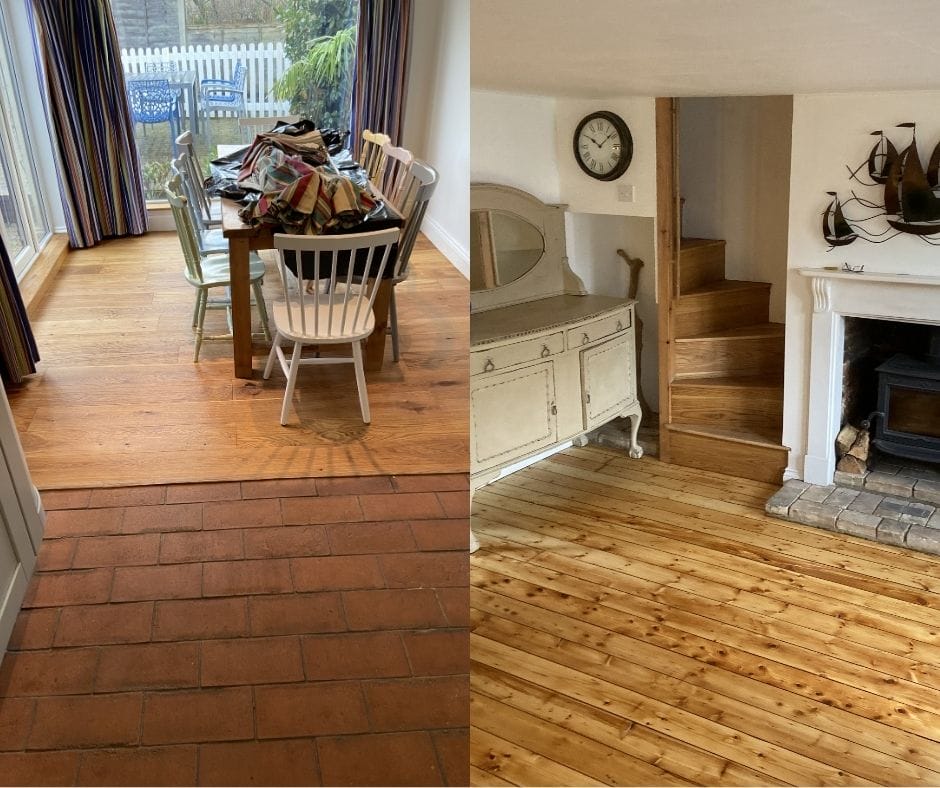
A lovely reminder of what existing wooden floors can offer…
Back to Southwold.
Two rooms. Two different woods. A large pine living room and a beautiful oak dining room.
It was a substantial job for the team, and one that involved travelling some distance and staying overnight to complete the work.
What we particularly like about jobs like this is that they show why it’s worth taking a proper look at an existing floor before assuming it needs replacing.
Pine has its own charm. Oak has its own personality. And neither needs to look like a brand-new, factory-made floor to be beautiful.
Sometimes the best part of a room is already there, right underneath your feet. It just needs the right care.
If you enjoy seeing how different wooden floors can be brought back to life, have a look through some of our other floor sanding case studies.
And if you’re looking at your own wooden floor in Southwold or elsewhere in Suffolk, wondering whether it needs sanding, cleaning or something else entirely, there’s no harm in asking someone experienced to take a look.
Better to understand your floor first than discover you’ve sanded away something you didn’t need to!
Because a good wooden floor is worth looking after.
Frequently Asked Questions About Wood Floor Sanding in Southwold, Suffolk
-
Can old pine and oak floors be sanded and restored in Southwold?
Absolutely, in many cases they can! And you’d be surprised how much life might still be hiding in an old wooden floor.
Pine and oak can both respond beautifully to professional sanding, but they need slightly different care. Pine is softer and can mark more easily, while oak is generally harder wearing. Before getting started, it’s important to check the floor’s condition, thickness and any previous sanding.
The good news? A tired-looking wooden floor doesn’t automatically need replacing. Sometimes, a careful restoration is all it needs to bring out its natural character again.
-
How long does it take to sand and finish wooden floors in a Southwold home?
That depends on the size of the rooms, the condition of the timber and the finish being applied.
For our Southwold project, we worked on a large pine living room and an oak dining room. It was a substantial job, so our team stayed overnight rather than travelling back and forth.
Some smaller floors may take less time, while larger projects can need several days, especially when preparation, finishing and drying time are included.
It’s always worth discussing the timescale before work begins so you can plan around furniture, family life and when the rooms can be used again.
-
Is wood floor sanding dusty, and do I need to empty the room first?
A little preparation goes a long way!
Professional floor-sanding equipment uses dust extraction to help keep airborne dust down, but no sanding process is completely dust-free.
Furniture will also need some thought. Ideally, clear the working area so the team can access the floor properly and safely. If you’ve got a particularly heavy sofa or dining table, mention it before the job rather than trying to wrestle it through the doorway yourself!
The best advice is to agree on furniture arrangements beforehand. It makes the whole process easier for everyone.
-
Is it better to sand an old wooden floor or replace it completely?
Now, that’s a question worth asking before spending money!
If your wooden floor is structurally sound and has enough usable timber remaining, sanding and refinishing may be a sensible alternative to replacement.
However, if boards are badly damaged, unstable or have already been sanded too many times, you may need a different approach.
Whether you’re in Southwold or elsewhere in Suffolk, the sensible first step is to have the floor assessed before deciding what work it actually needs.