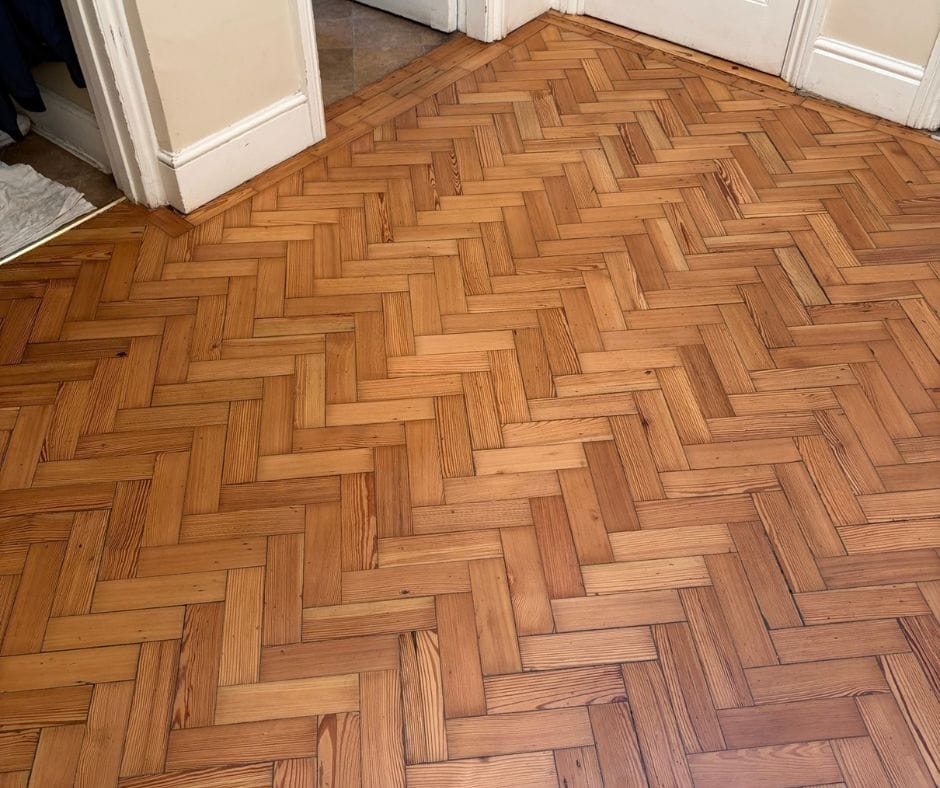
Newmarket homes are not exactly living a gentle little life, are they?
Between early starts, yard visits, dogs, boots, visitors, race days, countryside grit and the general chaos of a busy home, wooden floors can take a proper battering.
Lovely when they are looked after.
A bit tragic when they have been quietly suffering for years while everyone pretends the hallway is “just a bit tired”.
If you live in or around Newmarket, especially if your household is connected to racing, yards, studs, or horsey life in any way, your wooden floor may be taking more daily wear than you realise.
That does not always mean it needs ripping out… Good grief, no.
In many cases, the right wood floor sanding and restoration can bring a tired floor back to life.
Sometimes it may need full sanding. Sometimes it may only need maintenance. The clever bit is knowing which route is right before you start.
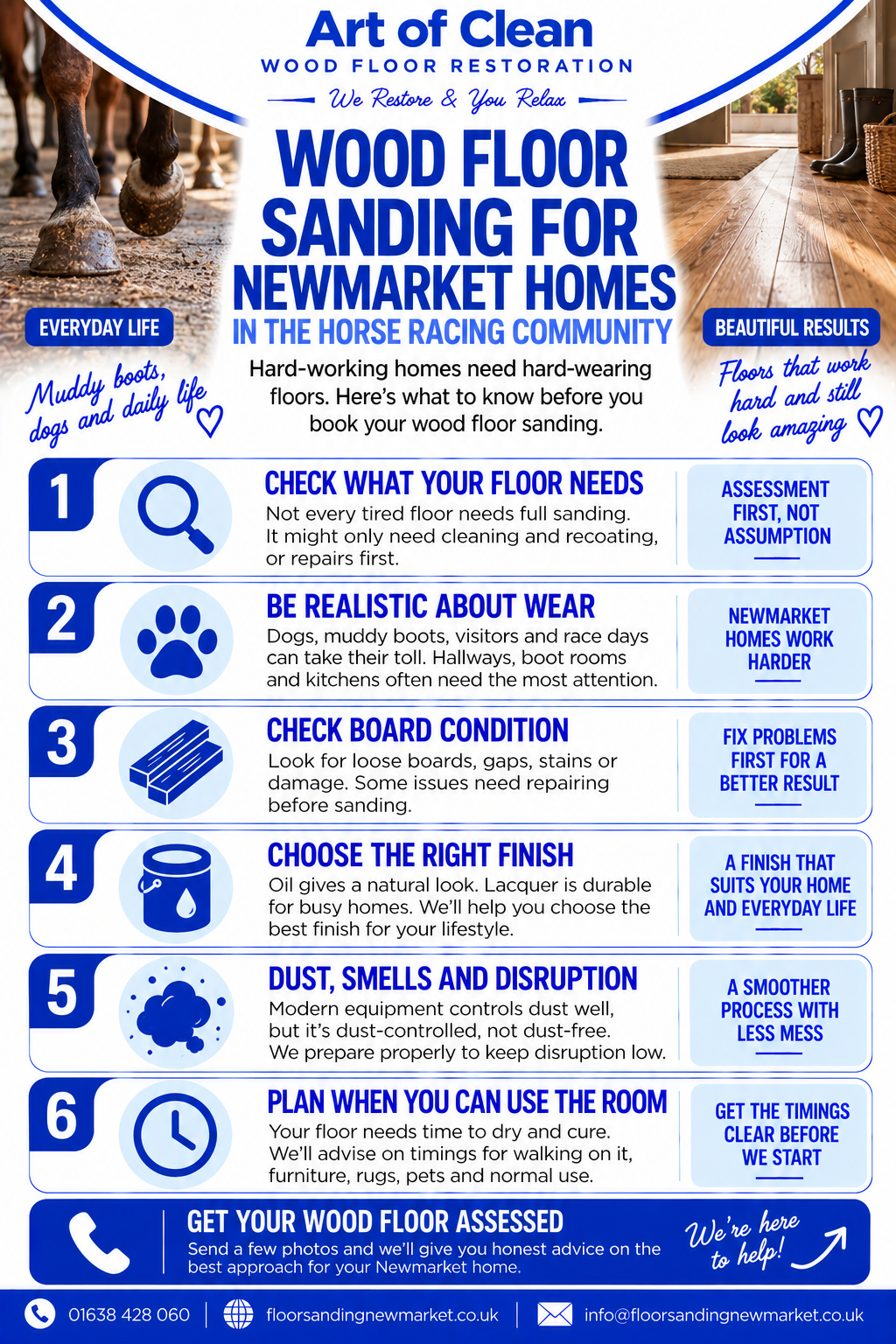
Why Newmarket floors work harder than most
Newmarket is not just another market town. It is known worldwide for horse racing, with the wider racing and breeding industry playing a huge role in local life.
The Newmarket Thoroughbred Racing and Breeding Industry Forum describes the town as having thousands of horses in training and a major concentration of racing businesses, yards and related facilities.
That local lifestyle matters when we talk about wooden floors.
Homes around Newmarket often have a practical rhythm.
People come in from yards. Dogs charge through like they own the place.
Boots bring in grit.
Wet coats get dropped near the door.
Visitors arrive for race days or weekends.
The hallway, boot room, kitchen and study often take the hit first.
Wood itself is strong, but the protective finish on top does the daily hard work.
Once that finish starts wearing thin, dirt and moisture can reach the timber.
That is when floors begin to look dull, grey, scratched or patchy.
And no, mopping it harder is not the answer. Please step away from the mystery supermarket floor cleaner.
Signs your wooden floor may need attention
A wooden floor does not have to look dreadful before it needs help.
In fact, the best time to ask for advice is often before it becomes a full “what happened here?” situation.
You may notice the floor still looks dirty after cleaning.
The main walking routes may look duller than areas under furniture or rugs.
There may be scratches around chairs, dark marks near doorways, or grey worn patches where the finish has started to give up.
In racing households, the clues often show near the busiest entrances.
Back doors, utility spaces, hallways and kitchens tend to tell the truth first.
They are the places where grit, damp, dogs and daily life all meet, usually with very little ceremony.
If the finish has worn through, wood floor restoration may be the right option.
If the finish is still mostly intact, the floor may need cleaning, recoating or better maintenance instead.
That is why a proper look at the floor matters.
Guesswork is not a great strategy when you are dealing with timber.

Sanding, maintenance or leave it alone for now?
Not every tired floor needs full sanding. That is worth saying clearly.
If the protective finish is still doing its job, a lighter maintenance route may be enough to freshen the surface and improve protection.
If scratches, staining or wear have gone deeper, sanding and refinishing may be the more sensible route.
Solid wood usually gives more flexibility, although it still needs assessment.
Engineered wood is a different story because it only has a limited real wood wear layer on top.
Some engineered floors can be sanded.
Some really should not be.
If you are unsure what you have, this guide on how to tell if your floor is engineered wood or laminate is a useful place to start.
This is where honest advice saves stress.
The aim is not to sand everything within an inch of its life.
The aim is to protect the floor properly and choose the right level of work for the room, the timber and the way your home is used.
Choosing a finish that can cope with real life
This is where things get interesting.
For some Newmarket homes, a natural oiled finish works beautifully.
It gives a warm, tactile look and can often be easier to maintain in localised areas if one section starts to look worn.
You can read more about that on the wood sanding and oiling page.
For busier households, especially where dogs, boots, children and visitors are part of daily life, a lacquered finish may be worth considering.
Lacquer creates a protective surface layer and can be a practical choice for high-traffic rooms.
The wood sanding and lacquer page explains more about that option.
There is no one finish that suits every home. Sorry, wouldn’t that be neat?
A beautiful finish is only useful if it suits how you actually live.
If people are coming in from yards, if dogs are part of the household, if the kitchen is the main route through the house, or if race weekends bring extra visitors, say so during the survey.
That information helps the team recommend a finish that fits your life, not just the sample board.

What about dust, smells and disruption?
This is one of the big worries, and rightly so. Nobody wants their home turned into a sawdust snow globe.
Modern floor sanding is much more controlled than many people expect.
Good preparation, professional sanding equipment, high-filtration vacuuming and careful finishing all help reduce disruption.
Floor Sanding Newmarket’s service includes preparation, sanding, fine dust removal, oiling, lacquering and repairs, with a site survey before work begins.
That said, it is still real work in a real home.
Furniture needs planning.
Access needs thinking through.
Pets need keeping away from the work area.
Fresh finishes need time before normal use resumes.
If your home runs around yard routines, staff accommodation, school runs, race days or visiting owners, timing matters.
The best moment to sand a floor is rarely “whenever”. It is when the room can be cleared, finished properly and left alone long enough for the finish to cure.
Glamorous? Not especially. Important? Absolutely.
Preparing your home before floor sanding
A smoother job usually starts before the sanding team arrives.
Furniture should be planned in advance.
Some items may need to leave the room completely.
Heavy pieces need proper thought, not a hopeful shove ten minutes before the team turns up.
Move rugs, delicate items, and anything breakable out of the work area.
If the floor runs through several spaces, think about how people will move around the house while the work is happening.
Dogs and freshly finished floors don’t really mix.
Neither are muddy boots and a new finish. Let’s not make the floor cry on day one.
For homes linked to the racing community, the entrance route is especially worth thinking about.
If the newly restored floor sits near a boot room, yard entrance or kitchen door, mats and habits will matter from the start.
The wood floor aftercare guide is useful once the work is done, especially if you want the finish to stay looking good for longer.

What result can you expect?
A sanded and refinished wooden floor can make a room feel cleaner, brighter and better cared for.
Sometimes the change is dramatic.
Sometimes it is quieter, more natural and exactly right for the age of the home.
Older boards may keep some character.
Deep stains may improve but not disappear completely.
Pet marks, water damage, previous repairs and colour differences between boards can all affect the final look.
That is not a reason to avoid restoration.
It is a reason to get proper advice before expecting miracles.
A good restored floor does not always need to look brand new.
In many Newmarket homes, especially older properties, the best result is a floor that looks clean, protected, practical and full of character without pretending it has never seen a boot, dog or busy morning in its life.
How to help your floor survive racing life
Once your wooden floor has been restored, the aftercare does not need to be complicated.
It does need to be consistent.
Good entrance mats help catch grit before it scratches the finish.
Felt pads under chairs reduce scuffs. Spills should be dealt with quickly.
Avoid soaking the floor when cleaning, especially near joins, doors and older boards.
Use products that suit the finish, not whatever bottle happens to be under the sink.
If your home has a strong yard-to-kitchen traffic pattern, create a practical stopping point.
Boots off.
Dog paws dealt with.
Wet coats somewhere sensible.
Very unglamorous.
Very effective.
For high-traffic homes, this article on the best finishes for high-traffic wood floors may also help you think through what your floor needs to cope with.
When should you ask for advice?
If your wooden floor is looking dull, grey, scratched, sticky, patchy or impossible to clean properly, it is worth asking before the wear gets worse.
A proper survey can help answer the important questions:
- Can the floor be sanded?
- Would maintenance be enough?
- Is it solid wood, engineered wood or something else?
- Are there stains or repairs that may still show?
- Would oil or lacquer suit the room better?
- How should the work be planned around your household?
For homes in and around Newmarket’s racing community, wooden floors are often part of a busy, practical, hard-working home.
They do not need precious treatment, but they do need the right care.
If your floor is starting to look like it has seen one too many wet mornings, muddy boots or race-day gatherings, Floor Sanding Newmarket can inspect it, talk through your options and recommend a sensible route.
No drama.
No guesswork.
No pretending the mop will fix everything.
FAQs
Do wooden floors in Newmarket racing homes wear faster?
They can, especially in busy homes where people come in from yards, gardens, cars or outdoor work. Grit, moisture, dogs, boots and heavy foot traffic can all wear down the protective finish. The wood itself may still be sound, but once the finish is thin, the floor becomes harder to clean and more vulnerable to marks.
How do I know if my wooden floor needs sanding?
Your floor may need sanding if it looks dull even after cleaning, has grey worn patches, visible scratches, dark marks near doorways, or areas where the finish has worn through. A survey is the safest way to check, because some floors need sanding while others may only need cleaning, recoating or maintenance.
Can engineered wood floors be sanded?
Some engineered wood floors can be sanded, but not all of them. It depends on the thickness of the real wood wear layer, the condition of the floor and whether it has been sanded before. If that wear layer is too thin, sanding might not be an option.
Is oil or lacquer better for a busy home?
It depends on the room and how the floor is used. Oil can give a natural look and may be easier to maintain in smaller worn areas. Lacquer creates a protective surface layer and can be a practical option for high-traffic rooms. The best choice depends on your floor, your preferred look and how much daily wear the room gets.
Will floor sanding remove all stains and scratches?
Not always. Sanding can greatly improve many scratches, worn patches and surface marks, but deeper stains, pet marks, water damage and old repairs may still show. A good survey should explain what is likely to improve and what may remain before the work begins.
Is floor sanding very dusty?
Modern floor sanding is much more controlled than older methods, especially when professional equipment and good dust extraction are used. It should not be treated as completely dust-free, but the process can usually be managed carefully with proper preparation and cleaning between stages.
How should I prepare my home before floor sanding?
Clear as much furniture as agreed before the work starts, remove rugs and fragile items, and plan how people and pets will move around the home while the room is out of use. If the floor is near a busy entrance, boot room or kitchen door, it is worth thinking ahead about mats and access after the finish is applied.
How soon can I use the room after sanding and finishing?
This depends on the finish used, the room conditions and the advice given after the job. Some finishes can take light use sooner than others, but furniture, rugs, dogs and heavy traffic may need to wait longer. Always follow the aftercare advice for the specific finish on your floor.
Can sanding help if my floor always looks dirty?
Yes, if the dull or dirty look is caused by a worn finish, old surface damage or ingrained marks that sit in the top layer. If the finish has failed, normal cleaning may not make the floor look much better. Sanding and refinishing may restore a cleaner, more even appearance, but the floor should be checked first.
What is the best way to protect a newly sanded floor in a horsey household?
Use good entrance mats, keep grit away from the floor, avoid wet mopping, clean up spills quickly and use the right cleaning product for the finish. In homes with boots, dogs and regular outdoor traffic, a simple routine near the entrance can make a big difference to how long the finish lasts.