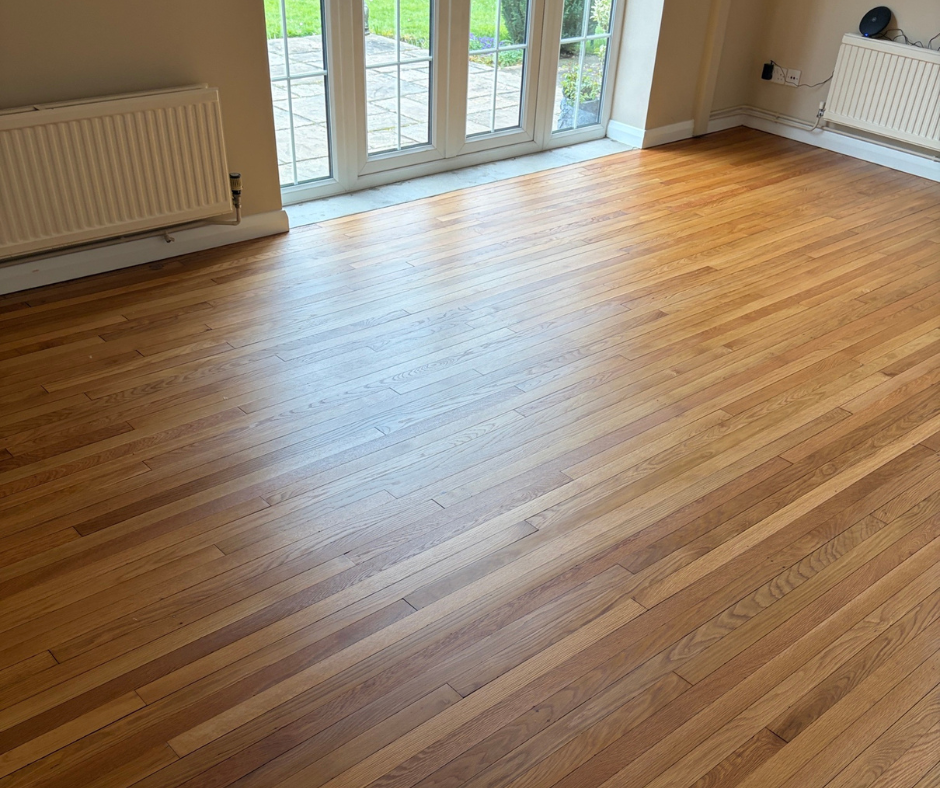
If you live near Newmarket and your wooden floor is starting to look tired, sanding may be the right answer. It is not always the first answer, though.
Some floors need a full sand and refinish. Some only need cleaning and recoating. Others need repairs before any finish is applied. The useful first step is to understand what type of floor you have, how worn the surface is and what result you are hoping for.
At Floor Sanding Newmarket, we help clients in and around Newmarket, including nearby areas such as Exning, Burwell, Fordham, Soham, Mildenhall, Kentford, Kennett, Cheveley and the surrounding villages.
Many homes in this area have hard-working wooden floors in kitchens, hallways, sitting rooms and older properties where the floor has already had a long life before the current owner moved in.
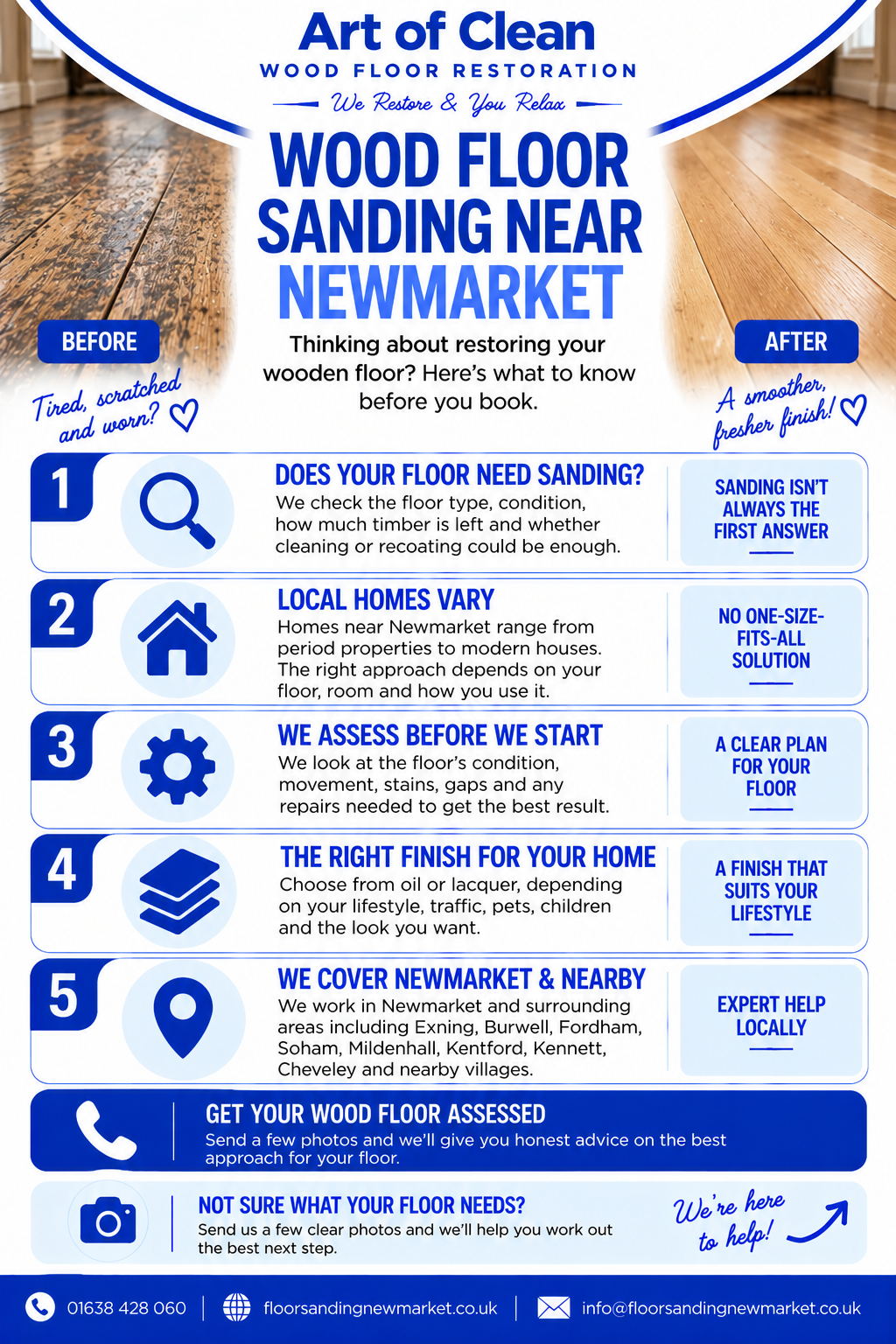
Does your floor need sanding, or something less?
A wooden floor can look dull for several reasons. The finish may be worn. Grit and everyday soil may have marked the surface. Furniture may have left scratches. Old cleaning products may have built up. In some cases, the timber itself is still sound, and the floor may not need a full restoration.
A professional assessment looks at the surface before recommending the work. Important checks include:
- whether the floor is solid wood, engineered wood, parquet or laminate
- how much usable timber is left
- whether the finish has worn through
- whether there are loose boards or loose parquet blocks
- whether stains, gaps or historic damage will affect the final result
- whether cleaning and recoating could be enough
This matters because sanding removes a fine layer from the floor. That can be exactly what is needed when the surface has failed, but it should not be used carelessly, especially on engineered wood or older floors that may have been sanded before.

Why local homes around Newmarket often need practical floor advice
Homes around Newmarket and the nearby villages vary a lot. Some have modern engineered floors. Some have older pine boards. Some have parquet hidden under carpets or rugs. Some have kitchen floors that have taken years of family traffic, pets, muddy shoes and everyday cleaning.
That variety is why a simple online answer is not always enough.
A floor in a busy hallway in Exning may need a different approach from a sitting room floor in Burwell or a parquet floor in a Newmarket townhouse. The question is not just “Can this be sanded?” It is “What will give this floor the most sensible result for its condition, use and budget?”
What happens during a wood floor sanding assessment?
Before sanding starts, the team should check the floor carefully. The team will usually look at the floor type, movement, damage, finish condition and any areas where previous repairs or cleaning products may affect the work.
For parquet, loose blocks need attention before sanding. For engineered floors, the team needs to check the wear layer. For old boards, the team may need to discuss gaps, staining, colour variation and how much character the client wants to keep.
This is also the point where expectations should be made clear. Sanding can make a tired wooden floor look much better, but it does not make every floor look new.
Deep stains, old repairs, historic movement and colour differences can sometimes remain visible. In the right home, that character can be part of the finished floor. In other cases, it may affect whether restoration is worth doing.

Will floor sanding create dust?
Modern floor sanding equipment is designed to control dust, but no sanding work should be described as completely dust-free. A good team will use dust-controlled sanding equipment, prepare the room properly and explain what needs to be moved before work begins.
This is especially useful if you are restoring a floor in a lived-in home. Kitchens, sitting rooms, staircases and hallways often need a clear plan because they are used every day. If heavy furniture cannot be moved safely, it is better to discuss that before the job is booked rather than on the morning of the work.
Choosing the right finish after sanding
Once the floor has been sanded, the finish makes a big difference to how the floor looks and how it copes with daily use.
Some clients prefer a natural oiled look. Others want the durability and easier maintenance of a lacquer. No single finish is best for every home. The right choice depends on how the room is used, how much traffic the floor receives, whether there are pets or children, and what look the client wants.
For example, a quiet bedroom floor may not need the same finish as a busy kitchen or hallway. A family home near Newmarket with dogs, children and garden traffic may need a more practical finish than a lightly used spare room.
A good contractor should explain the options clearly rather than pushing every client towards the same finish.
Can old floorboards be restored?
Often, yes, but the condition matters.
Old floorboards can have charm, but they can also have gaps, splits, stains, previous sanding marks, old nails, weak areas, or boards altered during plumbing and electrical work. Sanding can improve many old boards, but it cannot remove every sign of age.
Before deciding, ask what the floor is likely to look like after restoration. Some people want a clean, warm, characterful floor. Others want a very even, modern appearance. Those expectations can lead to different recommendations.

Can engineered wood be sanded?
Some engineered wood floors can be sanded, but only if there is enough real wood on the top layer. This is called the wear layer. If the wear layer is a bit too thin, sanding may damage the floor instead of restoring it.
If you are not sure whether your floor is engineered wood, solid wood or laminate, get it checked before booking sanding. Laminate cannot be sanded like a real wooden floor because the visible surface is not a sandable timber layer.
When repairs are needed before sanding
Sanding should not be used to hide problems that need repair first. Loose parquet blocks, damaged boards, movement, gaps and previous poor repairs may need attention before the floor is sanded and finished.
This is especially true with parquet flooring. If blocks are loose, address them before sanding.
Otherwise,, the finished floor may still move or feel weak even after the surface looks better.
How to prepare before wood floor sanding
Before the work begins, ask what needs to be moved and what access the team will need. Furniture, rugs, fragile items and floor-level belongings should usually be cleared from the area. Curtains, doors and skirting details may also need discussion depending on the room and the work.
It is also useful to think about how you will use the home while the finish cures. Some finishes can be walked on sooner than others, but furniture, rugs and normal use may need to wait. Your contractor should explain this clearly before the work starts.
Areas near Newmarket we can help with
Floor Sanding Newmarket works in Newmarket and the surrounding area, including nearby villages and towns such as Exning, Burwell, Fordham, Soham, Mildenhall, Kentford, Kennett and Cheveley.
If you are just outside Newmarket and are unsure whether your home falls within the service area, it is still worth asking. Photos of the floor, the room size and a short description of what concerns you can help the team give clearer initial advice.
Thinking about restoring a wooden floor near Newmarket?
If your wooden floor is scratched, dull, stained or worn, the best next step is to find out what the floor actually needs. It may be sanding and refinishing. It may be cleaning and recoating. It may need repairs first.
Send a few clear photos of the room, close-ups of the worn areas and any details you already know about the floor. The team can then advise what is likely to be suitable and whether a visit or fuller assessment is needed.