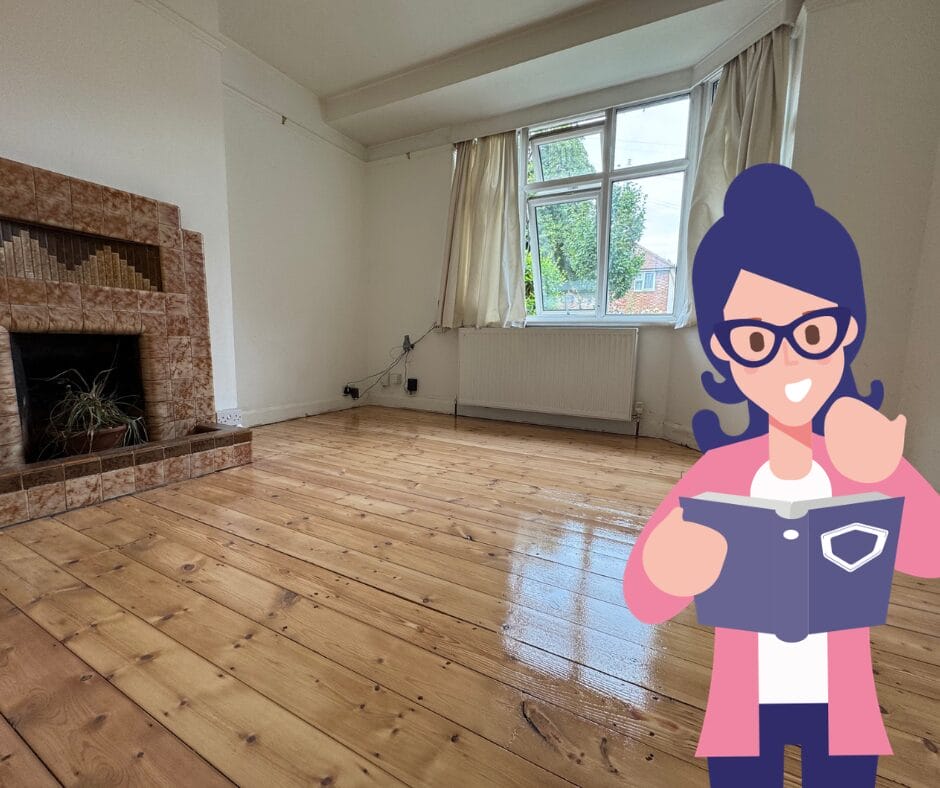
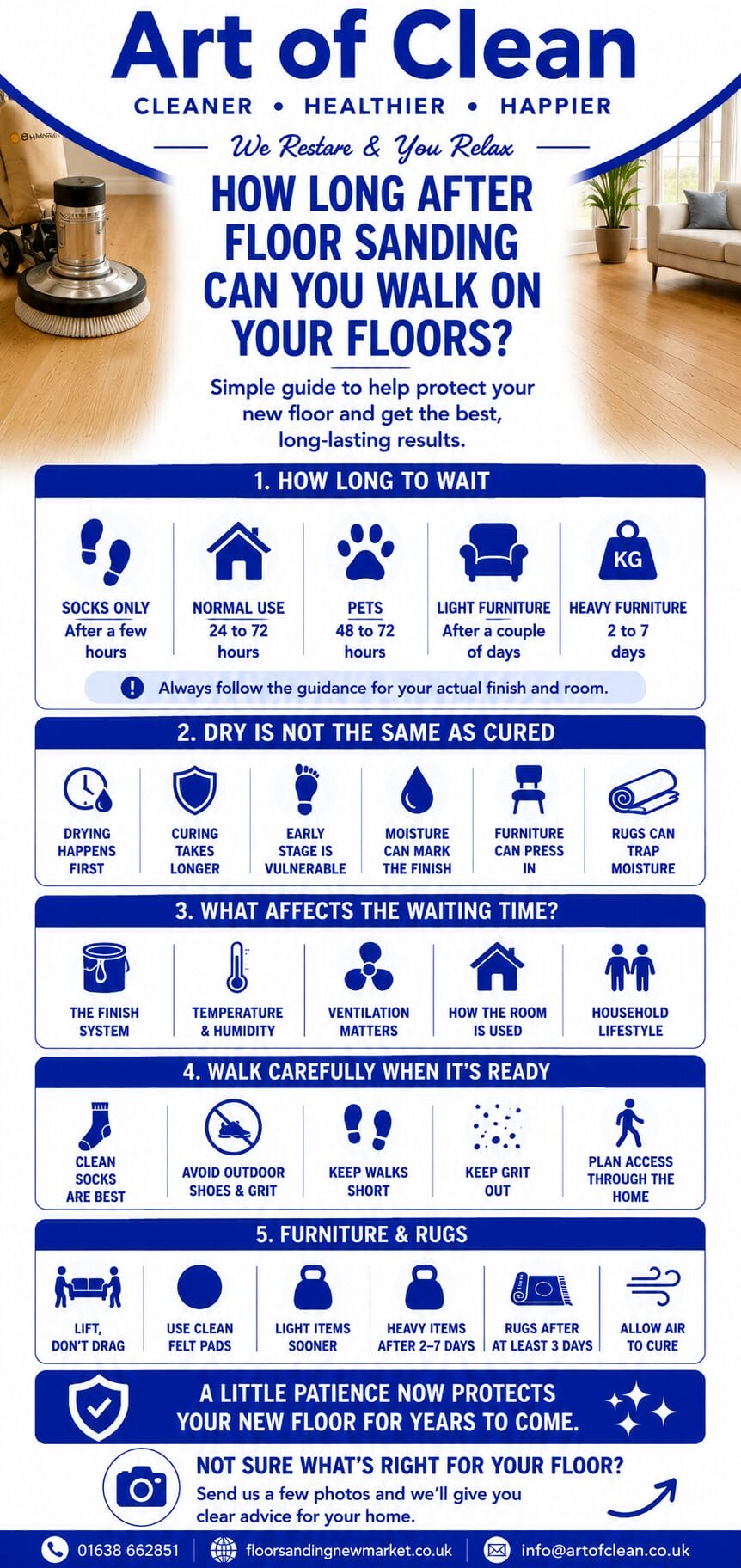
You usually should not walk on a freshly sanded floor straight away. Once the finish has been applied, some floors may allow light sock-only foot traffic after a few hours, but normal use is usually safer after 24 to 72 hours. Heavy furniture, rugs, pets and cleaning often need longer.
That answer can feel frustrating when the room is your hallway, kitchen, sitting room or main route through the house. In many Newmarket homes, floor sanding is not happening in a spare empty room. It is happening in a room people rely on every day.
But the first few days matter. A newly sanded and finished wooden floor may look ready before the finish has fully hardened. If you rush it, you can mark the surface before it has had a fair chance to cure.
The short answer: when can you walk on a sanded floor?
If the floor has only been sanded and is still bare wood, avoid walking on it unless your floor sanding team says it is safe and necessary.
Once the finish is applied, timing depends on the finish system, the room conditions and how the floor will be used.
As a simple guide:
| Stage after floor sanding | What is usually safest |
| Bare sanded wood before finish | Avoid walking on it where possible |
| First light foot traffic | Clean socks only, usually after the finish is ready |
| Normal household walking | Often 24 to 72 hours, depending on the finish |
| Pets | Keep off for 48 to 72 hours where possible |
| Light furniture | Often after a couple of days, if advised |
| Heavy furniture | Often 2 to 7 days, depending on the finish |
| Rugs and mats | Wait longer, often at least 3 days and sometimes more |
| Damp mopping | Avoid until the finish has cured enough for cleaning |
The most important rule is this: follow the finish guidance for your actual floor, not a general answer from the internet.
Different products behave differently. For example, Bona’s guidance for Traffic HD says light foot traffic can be possible after the stated drying period, but it also says carpets or coverings should be kept off the surface for at least 3 days. Pallmann’s guidance for PALL-X 94 also shows that final strength takes longer than the early drying stage.
Dry does not always mean cured.
This is where many people get caught out.
A floor can feel dry underfoot before the finish has reached full strength. Drying is the early stage. Curing is the longer process where the finish hardens properly and becomes more resistant to daily use.
That matters because the risks are different in the first few hours, first few days and first few weeks.
In the early stage, the floor is more vulnerable to:
- Outdoor shoes bringing in grit.
- Furniture legs pressing into the finish.
- Dog claws scratching the surface.
- Rugs trapping moisture or slowing curing.
- Cleaning products affecting the finish too soon.
- Chair legs being dragged before the floor is ready.
This does not mean you need to panic about your new floor. It simply means the first few days should be treated with care.
What changes the waiting time?
There is no single timing that suits every wooden floor in Newmarket. The answer depends on the finish and the room.
- The finish system
A water-based lacquer, oil, hardwax oil or two-part finish may each have different drying and curing instructions. A hallway used by children, pets and visitors may also need a different finish choice from a quiet bedroom.
If you are choosing between finishes, our pages on wood sanding and oiling in Newmarket and wood sanding and lacquer in Newmarket explain the two main routes.
- The room itself
Temperature, ventilation and humidity can all affect drying. A warm, well-ventilated room will usually behave differently from a cold, damp or poorly ventilated space.
This is one reason floor sanding advice should be given for the actual home, not only the product label.
- How the room is used
A spare bedroom is easier to protect than a kitchen, hallway or sitting room. If the room is a main route through the house, it is worth planning how people will move around before the work starts.
For busy homes, it helps to think about access, pets, school runs, deliveries, visitors and where furniture will wait while the floor cures.
How to walk on the floor safely when it is ready
When your floor sanding team says light foot traffic is allowed, keep it gentle.
Clean socks are usually better than bare feet or shoes. Bare feet can leave natural oils on the surface, and shoes can bring in small grit that scratches the fresh finish.
Keep the first few walks short and controlled. Do not use the room normally just because you have been told you can cross it.
Avoid outdoor shoes, slippers with hard soles and anything that could leave grit behind.
When can furniture go back after floor sanding?
Furniture is often more of a risk than walking.
A table, sofa, cabinet or piano can press into a finish that has not hardened enough. Dragging furniture can also scuff or scratch the surface before the room has properly returned to use.
A safer approach is to lift furniture back into place, not drag it. Fit clean felt pads under chair legs, table legs and other contact points before the furniture comes back.
Light furniture may be allowed sooner than heavy furniture, but the timing depends on the finish. As a practical guide, many floors need at least 2 to 7 days before heavier items are returned.
Room preparation also matters before the sanding work begins.
If you are not sure whether you can move furniture yourself, tell the team early. Some furniture is too heavy, fragile, or awkward for one person to move safely.
Planning this before the appointment protects the furniture, the floor, the technician and the schedule.
When can rugs go back on a newly finished wooden floor?
Rugs and mats should not go back too soon.
They can trap moisture, slow curing, mark the finish or leave a visible outline if the surface is still settling. This is especially important with rugs that have rubber backing or underlay.
As a simple rule, wait longer for rugs than you would for light foot traffic. Some product guidance says at least 3 days before covering the surface. Some oil systems may need longer.
If your wooden floor has just been restored and you are unsure, ask before putting rugs back. It is much easier to wait a few extra days than to correct a mark caused by covering the floor too early.
Can pets walk on the floor after sanding?
Not straight away.
Pets do not understand that a floor is still curing. Dogs can bring in grit, slip when excited or scratch the surface with their claws. Cats can do the same in smaller but still noticeable ways.
Keep pets off freshly finished floors for at least 48 to 72 hours where possible. Longer may be needed depending on the finish and your contractor’s advice.
For homes with dogs, it is also worth checking matting at entrances once the floor is back in use. Grit is one of the small everyday causes of scratches on wooden floors, especially near doors and busy routes.
What not to do in the first few days…
The first few days are about restraint. The floor may look finished, but it still needs care.
- Avoid dragging furniture.
- Avoid outdoor shoes.
- Avoid damp mopping.
- Avoid laying rugs too early.
- Avoid letting pets run across the floor.
- Avoid replacing heavy items before the finish is ready.
- Avoid cleaning products unless your floor sanding team has confirmed they are suitable.
If something spills, ask for aftercare advice rather than guessing. Wooden floors and finishes do not all respond the same way.
Why local advice matters for Newmarket homes
A wooden floor in a Newmarket terrace, cottage, townhouse, barn conversion or family home may have a different history from a modern floor in a newer property.
Some floors are solid wood. Some are engineered. Some have been sanded before. Some have old finishes, gaps, stains, pet marks or worn traffic lanes.
That is why good wood floor restoration in Newmarket starts with assessment, not assumptions.
One floor may need sanding and lacquering. Another may suit oiling. Another may need repair before finishing.
An engineered wood floor may need a careful check of the wear layer before sanding is even discussed.
The finish choice should also match the way the room is used. A quiet bedroom, a busy kitchen, a hallway and a home with dogs do not all need the same answer.
A useful way to plan the first week
If your room is important to daily life, plan the first week before the sanding starts.
Before the job: decide where furniture will go, how people will move through the house and whether pets need to be kept away from the room.
On the day of finishing: keep the room clear and follow the technician’s timing. Do not test the floor by touching or walking on it before you have been told it is ready.
After light foot traffic is allowed: use clean socks only and keep traffic low.
Before furniture returns: fit felt pads and lift items into place.
Before rugs return: check the finish guidance and wait longer if unsure.
Before cleaning: ask which cleaner is suitable for the finish. Avoid steam cleaners and wet mopping on wooden floors.
For longer-term care, the wooden floor maintenance service can help keep a finished floor in better condition, especially in busy homes where the floor works hard every day.
So, how long after floor sanding can you walk on your floors?
For light walking, some finished floors may be ready after a few hours, but only if the finish system and room conditions allow it. For normal household use, 24 to 72 hours is a safer guide. For heavy furniture, rugs, pets and cleaning, allow longer.
The safest answer will always come from the finish used on your own floor.
If you are planning floor sanding in Newmarket, ask these questions before the work starts:
- When can we walk on the floor?
- Should we wear socks only at first?
- When can furniture go back?
- When can rugs go back?
- When can pets use the room?
- When can we clean the floor?
- Which cleaner should we use?
A good floor sanding company should be able to talk you through this clearly, without making you feel rushed or silly for asking.
If your wooden floor is scratched, dull, stained or difficult to clean, you can start with a practical assessment. See our floor sanding and restoration services in Newmarket or look through our floor sanding case studies to understand what may be possible.
A freshly finished floor rewards patience. Waiting another day can often protect the result for much longer.