Yes, pet urine stains can often be improved, and in some cases removed completely, but the outcome depends on how long the urine has been left, how deeply it has soaked into the timber, and whether the protective finish has already broken down.
In homes across Newmarket and Suffolk, we regularly see dark patches around dog beds, near doorways, or hidden beneath rugs where accidents were not noticed straight away. Sometimes the stain sits mainly in the finish layer and sands away well. Other times, the moisture has travelled deep into the wood and affected the timber underneath.
If you are worried the floor is permanently ruined, it is worth knowing that many stained floors still restore far better than people expect.
Key takeaways
- Pet urine can stain wood floors surprisingly deeply, especially oak flooring.
- Fresh stains are usually easier to restore than older damage.
- Professional sanding often improves pet stains significantly.
- Deep staining may require repairs or board replacement.
- Odours sometimes remain trapped beneath the surface if not treated properly.
- DIY methods can easily make wood floor staining worse.
Why pet urine stains wood flooring so badly
Pet urine does more than leave a surface mark.
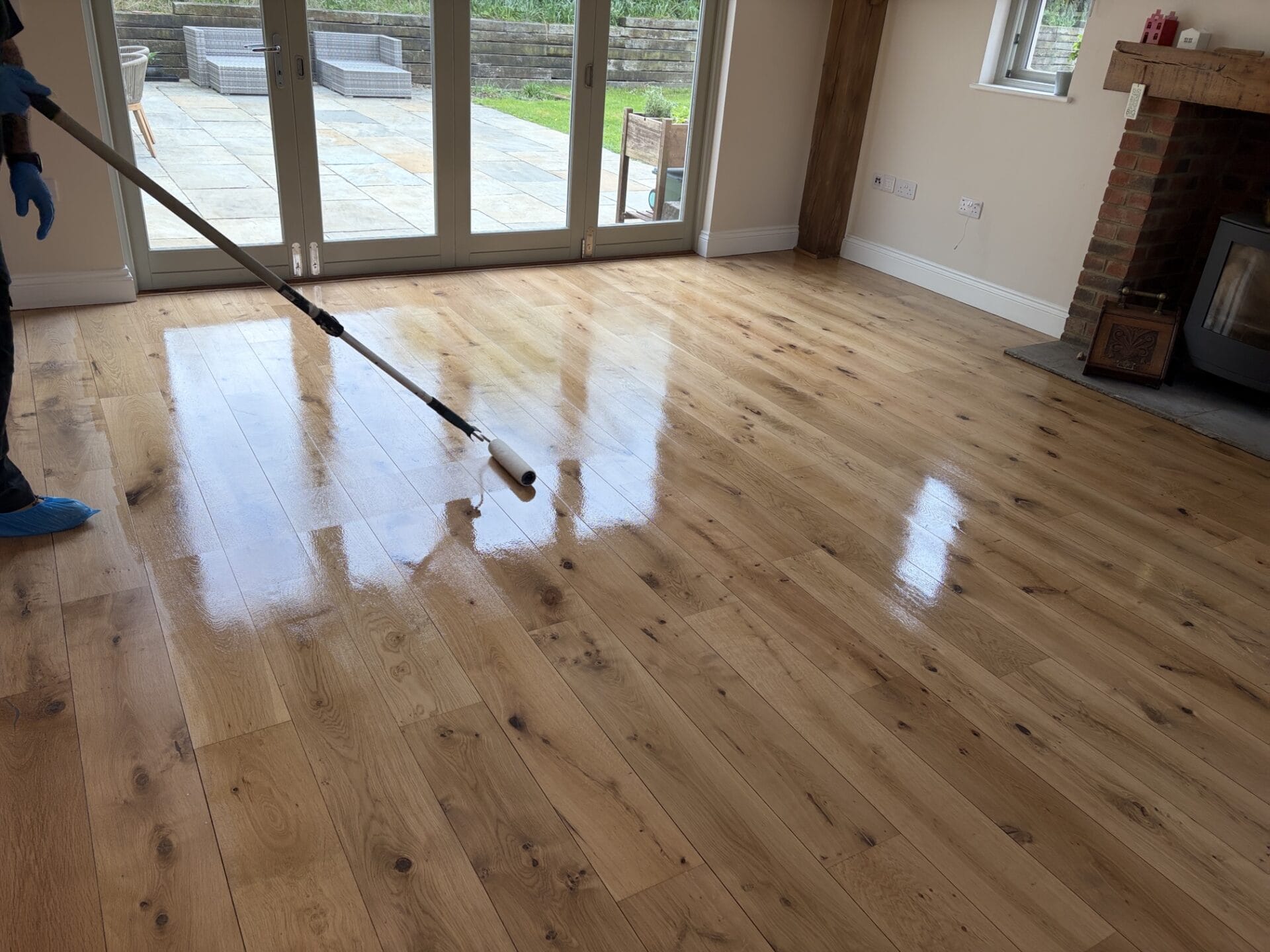
Once moisture gets through worn lacquer or oil protection, it soaks into the grain of the wood. On oak flooring, especially, the ammonia and moisture react with the natural tannins inside the timber, creating dark black staining that can spread surprisingly deep.
The longer it sits, the more damage it tends to cause.
That is why older pet stains often look darker around the edges or develop uneven patches where the wood fibres have already started breaking down underneath.
Some pet stains are easier to restore than others.
Usually, in homes like yours, the biggest difference is whether the stain is recent or years old.
Fresh accidents that are cleaned quickly may leave little or no lasting damage. Older stains are more likely to have penetrated deep into the timber and between floorboards.
We often see three levels of staining:
Surface-level staining
This usually affects the finish rather than the timber itself.
The floor may look dull or cloudy, but professional sanding often restores it well.
Mid-level staining
The urine has penetrated into the top layers of timber.
These stains may lighten significantly during sanding, but still need specialist stain treatment or colour blending afterwards.
Deep staining and odour damage
This is where moisture has soaked deeply into the wood and sometimes the subfloor beneath.
In more severe cases, individual boards may need replacing before the floor is refinished properly.
The smell can remain even when the stain fades.
One of the more frustrating parts of pet urine damage is that odours sometimes remain trapped inside the timber long after the visible stain improves.
Warm weather, underfloor heating, or damp conditions can make lingering smells more noticeable again later.
That is why proper restoration is not just about sanding the surface. The affected area needs to be assessed carefully so that deeper contamination is not simply sealed underneath a new finish.
Can sanding remove pet urine stains?
Professional sanding often improves pet stains dramatically, but complete removal depends on how deep the contamination goes.
The sanding process removes the old finish and the upper layer of timber where much of the staining sits. If dark patches remain afterwards, additional restoration work may be needed.
This can include:
- targeted stain treatments
- localised bleaching
- replacing damaged boards
- odour treatment
- colour blending before refinishing
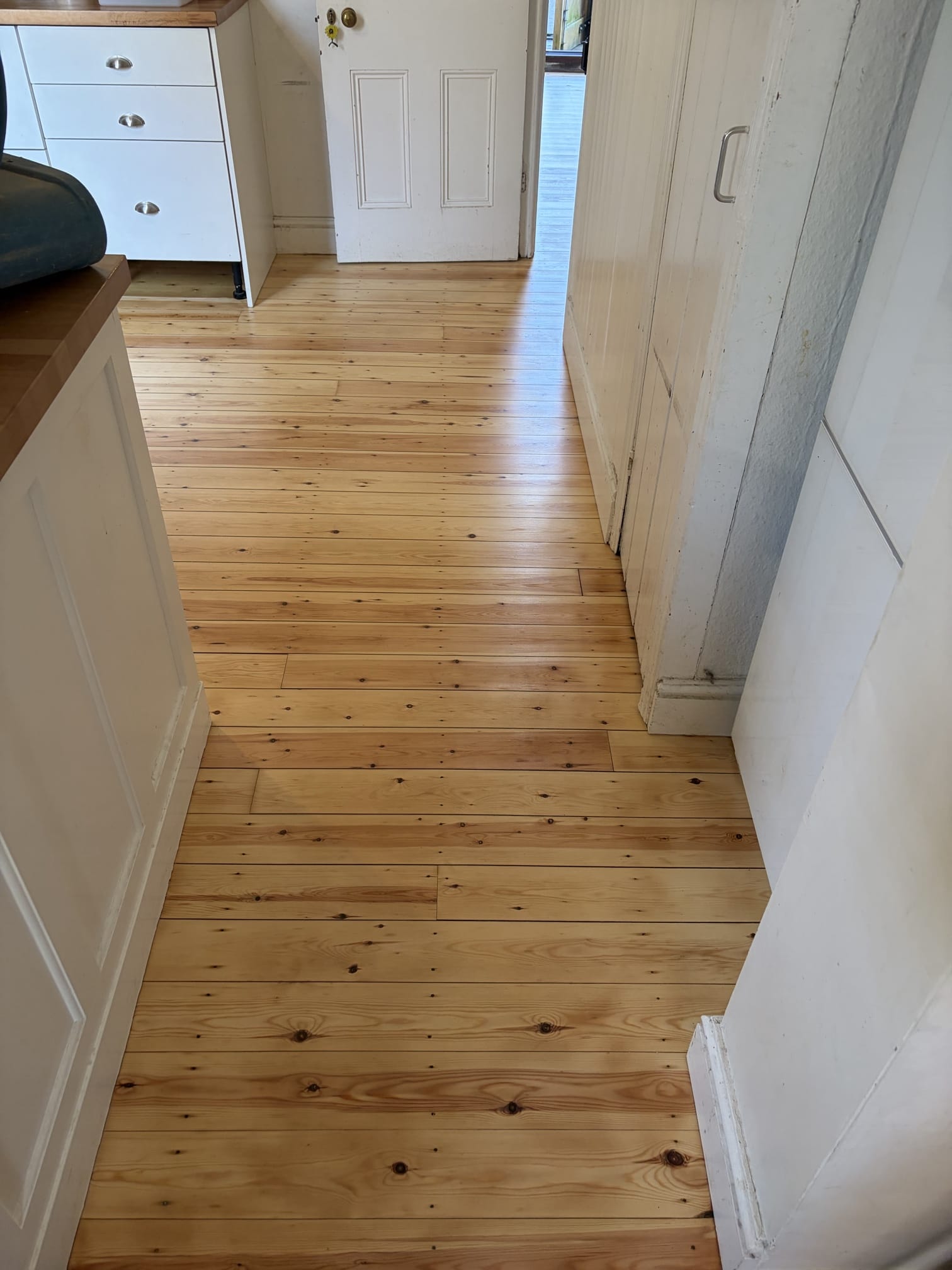
The aim is not creating a floor that looks artificially perfect. It is restoring the room so it feels clean, balanced and comfortable again.
Why DIY pet stain removal often backfires
People naturally want to fix the problem quickly.
Online advice often suggests vinegar, hydrogen peroxide, steam cleaning, baking soda, or supermarket stain removers. The problem is that wood flooring reacts unpredictably to aggressive treatments.
Over-wetting the timber can push the contamination deeper. Harsh chemicals can bleach areas unevenly. Scrubbing may roughen the grain or damage the finish further.
In older Newmarket properties with oak or parquet flooring, we regularly see DIY attempts that have left larger pale patches or uneven repairs that are harder to blend afterwards.
A calm assessment first usually saves far more stress later.
What happens during professional pet stain restoration?
The safest next step is understanding how deep the damage actually goes.
A professional restoration process normally includes careful inspection, moisture checks, sanding, stain treatment where appropriate, and refinishing the floor evenly across the room.
If boards are too heavily affected, they can sometimes be replaced and blended naturally into the surrounding floor.
For busy families, especially, restoring the existing floor is often far less disruptive than full replacement.
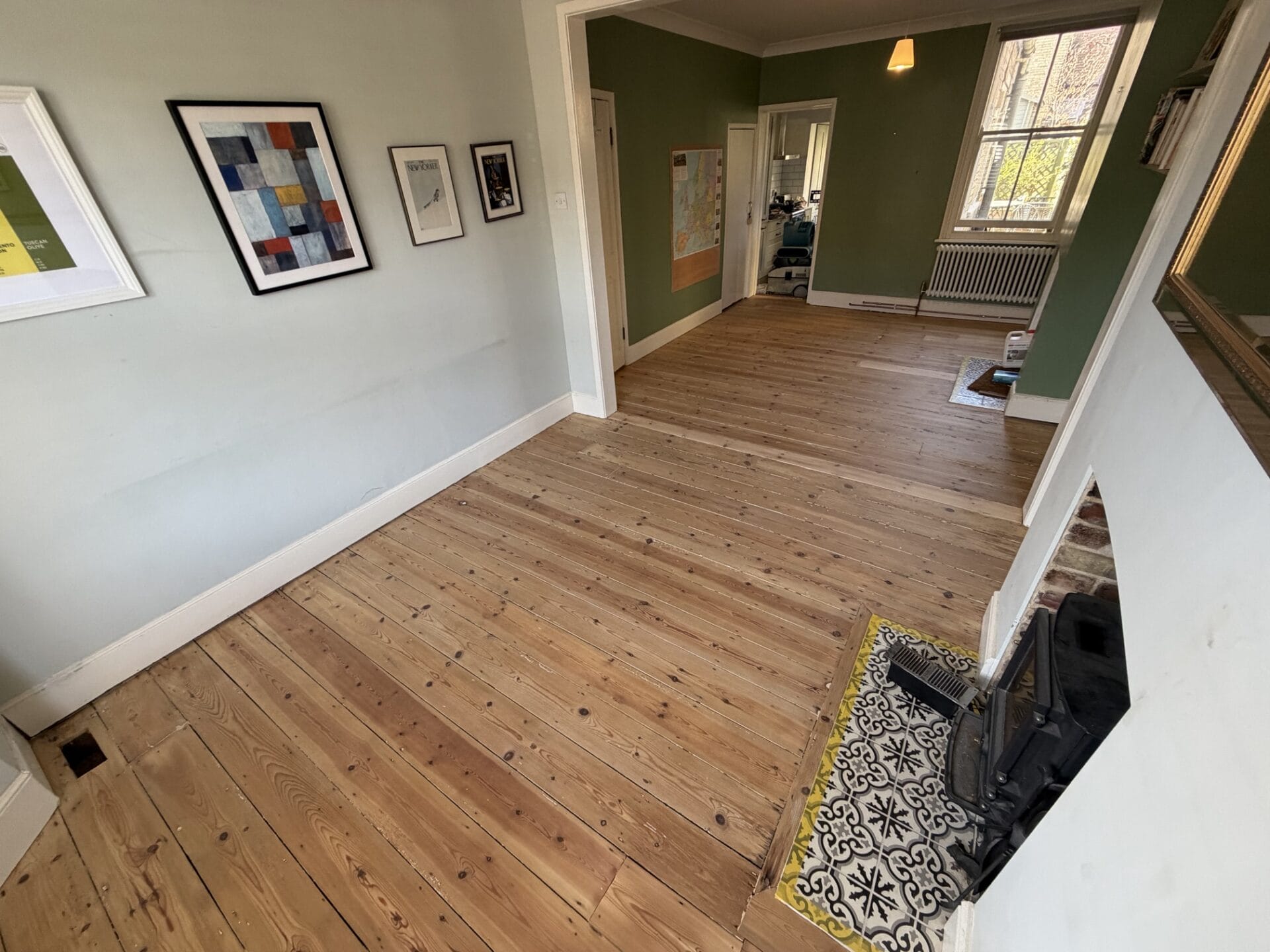
Older wood floors can still come back beautifully.
Many homeowners assume pet damage means the floor has reached the end of its life.
Often, that is not true.
Once old finishes, scratches and staining are removed properly, the natural warmth of the timber starts coming back through again. Rooms feel fresher, calmer and cleaner without losing the original character of the home.
Even where some faint shadowing remains, the finished result is usually a huge improvement over the original damage.
If you are comparing restoration options
If you are speaking to floor sanding companies around Newmarket, compare like-for-like before deciding.
Ask whether stain treatment is included, how odour issues are assessed, whether repairs are possible if sanding alone is not enough, and what finish is recommended for homes with pets moving forward.
A careful explanation is usually a good sign. Good restoration work is thoughtful work.
FAQs
Can black pet stains be removed from oak floors?
Sometimes yes. Surface-level stains often sand out well, while deeper black staining may need specialist treatment or local board replacement.
Will pet urine smell disappear after sanding?
Often yes, but not always completely, if the contamination has soaked deep into the timber or subfloor underneath.
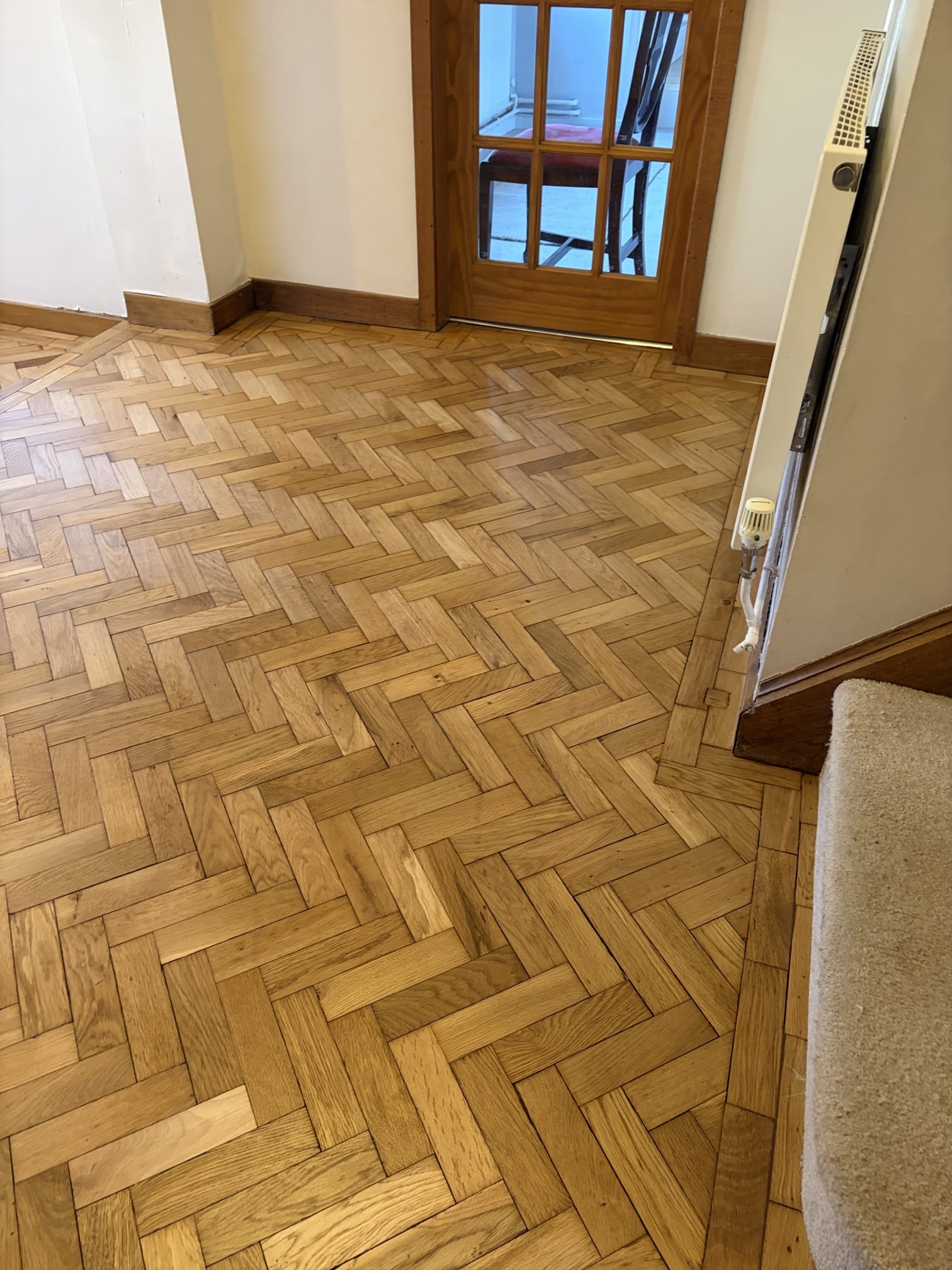
Can parquet flooring be restored after pet damage?
Yes. Parquet flooring can often be restored successfully, although the process may involve more careful sanding and localised repairs.
Is it worth restoring a stained wood floor?
In many cases, yes. Restoration is usually far more cost-effective than replacing the entire floor, especially if the timber itself is still structurally sound.
What finish is best for homes with pets?
That depends on the type of flooring and lifestyle, but durable modern lacquers and hardwax oils both offer good protection when maintained properly.
How quickly should pet stains be treated?
As quickly as possible. The longer moisture sits in the timber, the deeper the staining and odour problems tend to become.
If you are unsure whether your floor can be restored, we are happy to explain the options calmly and honestly before any work begins.