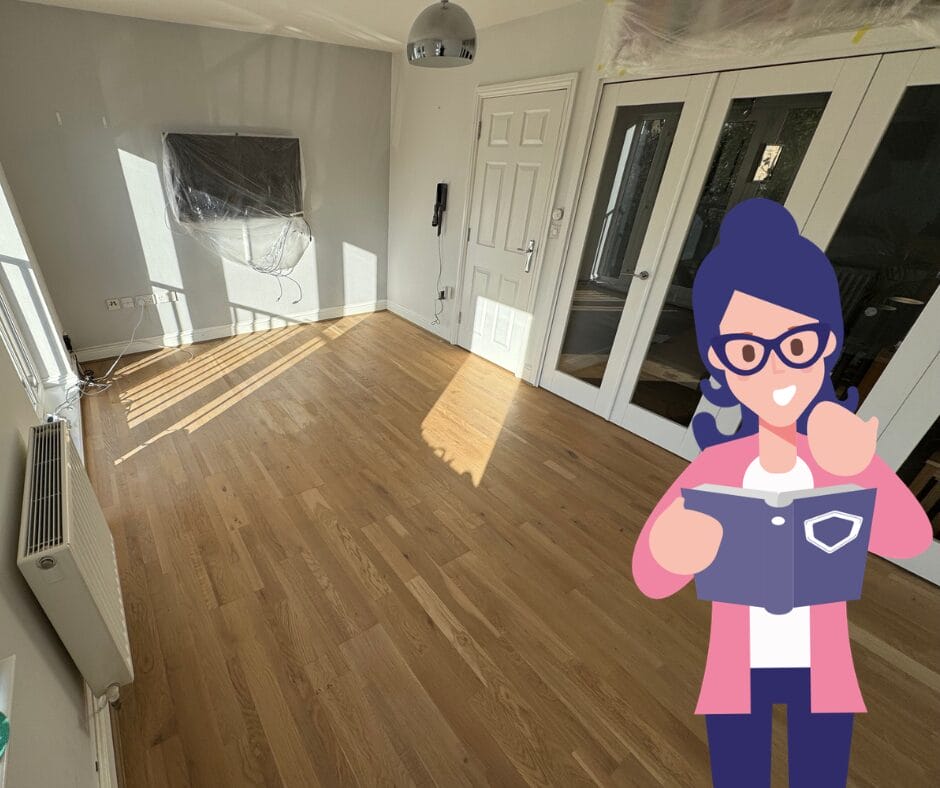
Is wood floor sanding as dusty as people think?… no, but wood floor sanding does create dust. There is no honest way around that. Sanding removes old finish, marks, scratches, and a fine layer of timber, so some dust is part of the process.
What has changed is how that dust is controlled.
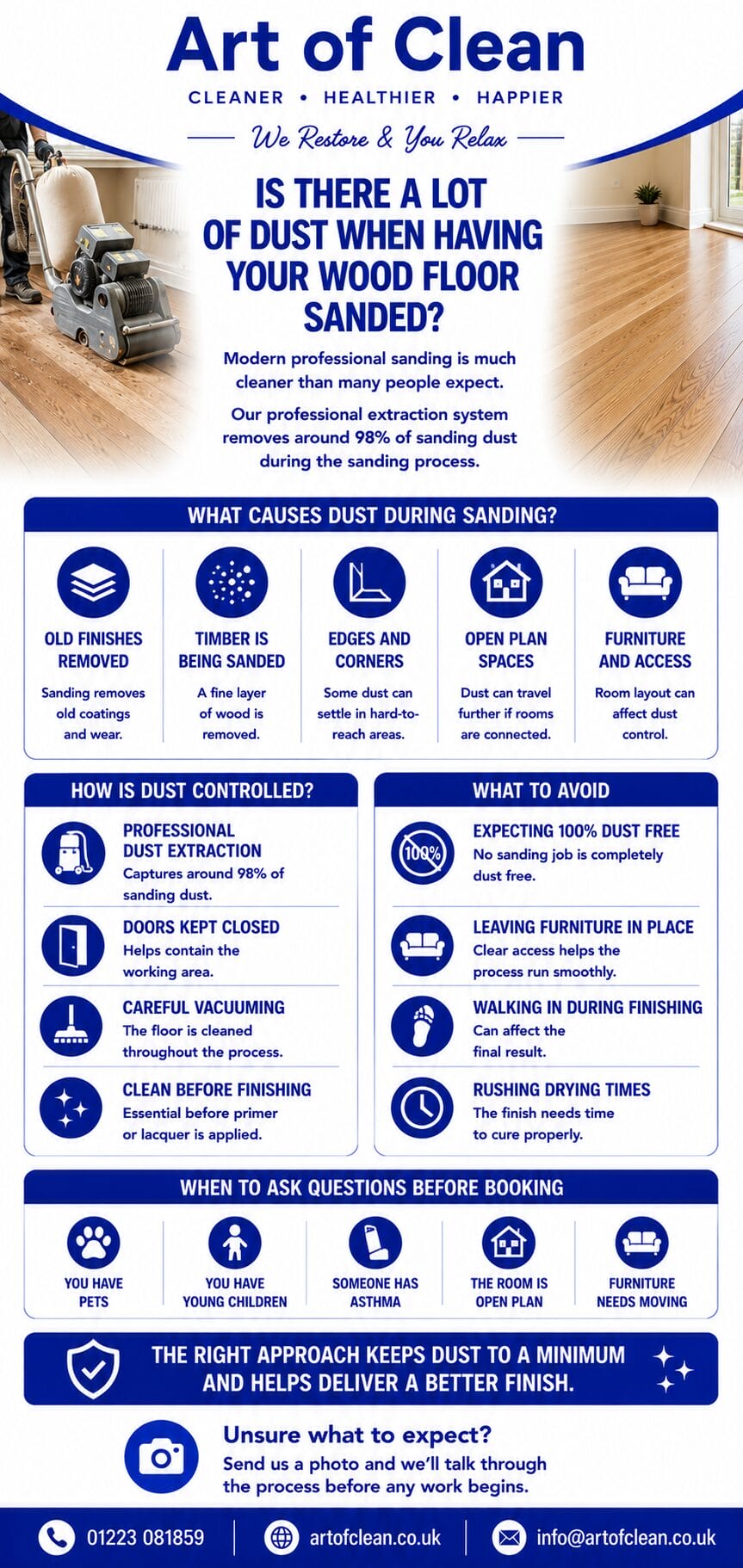
Modern professional sanding is much cleaner than many people expect. At Art of Clean, we use a professional dust extraction system that removes around 98% of the sanding dust as the work is being carried out. That makes a huge difference to the amount of dust left in the room and how far it is likely to travel through the home.
We would not call it 100% dust-free, because that would not be true. There may still be a small amount of fine dust. But the old image of clouds of dust spreading through the whole house is not what most clients should expect from a properly managed professional sanding job.
Why clients worry about dust
When people ask us about dust, they are not usually asking a simple cleaning question. They are thinking about the whole home.
They want to know whether dust will get into other rooms. They worry about furniture, curtains, children, pets and anyone in the home with asthma or breathing concerns.
They may also worry that they will be left with days of cleaning once the floor has been sanded.
These are sensible questions.
A wood floor is part of a lived-in home. It might be a lounge, hallway, kitchen, bedroom or open-plan space that the family uses every day. If the work is not explained properly, it can feel like a big disruption.
That is why we prefer to talk through dust control, furniture, access, drying times and aftercare at the quote stage. The more clearly those things are explained before the work starts, the easier it is for the client to feel prepared.
What we tell clients from real Art of Clean experience
The honest answer is this: there will be minimal dust, but we can’t guarantee no dust at all.
Our professional extraction system removes around 98% of the dust created during sanding. We also manage the room carefully while work is taking place. Where suitable, we open a window. We keep doors closed to help contain the working area. We vacuum carefully during the process because the floor needs to be clean before any finish is applied.
This is an important point. Dust control is not only about keeping the home tidy. It is part of achieving a good finish.
If fine dust is left on the floor before primer, lacquer or oil is applied, it can affect the quality of your finished surface. So the team has a practical reason to keep the floor as clean as possible throughout the work.
How dust is controlled during sanding
Professional sanding is not just a case of turning up with a machine and sanding the floor. The working area needs to be managed properly.
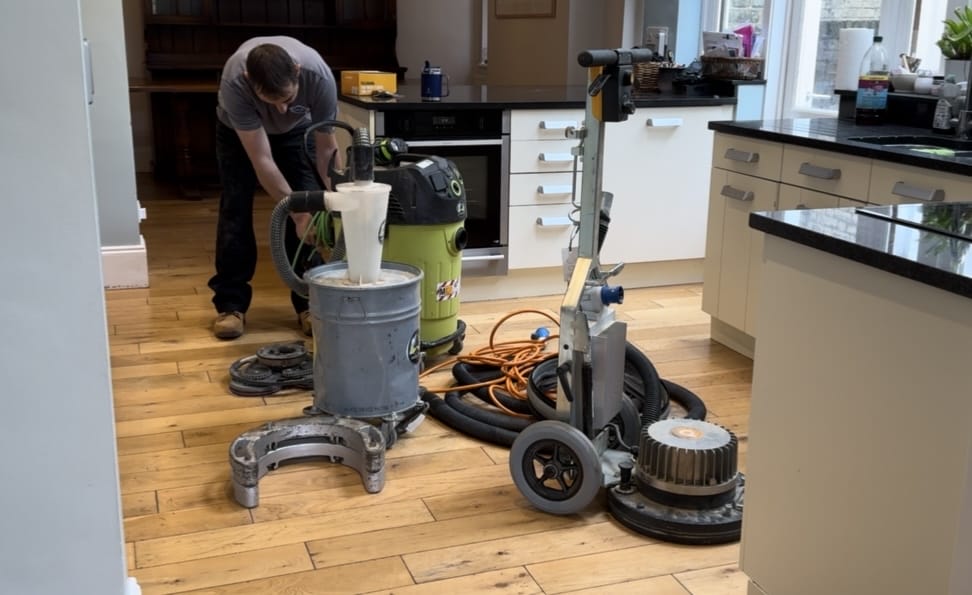
Where possible, the team will use airflow sensibly, often by opening a window in the room being worked on. Doors are kept closed so the dust is contained as much as possible within that room. The sanding machinery is connected to dust extraction, which captures the vast majority of sanding dust as it is produced.
Even with this extraction system, the team still vacuums during the process. This is because fine dust can settle on the surface, edges and corners. Before the finish goes down, the floor needs to be properly cleaned.
This is especially important when using finishes such as primer and lacquer. The finish needs a clean surface, and once coating begins, the room needs to be protected while each stage dries.
Will dust get into other rooms?
A small amount of fine dust may still move, especially in busy homes, open-plan spaces or rooms with unavoidable gaps. But the aim is always to keep it to a minimum.
Keeping doors closed makes a real difference. So does working with proper extraction rather than relying on sanding alone. If the room can be closed off, that usually helps contain the work much better.
If you are especially concerned about a nearby room, a child’s bedroom, pets, asthma or delicate items, mention this during the quote. It gives the team the chance to talk through the layout of the home and what is realistic.
We would rather know about these worries early. It means we can explain the process properly and help you prepare in a way that suits your home.
Will I need to clean afterwards?
You may want to do a light clean afterwards, but you should not be left with a major dust clean-up.
The room itself needs to be cleaned as part of the sanding and finishing process. Before any finish is applied, the floor must be hoovered and prepared properly. That means the team is already working towards a clean surface before the final coating stages begin.
There may still be a small amount of fine dust in nearby areas, especially if the room is connected to the rest of the home or if people need to move through the house during the work. A light wipe over surfaces or a careful hoover may be sensible afterwards.
But with modern sanding equipment and proper extraction, the cleaning afterwards is usually much less than many people fear.
What about children, pets and asthma?
This is one of the reasons dust questions matter.
If there are young children, pets or someone in the home with asthma, it is worth raising this before the work is booked. We cannot give medical advice, and we would never promise that sanding creates no dust at all. What we can do is explain how we reduce dust, how the room is managed and what you may want to consider while work is taking place.
In many homes, the sensible approach is to keep children and pets away from the room while sanding and finishing are happening. The room should also stay closed during drying stages, especially where primer, lacquer or another finish has been applied.
The best guidance will depend on the room, the finish, the layout of the home and the timing of the work. This is another reason a proper quote is helpful. It gives the team chance to talk through the practical details before the job starts.
Why the floor has to be clean before the finish goes down
This is something many clients do not realise.
The sanding stage prepares the floor, but the finish is what protects it and gives it the final look and feel. If dust is left behind before the finish is applied, it can interfere with the result.
That is why hoovering and cleaning the floor during the process matters so much. It is not an optional tidy-up at the end. It is part of the job.
If a primer is being used before lacquer, that primer needs time to dry. The lacquer then needs to be applied in coats, and those coats also need drying time. Depending on the size of the room, some stages may be completed on the same day, but the floor still needs to be left alone during the correct drying periods.
This is where dust control and patience meet. A clean surface and proper drying time both help protect the finish.
Should the room be empty before sanding?
Ideally, yes. For wood floor sanding, the room should be as empty as possible.
This gives the team clear access to the floor and helps the work run properly. It also reduces the risk of furniture getting in the way or needing to be moved repeatedly during the job.
If you need Art of Clean to help move furniture, this should be discussed during the quote. In some cases, moving furniture may require an extra technician. It depends on how much there is, what type of furniture it is and how the room is set up.
It is always better to discuss this before the booking rather than on the day. That way, everyone knows what is included, what needs to be moved and how the room should be prepared.
What happens after sanding?
Once the floor has been sanded and cleaned, the finishing process begins.
The exact process depends on the finish being used. If lacquer is chosen, there may be a primer followed by coats of lacquer. Normally, lacquer systems need more than one coat. Each stage needs time to dry before the next stage or before the floor can be used again.
During these drying stages, the room should usually stay closed. People should keep off the floor until the team advises it is safe. Light foot traffic may be possible after a certain period, but this should always follow the guidance given for that job and finish.
It can be tempting to step in and look at the floor straight away, especially when it has started to look fresh again. But the finish needs time. Walking on it too early can affect the result.
A typical client concern
Some clients worry about dust because they have pets, children or breathing concerns in the home. That is completely understandable. A freshly sanded floor is exciting, but no one wants the rest of the house left dusty afterwards.
A recent client with pets was concerned about dust before the work. After the floor had been sanded and finished, they left a short but useful review:
“Cracking job, no dust, no mess and beautiful finish.”
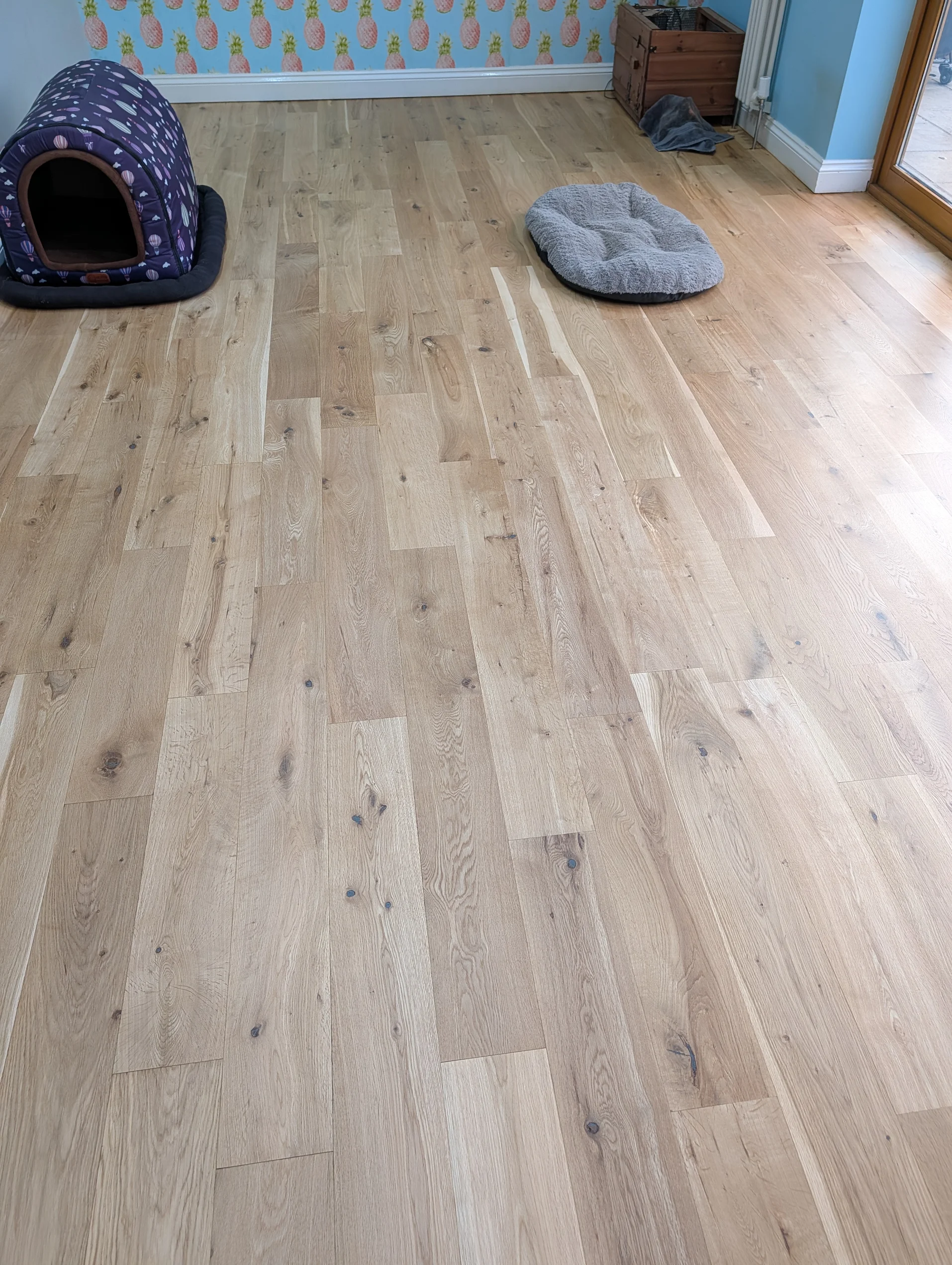
We would still avoid calling any sanding job 100% dust-free. Wood sanding naturally creates dust. What matters is how well that dust is controlled.
With professional extraction, doors kept closed where possible and careful hoovering before the finish goes down, modern sanding is much cleaner than many people imagine.
Questions to ask before booking wood floor sanding
If dust is one of your main concerns, it is worth asking a few questions during the quote.
Useful questions include:
- How will dust be extracted during sanding?
- Will the room be closed off while the work is happening?
- Does the room need to be empty?
- Can furniture moving be included if needed?
- How long will the finish need to dry?
- When can we walk on the floor again?
- Is there anything we should do before or after the work?
A good quote should give you practical answers, not vague reassurance. You should understand what will happen, what you need to prepare and what the limits are.
Why a quote matters
Wood floor sanding is not one-size-fits-all.
The amount of preparation, sanding, cleaning, finishing and drying time can depend on the size of the room, the condition of the floor, the type of finish, the furniture situation and how the home is used.
A quote gives the team chance to look at the floor and talk through the full process. It also gives you a chance to let the team know about any concerns before the work is booked.
This is especially useful if dust is a worry. The team can explain how they manage it, what they can control and what you may still need to expect. That honest conversation is much more helpful than a simple promise of “no dust”.
So, is there a lot of dust when having your wood floor sanded?
With professional equipment and proper dust extraction, there should not be a lot of dust.
There will be some dust, because sanding wood naturally creates it. But with a professional extraction system removing around 98% of sanding dust, doors kept closed where possible, sensible airflow and careful hoovering before finishing, the process is much cleaner than many people imagine.
The honest answer is not “no dust at all”. The honest answer is “minimal dust, carefully managed”.
If you are thinking about having your wood floor sanded and dust is one of your worries, the best next step is to book a quote. The Art of Clean team can look at the room, explain how the work would be managed, talk through furniture and drying time, and help you understand what to expect before you decide.