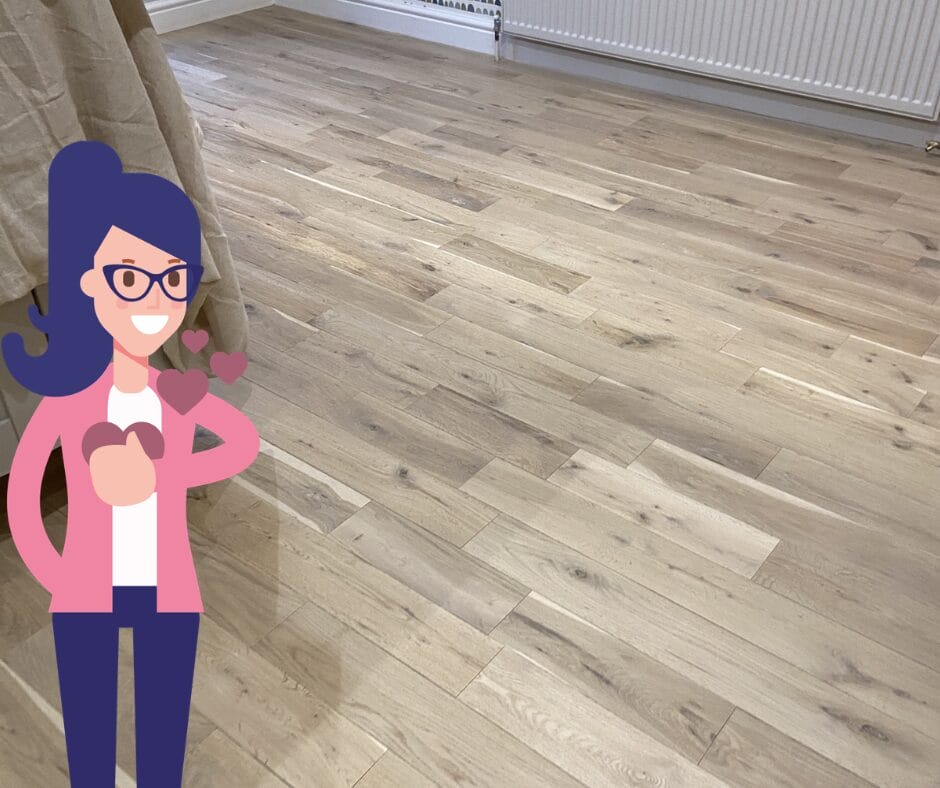
Engineered wood flooring is popular for a good reason. It gives you the look and feel of real wood, but with a layered construction that can be more stable than solid timber in many modern homes.
The question most people ask when it starts to look tired is simple:
Can my engineered wood floor be sanded, restored or repaired, or does it need replacing?
The honest answer is: sometimes it can be restored beautifully, sometimes it should only be lightly refreshed, and sometimes sanding would do more harm than good.
That is the part worth understanding before you spend money.
If you live in or around Newmarket and your engineered wood floor has scratches, dull patches, worn walkways, water marks or tired lacquer, this guide will help you understand what is possible, what is risky and what to ask before anyone starts sanding.
What is engineered wood flooring?
Engineered wood is not laminate. It has a real wood surface layer on top, usually oak, walnut or another timber, bonded to a layered core underneath.
That top layer is called the wear layer or veneer. It is the only part that can be sanded.
With solid wood flooring, there is usually more timber to work with. With engineered wood flooring, the available sanding depth is limited. That is why a careful assessment matters before any machine touches the floor.
The benefit for you is simple: knowing the difference can save you from paying for the wrong service or from damaging a floor that could have been protected with a lighter treatment.
Can engineered wood floors be sanded?
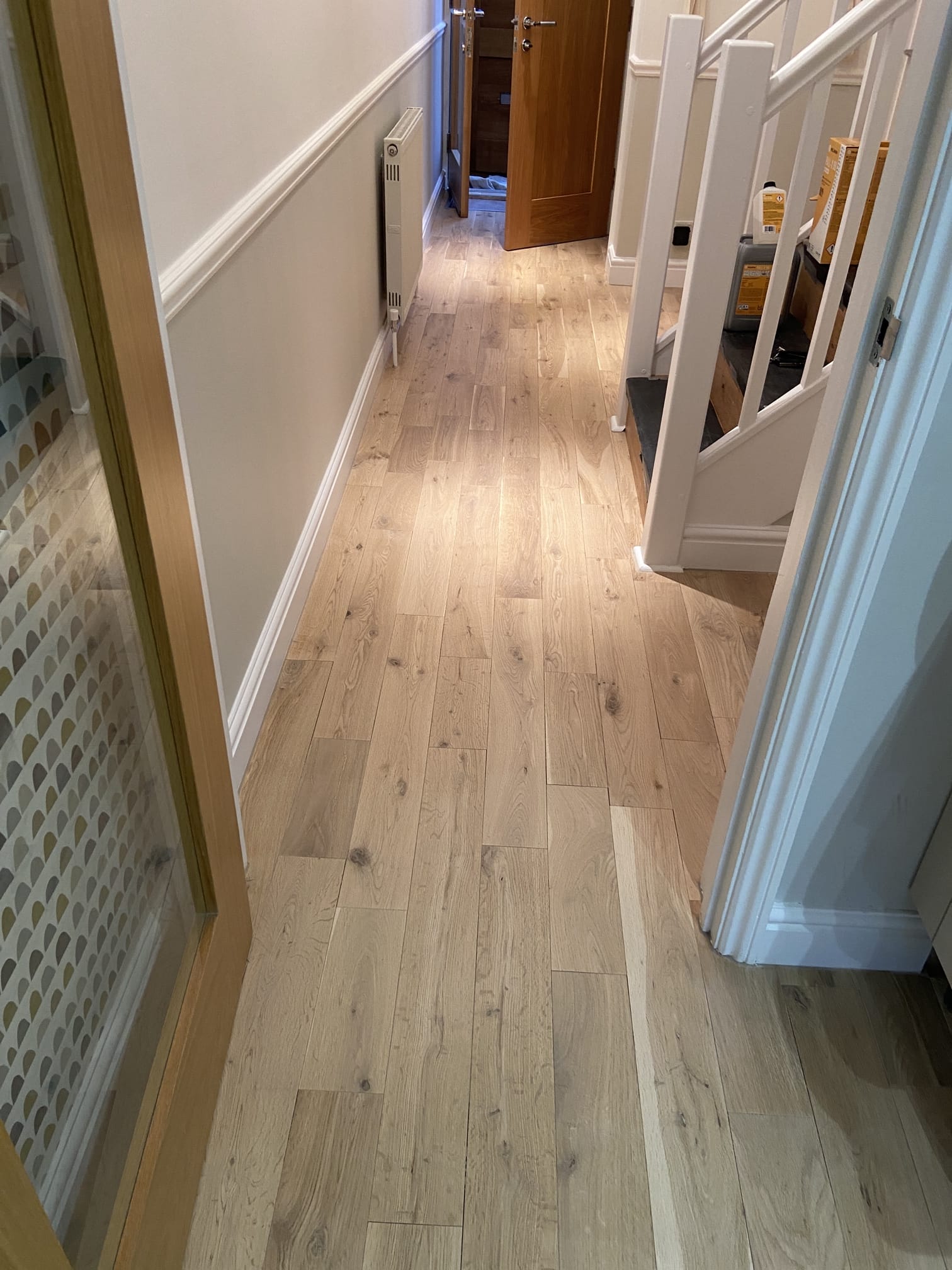
Yes, some engineered wood floors can be sanded, but not all of them.
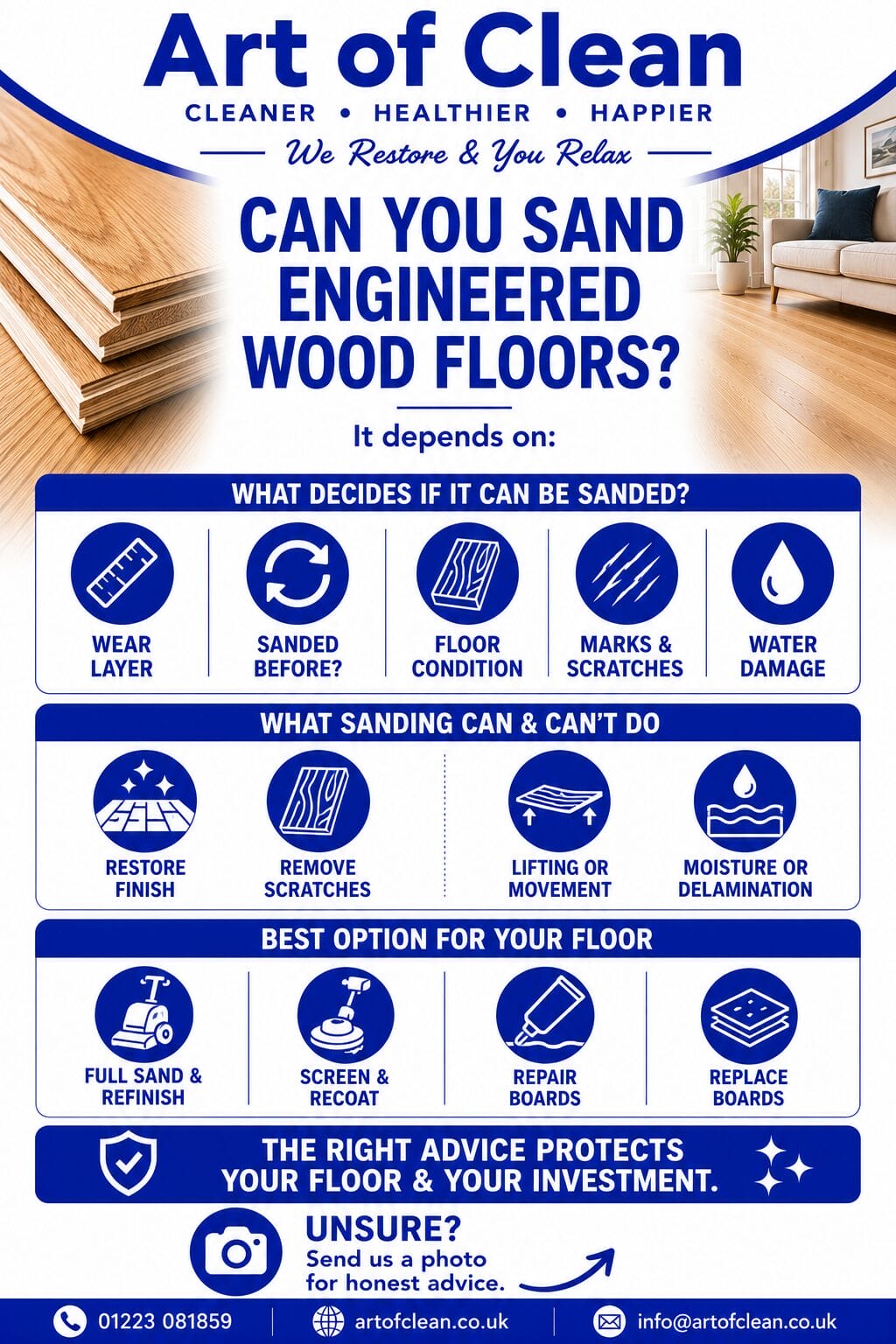
The main deciding factors are:
- the thickness of the wood wear layer
- whether the floor has been sanded before
- the condition of the boards
- whether the floor is glued, nailed or floating
- How deep the scratches or marks are
- whether there is water damage, movement or delamination
A good floor sanding specialist should not simply say “yes” without checking. The right first step is to assess the floor, look for exposed edges where possible, and decide whether a full sand, light abrasion and recoat, repair or replacement makes sense.
For floors that are suitable for full sanding and refinishing, our wood floor restoration service explains how tired wooden floors can be assessed, prepared and finished properly.
The wear layer is the important bit.
The wear layer is the real wood surface on top of an engineered board. Once that layer is sanded through, you reach the core below. That damage is usually permanent and very difficult to disguise.
Here is a practical guide.
| Wear layer | What may be possible | What to be careful about |
| Under 2 mm | Usually not suitable for full sanding | High risk of sanding through the veneer |
| Around 2 to 3 mm | Light sanding or screen and recoat may be possible | Needs careful assessment and a test area |
| Around 3 to 4 mm | Often suitable for one careful refinish | Previous sanding and deep marks still matter |
| 4 mm plus | More restoration options may be available | Still needs controlled sanding, not aggressive cutting |
| Unknown thickness | Do not guess | Ask for an inspection before deciding |
The safest rule: if you do not know the wear layer, do not book a full sanding job until it has been checked.
What can sanding do for engineered wood floors?
When the floor is suitable, sanding and refinishing can make a big difference.
It may help with:
- dull, tired or patchy lacquer
- light to moderate scratches
- worn walkways through kitchens, hallways and open-plan spaces
- surface marks from furniture movement
- old finish that has lost its protection
- a floor that needs a new oil or lacquer finish
- some colour changes, where the timber and condition allow it
For many homes, especially busy family homes around Newmarket, Cambridge, Ely and surrounding villages, the goal is not to make the floor look brand new at any cost. The goal is to make a sensible improvement that protects the floor and suits how the room is used.
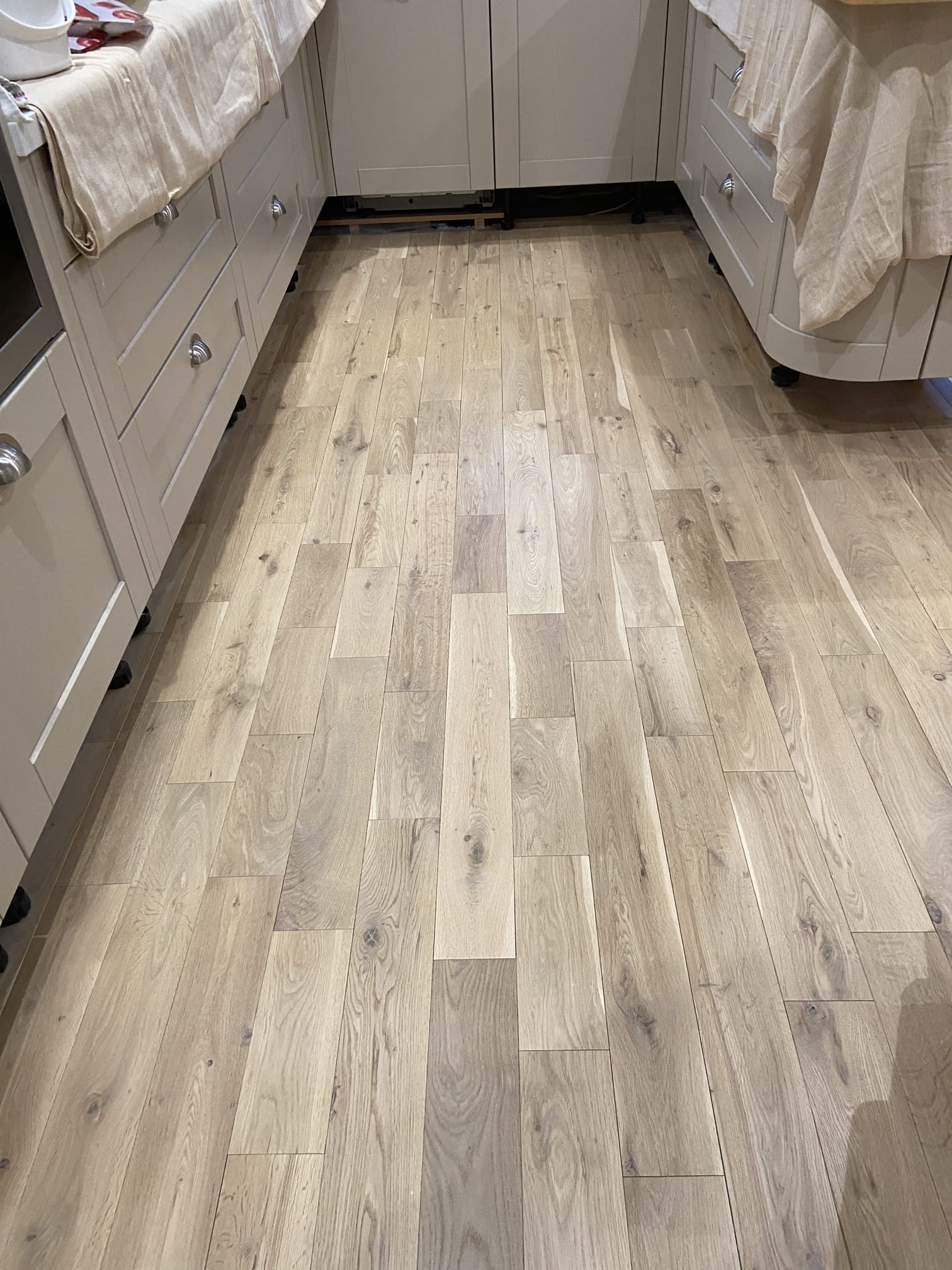
What does sanding not do?
This is where homeowners get the most value from honest advice.
Sanding cannot safely fix every engineered wood problem.
It may not solve:
- a very thin veneer
- boards that are lifting, bouncing or moving
- swelling from leaks or long-term moisture
- delamination, where layers are separating
- deep dents that go through the top layer
- black water stains that have penetrated too far
- damage caused by harsh cleaning products
- a floor that has already been sanded too aggressively
- colour differences caused by sunlight, rugs or furniture over many years
If the real issue is movement, moisture or a failing board, sanding the surface will not fix the cause. In those cases, repair or replacement of affected boards may be the better route.
The benefit for you: you avoid paying for a beautiful finish on top of a problem that will come back.
Full sanding is not always the best answer.
A lot of engineered wood floors do not need a full sand. They need a refresh of the protective finish.
This is often called screen and recoat, light abrasion and recoat, or buff and recoat.
It works by lightly abrading the existing finish so a new coat can bond to it. It removes far less material than full sanding, which can be useful when the wear layer is thin or the floor mainly looks dull rather than damaged.
This may be a better option if:
- The timber itself is sound.
- Scratches are mostly in the finish.
- The colour does not need changing.
- The floor is worn but not deeply damaged.
- You want less disruption than a full restoration.
- The engineered boards have limited sanding depth.
If your floor mainly looks dull but is still sound, our maintenance service may be a better starting point than full sanding. It can help protect a floor without removing more wood than necessary.
Oiled or lacquered engineered wood: why it matters
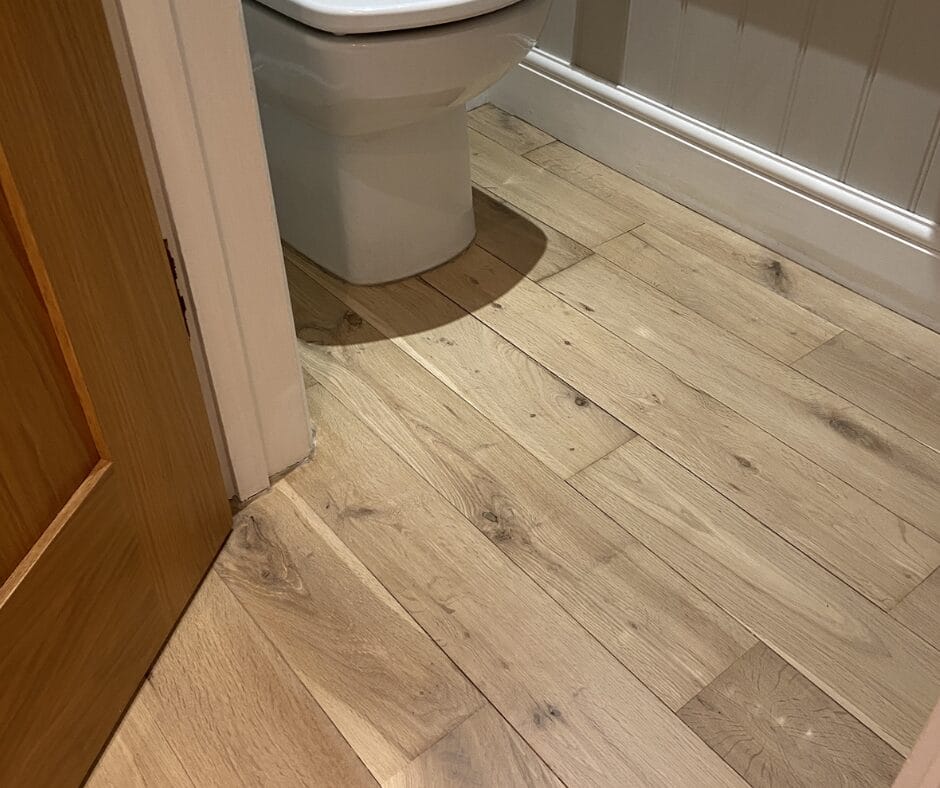
The finish on your engineered wood floor affects what can be done next.
Lacquered floors have a protective coating sitting on the surface. When they wear, you may see dull patches, scratches or areas where the coating has thinned.
Oiled floors usually have a more natural look and may be easier to maintain in local areas, depending on the product used and how the floor has been looked after.
If your engineered wood floor is suitable for sanding, the next decision is often the finish. Some homes suit a more natural oiled finish, especially where future maintenance is important. Others may suit a lacquered finish for a practical surface coating in busy rooms.
You can read more about those options on our wood sanding and oiling and wood sanding and lacquer pages.
If you are unsure whether your floor is oiled or lacquered, do not guess. Using the wrong cleaning or finishing product can cause adhesion problems, patchiness or extra preparation work.
What about deep scratches and dents?
A common worry is whether scratches can be removed.
Light surface scratches may improve with a recoat. Deeper scratches may need sanding, but only if there is enough wear layer to remove the damage safely.
Dents are different. A dent is compressed wood. If the dent is shallow, it may soften visually after restoration. If it is deep, sanding enough timber away to remove it could be risky on an engineered floor.
This is where good advice matters. The question is not “can we sand until it disappears?” The better question is:
How much can we improve this without shortening the life of the floor unnecessarily?
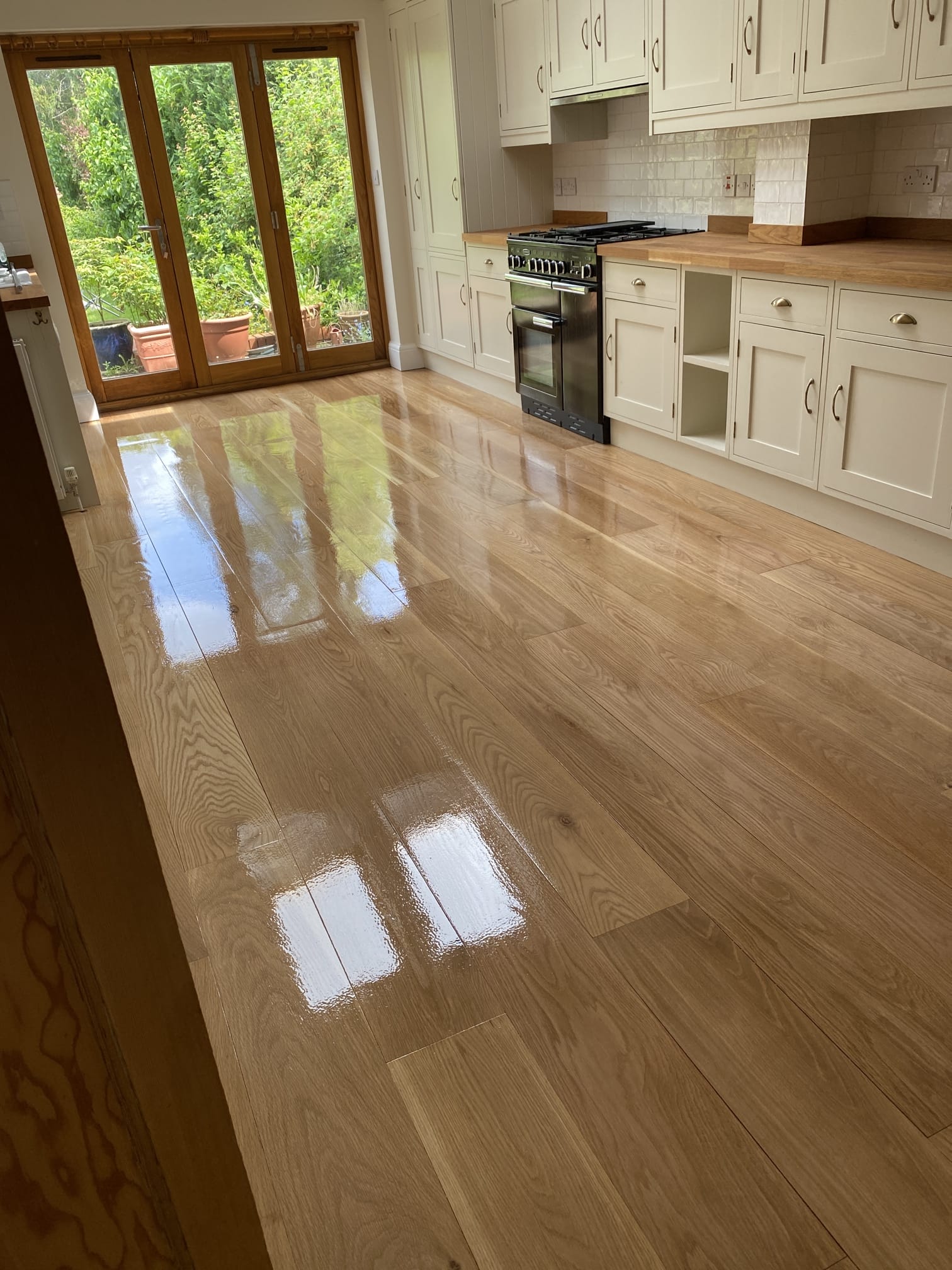
Can you change the colour of your engineered wood flooring?
Sometimes, yes.
If the floor has enough real wood on top and can be fully sanded back evenly, a colour change may be possible. This might include moving to a more natural oak look, a darker tone or a different finish sheen.
However, colour changes can be more demanding than a simple refinish. The floor needs even sanding, clean preparation and a suitable finish system. Bevelled edges, old stains, previous finishes and uneven wear can all affect the result.
A test area is sensible, especially if you are hoping for a specific colour.
Do not expect a guaranteed colour match from a photo online. Wood species, age, light exposure and previous finish all affect how a floor takes colour.
Can floating engineered floors be sanded?
Floating engineered floors can sometimes be sanded, but they need extra care.
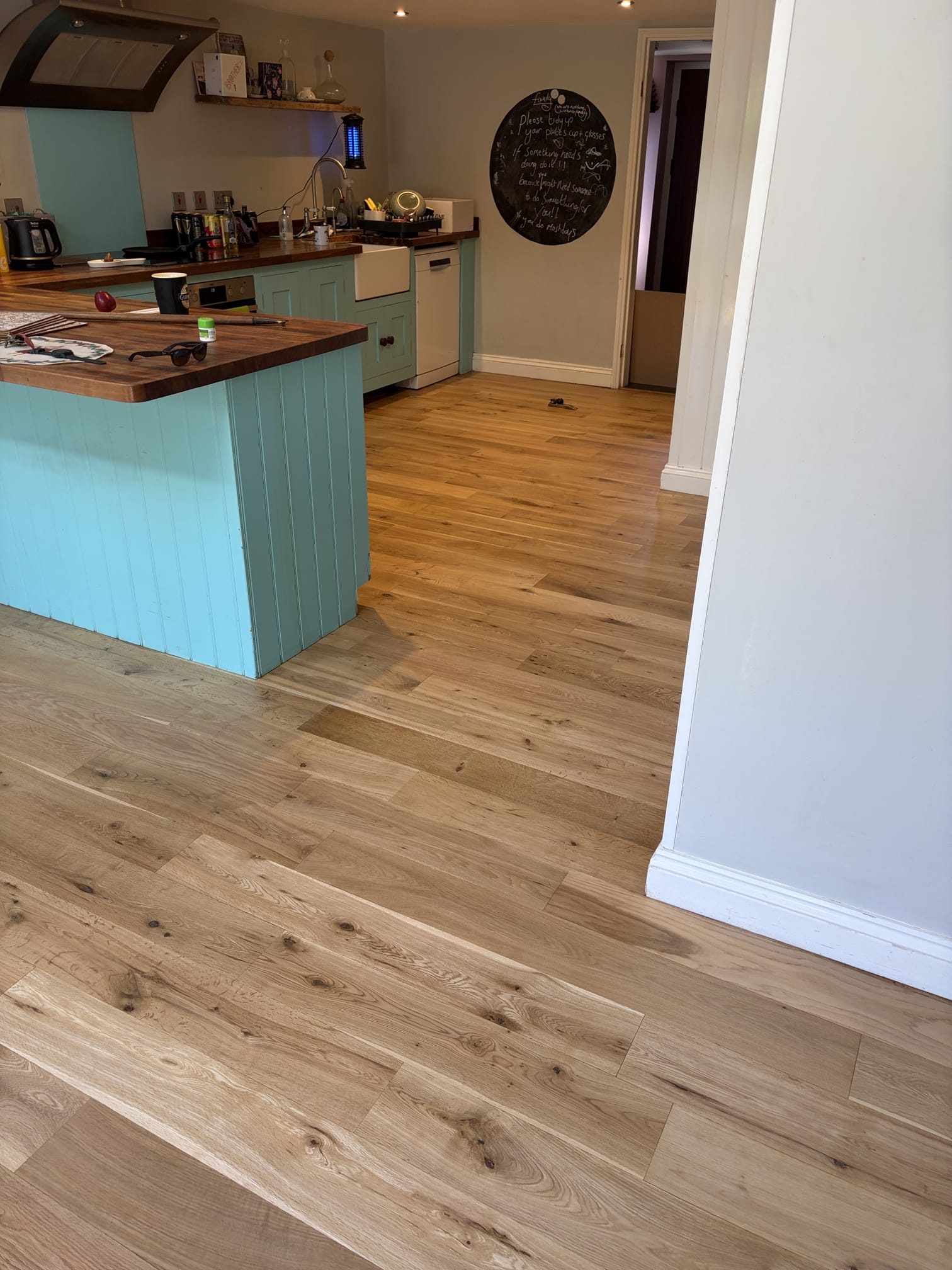
A floating floor is not fixed directly to the subfloor. If it moves, flexes or has hollow areas, sanding machines can behave differently across the surface. This can create uneven sanding or increase the risk at board edges.
Before sanding a floating engineered floor, it is worth checking:
- Whether the boards are stable
- Whether there is excessive bounce
- Whether the joints are sound
- Whether the floor has cupped or crowned
- Whether sanding will make movement more visible
In some cases, a lighter maintenance approach may be safer than a full sand.
What should you do before asking for a quote?
You do not need to diagnose the floor yourself, but a few simple checks can help.
Look for:
- any spare planks left from the original installation
- paperwork showing the wear layer thickness
- exposed board edges at thresholds or vents
- areas where the finish has worn through
- water marks near doors, kitchens or plant pots
- movement, gaps or lifting boards
- previous sanding marks around the edges
Take clear photos in natural light. Include a close-up of the worst area and a wider photo of the whole room. This helps the floor sanding team give better early guidance before a visit.
If you are ready to ask for advice, you can get in touch and tell us what you have noticed. Photos are useful, but a proper assessment is still the safest way to decide what the floor can handle.
Local homes: why engineered wood problems vary
Engineered wood floors in Newmarket homes can wear very differently depending on the property and how the room is used.
A kitchen floor may show marks from chairs, pets, spills and daily traffic. A hallway may suffer from grit carried in from outside. A sunny room may have colour differences where rugs or furniture have blocked UV light. A newer extension with underfloor heating may have different movement risks from an older room with traditional construction.
That is why local floor sanding advice should not be one-size-fits-all. The right approach depends on the floor, the room and what you want to achieve.
If you would like to see examples of the type of work we carry out, our case studies can help you understand how different floors need different levels of care.
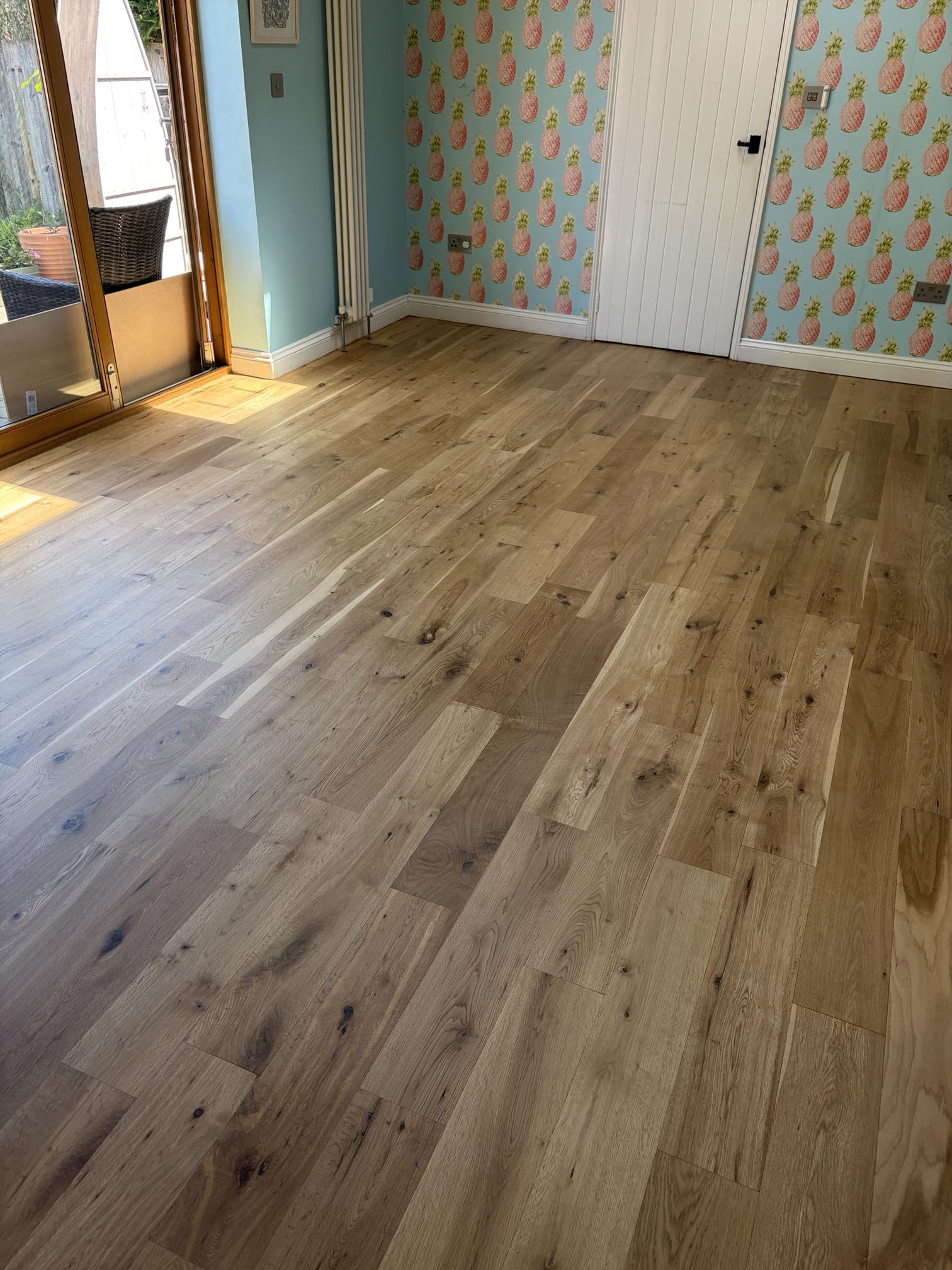
Sanding, oiling or lacquer: which finish should you choose?
There is no single best finish for every engineered wood floor.
An oiled finish can give a natural look and may be easier to maintain in local areas. It can suit homes where people like a softer, more natural appearance and are happy with periodic maintenance.
A lacquered finish gives a surface coating and can be a practical choice for busy areas. It may suit households that want a clear protective layer and straightforward daily cleaning.
The decision should be based on:
- How the room is used
- Whether you have children or pets
- How much maintenance are you happy to do
- The look you prefer
- The existing finish
- The floor’s condition and sanding capacity
A good finish choice should support the way you actually live in the home, not just how the floor looks on the day it is completed.
How to look after engineered wood after restoration
Once your floor has been restored or recoated, the way you use the room matters.
Simple habits help:
- Use good mats at entrances.
- Lift furniture rather than dragging it.
- Fit felt pads under chairs and tables.
- Clean grit before it scratches the finish.
- Wipe spills quickly.
- Avoid soaking the floor.
- Avoid steam cleaners.
- Use the cleaning product recommended for your finish.
- Wait for the finish to cure before putting rugs back.
The floor does not need fussy care, but it does need the right care.
When replacement may be the better option
Replacement is not always what people want to hear, but sometimes it is the honest answer.
It may be worth considering if:
- The veneer is too thin to sand.
- Several boards have swollen or delaminated.
- There is widespread water damage.
- The floor is unstable.
- Serious damage goes through the top layer.
- Previous sanding has already removed too much wood.
- The cost of restoration is too close to replacement.
A good floor specialist should explain this clearly. Sometimes the best value is restoration. Sometimes it is a careful repair. Sometimes it is better not to spend money trying to save a floor that no longer has enough material left.
The main thing to remember
Engineered wood flooring can often be improved, but it needs a more careful approach than solid wood.
Do not start with sanding. Start with assessment.
Find out what the floor is made from, how thick the wear layer is, what finish is already on it and whether the boards are stable. From there, you can make a calm decision about sanding, recoating, oiling, lacquering, repair or replacement.
If you are in Newmarket or the surrounding area and you are unsure what your engineered wood floor can safely handle, get in touch and ask for advice before committing to the work.
A short conversation now can protect the floor, your budget and the final result.
FAQs about engineered wood floors
Can all engineered wood floors be sanded?
No. Some engineered wood floors have a very thin real wood layer, which makes full sanding too risky. The wear layer needs to be checked first.
How many times can engineered wood be sanded?
It depends on the thickness of your wear layer and whether it has been sanded before. Some may only cope with one careful refinish. Others should not be fully sanded at all.
Is engineered wood the same as laminate?
No. Engineered wood has a real wood surface. Laminate has a printed decorative layer and should not be sanded like timber flooring.
Can scratches be removed from engineered wood?
Light scratches can often be improved. Deep scratches may need sanding, but only if the wear layer is thick enough. Some marks may remain if removing them would risk damaging the veneer.
Can water-damaged engineered wood be sanded?
Sometimes surface staining can improve, but swollen, delaminated or unstable boards cannot usually be fixed by sanding alone. The cause of the moisture needs to be dealt with first.
Should I choose oil or lacquer after sanding?
Both can work. Oil gives a natural look and can be easier to maintain locally. Lacquer gives a protective surface coating. The right choice depends on the floor, the room and how you use it.
Do I need a full sand or just a recoat?
If the finish is dull or lightly scratched but the wood is sound, a recoat may be enough. If the surface damage is deeper, sanding may be needed. A site assessment is the safest way to decide.