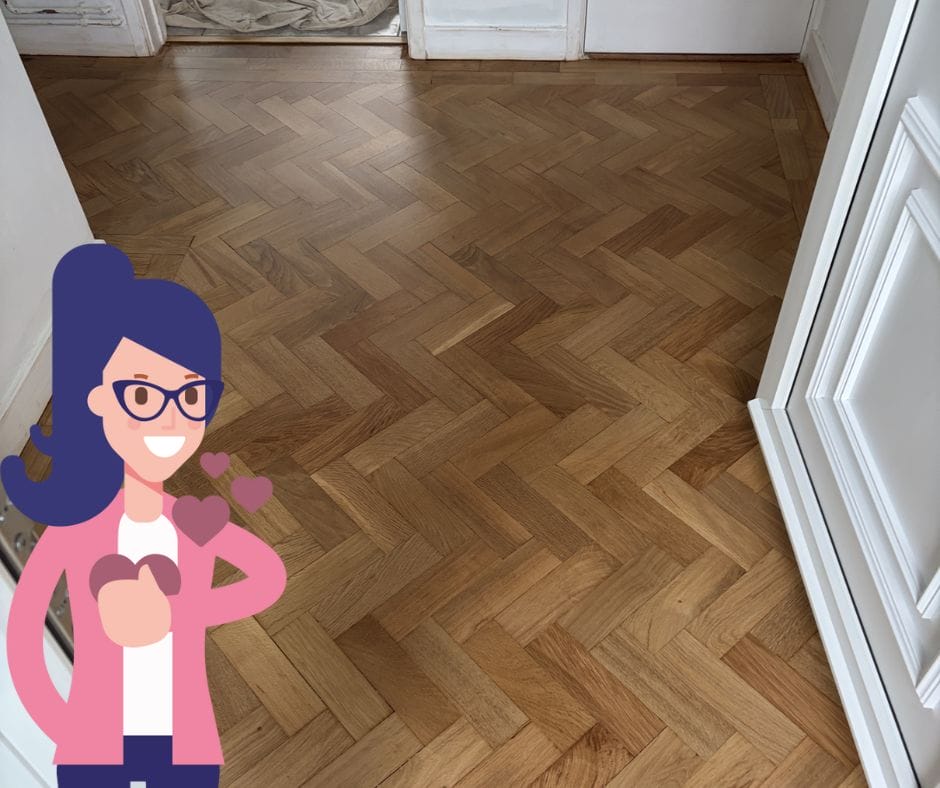
(And Why Patch Repairs Often Don’t Work) If you’ve noticed scratches, dents, water damage, or dull patches on your lacquered wood floor, it’s natural to wonder if a quick patch repair could sort it out. But the truth is, in most cases, patching doesn’t work… at least, not in a way you’d be happy with.
Let’s talk through why that is, what the better options are, and how you can protect your floor from getting worse.
What Makes Lacquered Floors Tricky to Repair?
Lacquer sits on top of your wooden floor like a clear, hard shell. It gives that smooth shine and helps protect the wood underneath from moisture, scuffs, and day-to-day wear.
But this type of finish brings a few challenges when you try to repair just one bit of it.
For starters, the colour and sheen of lacquered floors change over time. Even if you use the same product, a new patch will nearly always look glossier or duller than the rest… and often a slightly different shade too.
Also, the new lacquer doesn’t stick well to the old lacquer. Once it’s cured, it becomes almost impossible to bond with again unless the whole surface is sanded back first.
And the wood beneath may have changed, too. Sunlight, air, and even regular use all play a part. So even if you think you’re only dealing with a scratch, there might be deeper changes in the wood that won’t match a new patch.
Why Spot Repairs on a Laquered Wood Floor Don’t Normally Work
If you try and fix just a small area:
- The shine probably won’t match the rest of the floor.
- The colour may stand out, especially in natural light.
- That new patch might start peeling or lifting within months.
- The floor could crack or shift where the old and new finishes meet.
- If water damage or dents are involved, the problem goes deeper than the lacquer anyway.
And once you’ve seen the mismatch, you’ll always see it.
Are There Any Situations Where a Quick Fix Might Work?
Very occasionally, yes... but only for extremely light surface scuffs or shallow marks. Things like small scratches from a chair leg or the edge of a rug might respond to a soft touch-up.
But even then, the result is never perfect. These small fixes can help hide the damage a bit, but they won’t bring the floor back to a uniform look. If your floor’s generally looking tired, or the damage is more than surface-deep, patching will only make the contrast more obvious.
For lighter maintenance, we do offer helpful guides and services in our Knowledge Centre and Maintenance Plan… they’re worth a look if you’re trying to slow down wear and tear.
What Can You Do Instead?
The most effective approach… and the one we usually recommend… is to refinish the whole area properly.
This means sanding the floor back evenly to remove the old lacquer, then applying fresh coats across the full surface. That way, everything matches… colour, shine, and texture… and the finish lasts much longer.
If only one or two boards are damaged, it might be possible to replace them and blend the finish around that area. But even with skilled hands, it often still needs a wider refinish to avoid obvious joins.
In open-plan spaces, some people choose to refinish one half of a room, rather than the whole floor. It can work, but it still needs care to avoid noticeable dividing lines.
You can see examples of this work in our Gallery if you’re curious what’s possible.
Real Example: Why Patching Often Lets You Down
Imagine your living room floor has scratches near the doorway. You could try to touch up just that patch, but chances are it’ll dry differently, catch the light awkwardly, and peel off after a while.
On the other hand, if you refinish the whole floor, the scratches are gone completely and you get a clean, even look from one wall to the other.
It costs more upfront, sure… but you only need to do it once every 10–15 years, and it’ll look right. No compromises, no fuss.
Looking After Your Floor So It Lasts
Once your floor’s been professionally refinished, it makes sense to take care of it so you don’t end up back in the same position.
Try using mats at doorways and under big pieces of furniture. That stops grit and heavy movement from damaging the surface.
Stick felt pads under chair legs and tables… especially if they get moved often.
Keep your room at a steady temperature and humidity if you can. Wood doesn’t like sudden changes, and a consistent environment helps prevent expansion and cracking. Most professionals agree that keeping relative humidity between 30% and 55% helps wood floors stay stable and comfortable. (Rehmeyer Wood Floors)
And finally, clean gently… use a soft brush or a vacuum with a floor setting, and avoid anything harsh or too wet. A pH-neutral wood floor cleaner and a damp (not soaking) mop will keep things tidy without damaging the lacquer.
How to Know When It’s Time to Refinish
You might be ready for a full refinish if:
- The surface looks scratched and tired in lots of places.
- You’re seeing dull patches or areas where the lacquer is worn through.
- Water has caused staining or the boards are starting to cup or curl.
- The colour is patchy or uneven across the room.
- A test patch just looks out of place.
If any of those sound familiar, we’d be happy to take a look. It only takes a short visit to assess the condition and talk you through what’s possible. You can book that through our Contact Us page.
Want to see how others have handled it?
Have a scroll through our Gallery and see what’s possible with a proper refinish. You’ll find examples of floors that looked beyond saving… and came out beautifully.
When you’re ready to ask the question, we’re here to help you answer it.
Key Takeaways
- Patch repairs rarely blend in well with lacquered wood floors
- Age, sunlight and sheen all change the surface over time
- New lacquer doesn’t bond well to old finish
- Full refinishing delivers the most consistent and durable result
- Gentle cleaning and humidity control go a long way
FAQs
Can I just repair a small part of my lacquered floor?
You can try, but the finish probably won’t match. Most people end up more frustrated once they see the difference.
Will a patch start peeling or flaking?
Yes, it can. New lacquer doesn’t bond well to old layers unless the full floor is sanded back.
What if only one board is damaged?
If you’re lucky, a single board can be replaced and carefully blended. But blending may still involve refinishing a wider area.
How long does a full lacquer refinish last?
With the right care, usually 10–15 years or more. It depends on foot traffic, pets, and how well the floor is maintained.
Can I use a steam mop or strong cleaner?
Best not to. Stick with pH-neutral cleaners and avoid soaking the floor. Too much moisture can damage both lacquer and timber underneath.