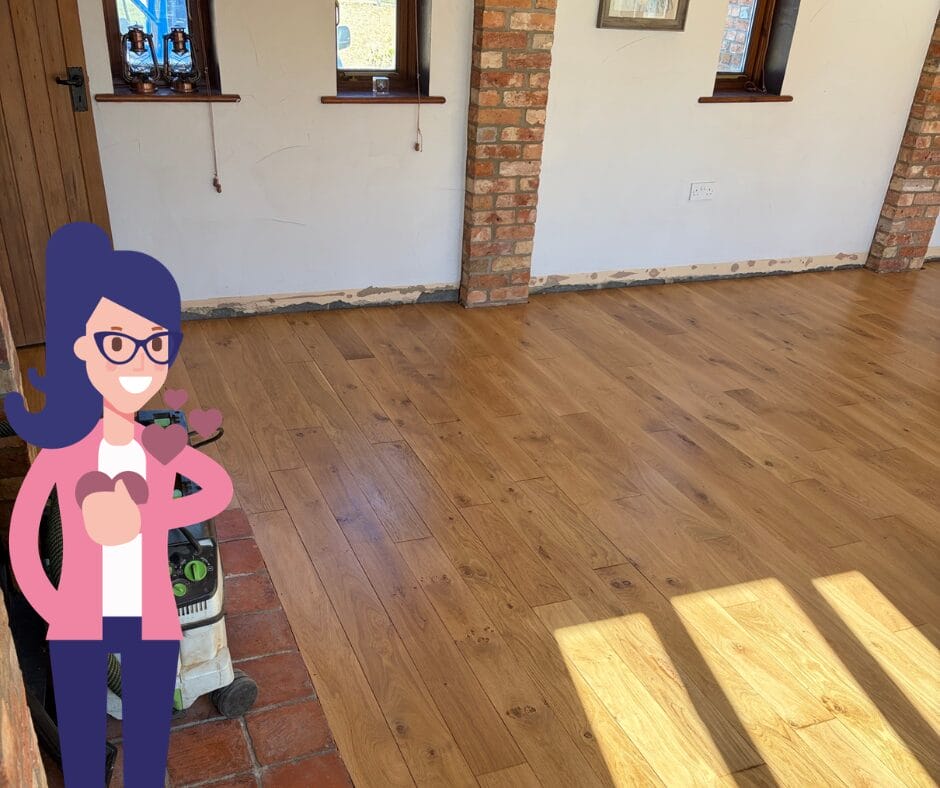
Food and drink stains can often be sanded out of wood floors, especially if the mark is sitting in the old finish or has only lightly affected the surface of the timber. Deeper stains from wine, coffee, oils, sauces or coloured drinks may need more than sanding alone, and some marks can leave a faint shadow if they have soaked into the wood for a long time.
In homes around Newmarket and the surrounding Suffolk villages, these stains often appear in kitchens, dining rooms, under breakfast tables and near doorways where family life happens every day. A small spill may not seem serious at the time, but if the protective finish has worn thin, liquid can travel into the wood before anyone realises.
The good news is that a stained wood floor is not automatically ruined. The right restoration approach can often make the floor look much cleaner, more even and easier to live with again.
Food and drink stains are often easier to improve when they are caught early, and the floor still has enough protection or timber to restore safely.

Quick takeaways
- Food and drink stains can often be sanded out if they are shallow.
- Deeper wine, coffee, oil or sauce stains may need extra treatment.
- Spot sanding can leave a patchy result, so the whole area often needs blending.
- Avoid steam, soaking, scrubbing and harsh household products.
- A proper assessment gives the best chance of a natural-looking finish.
Why do food and drink stains mark wooden floors?
Most food and drink stains become a problem when the protective finish has started to fail.
A healthy lacquer, oil or seal should give the timber a level of protection. It gives you time to wipe spills away before they sink in. Once that protection wears down, the wood becomes more vulnerable. Wine, coffee, tea, cooking oil, fruit juice, sauces and coloured drinks can then sit in scratches, gaps and open grain.
This is why stains are often worse in busy areas. Dining chairs scrape the finish. Grit gets walked in from outside. Cleaning products build up. Small spills happen again and again. Over time, the floor can develop darker patches, sticky-looking areas or dull marks that normal cleaning will not shift.
Oak floors can be particularly reactive because moisture and staining can interact with the natural tannins in the wood. Pine and older floorboards may absorb spills quickly. Parquet flooring can stain unevenly because each block may have worn differently over the years.
Can sanding remove food and drink stains?
Yes, sanding can often remove food and drink stains from wooden floors, but the result depends on how deep the stain has gone.
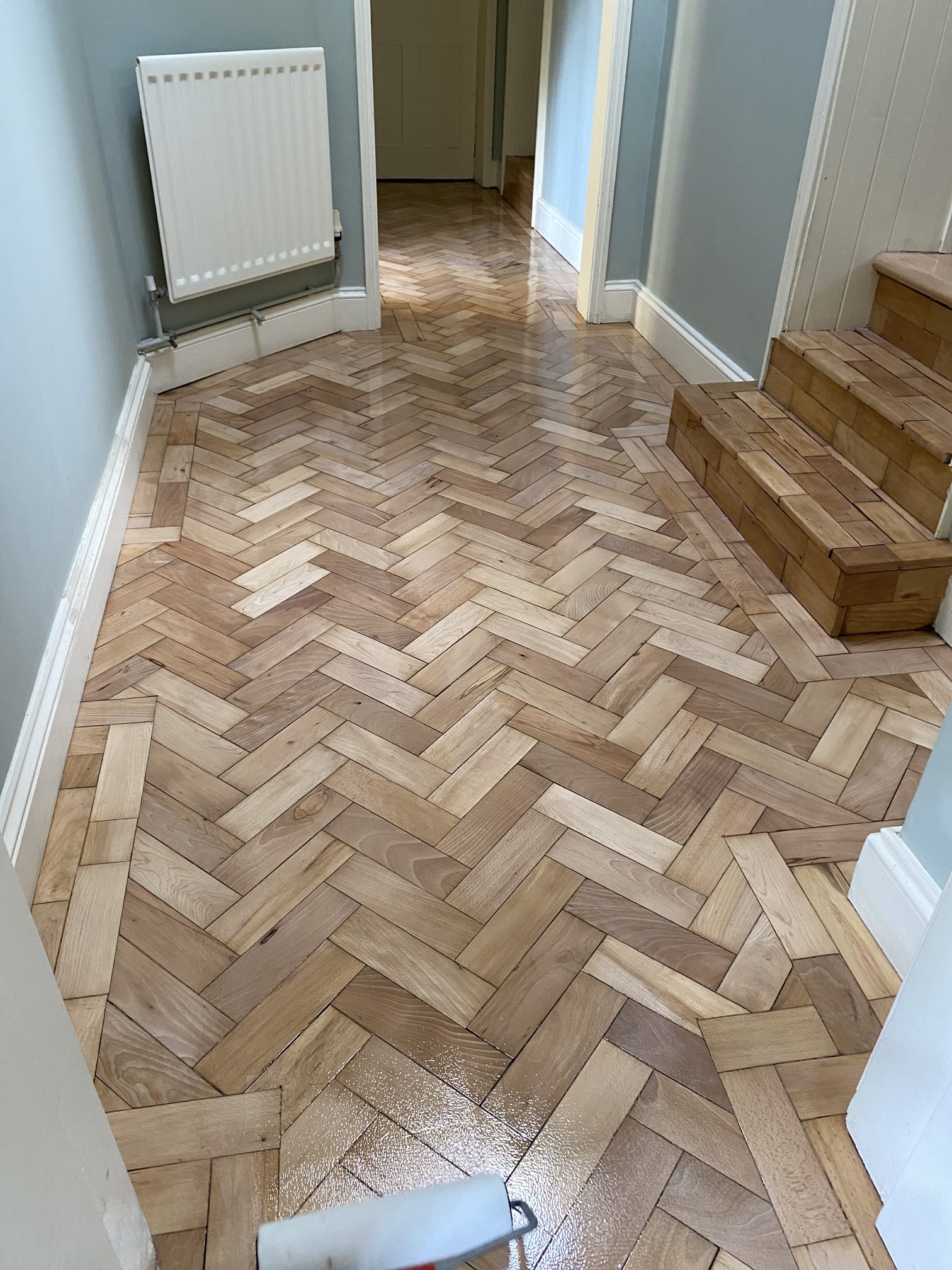
Professional sanding removes the old finish and a controlled amount of the timber surface. If the stain is shallow, this may be enough to remove it completely. If the stain has gone deeper into the grain, sanding may still improve it, but extra treatment or blending may be needed.
The most important thing is not to attack one small mark in isolation. Spot sanding a stain can leave a pale patch, a dip in the floor or an area that no longer matches the rest of the room. A professional restoration normally looks at the whole floor so the final finish feels natural and balanced.
Different spills behave differently.
Not every food or drink stain acts the same way.
Red wine and dark drinks can leave visible colouring if they reach the timber. Coffee and tea can create brownish marks that may sit deeper than they first appear. Cooking oils and greasy food spills can be difficult because they soak into open grain and may affect how new finishes bond later. Sugary drinks can leave sticky residue that attracts more dirt. Tomato-based sauces, curry spills and strongly coloured foods can stain both the finish and the surface beneath it.
This is why a proper assessment matters. The question is not just “can this be sanded?” It is “what caused the mark, how long has it been there, what has already been used on it, and is the floor still safe to restore?”
Why cleaning alone may not be enough
If the stain is sitting on top of the finish, careful cleaning may improve it. But once food or drink has gone through the finish and into the timber, cleaning alone is unlikely to remove it fully.
This is where many homeowners get caught out. They try more water, stronger cleaning products or repeated scrubbing. The stain may look slightly better for a short while, but the extra moisture can push the problem deeper. Harsh products can also bleach the surrounding wood or damage the remaining finish.
Steam cleaners are another common problem on wooden floors. They can force moisture into joints, gaps and open grain, especially where the finish is already worn.
If a stain has not lifted with gentle cleaning, it is usually better to pause and ask for advice rather than adding more products.
What happens during professional restoration?
The first step is to understand the condition of the floor.
A professional will usually look at the type of wood, the existing finish, the depth of the stain, the wear level, any gaps or loose boards, and whether the floor can safely be sanded. This is especially important with engineered wood flooring, where the top wear layer may be limited.
If sanding is suitable, the old finish is removed carefully. Shallow staining may come away during this stage. Deeper marks may need localised treatment before the whole floor is blended and refinished.
The finish choice also matters. A busy kitchen or dining room may need a different level of protection from a low-traffic bedroom. The aim is not just to improve your current stain, but to help the floor stand up better to everyday use afterwards.
Can oil stains be sanded out?
Oil stains can be more difficult than simple surface spills because oil can soak into the wood and affect the way the floor takes a new finish.
Light oil marks may sand away well. Older or heavier oil contamination may need further treatment, and in some cases, a faint mark may remain. If the oil has spread through gaps or deep into the grain, the restoration work becomes more about improvement and blending than guaranteed removal.
This is also why it is important to tell the floor sanding company what caused the stain if you know. Cooking oil, candle wax, grease and cleaning product residue can all behave differently.
Can wine, coffee, or tea stains be sanded out?
Wine, coffee and tea stains often improve well with sanding if they have not been left too long and the wood underneath is still sound.
The difficulty comes when the drink has sat on a worn floor, soaked into the timber or been covered by a rug or furniture before fully drying. In those cases, the mark may be deeper than it looks on the surface.
A dark stain does not always mean the floor needs replacing, but it does mean the floor needs assessing properly before anyone promises a perfect result.
Why DIY stain removal can make the repair harder
It is completely understandable to try to fix a spill quickly. The problem is that wooden floors do not respond well to guesswork.
Vinegar, baking soda, bleach, strong stain removers, steam cleaning and heavy scrubbing can all create new problems. They may lighten one patch too much, roughen the grain, spread the stain, leave residue or damage the protective finish around the original mark.
The repair then becomes harder because the floor no longer has just one problem. It has the original stain plus the uneven marks left by the attempted fix.
A safer first step is usually simple: blot fresh spills, avoid soaking the floor, do not scrub aggressively, and ask for advice if the stain is not lifting.
When sanding may not be the best answer
Sanding is not always the right route.
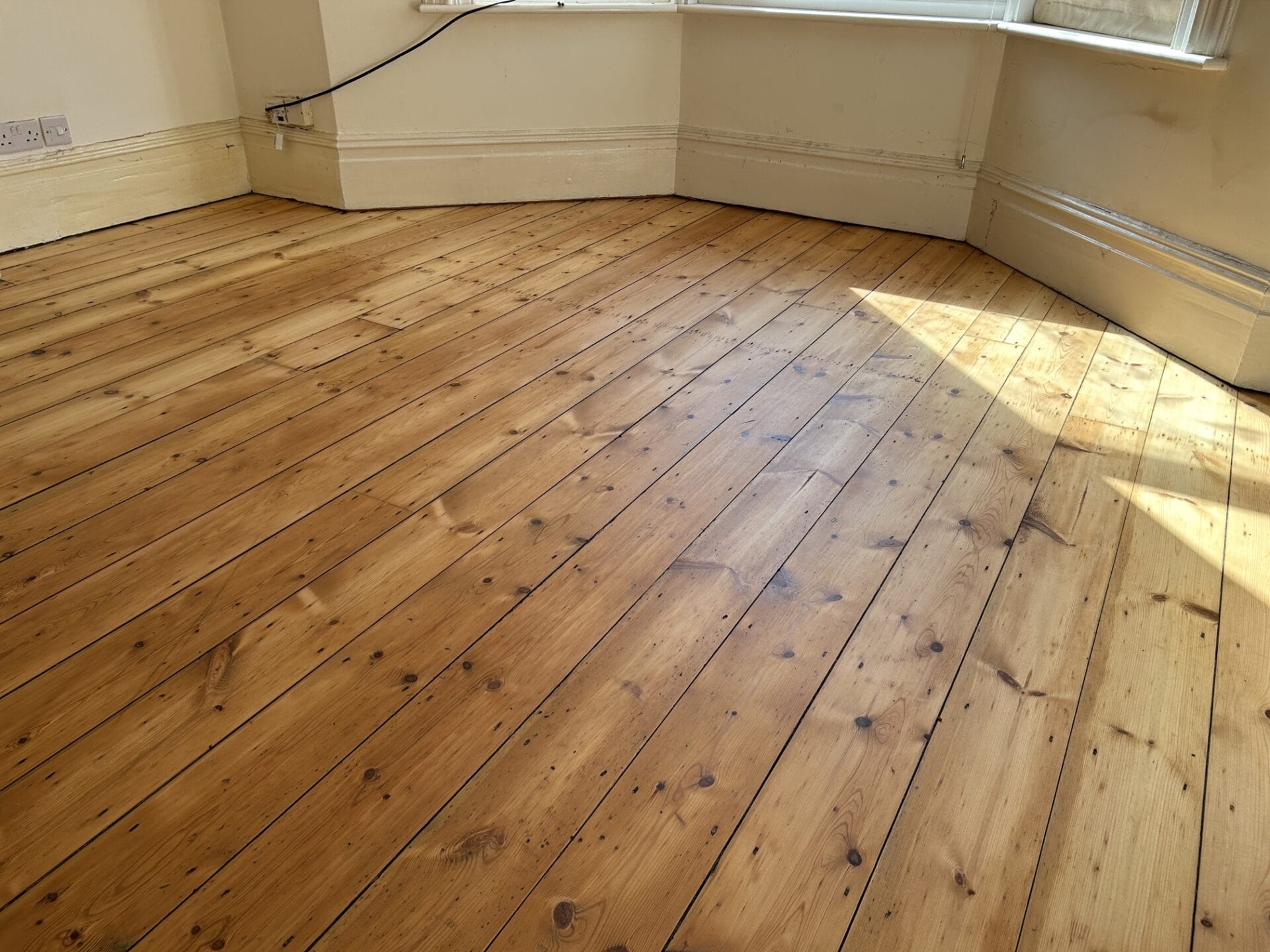
If the floor is engineered and the wear layer is too thin, sanding may not be safe. If the staining is very deep, individual boards may need replacing. If the floor has widespread moisture damage, movement or failing adhesives under parquet, restoration needs a more careful discussion.
Sometimes a clean and recoat is enough, but only if the existing finish is still in good condition. If the finish has worn through and the stain has reached the timber, a simple recoat will usually seal the mark in rather than remove it.
This is why a calm inspection matters. The right answer depends on the floor, not just the stain.
How to protect the floor after restoration
Once a stained floor has been restored, aftercare makes a real difference.
Wipe spills promptly. Use mats near external doors. Fit felt pads under dining chairs and furniture. Avoid over-wet mopping. Use the cleaning product recommended for your floor finish. Keep an eye on busy areas where the finish may wear faster, especially in kitchens and dining rooms.
A restored wood floor should be easier to look after, but it still needs the right habits. The protective finish is what gives the timber time to cope with normal family life.
FAQs
Can red wine stains be sanded out of wood floors?
Sometimes, yes. If the wine stain is shallow or mainly sitting in the old finish, sanding may remove it well. If it has soaked deeper into the timber, it may need further treatment and may not disappear completely.
Will coffee stains come out of oak flooring?
Coffee stains can often be improved with sanding and refinishing. The result depends on how long the coffee was left, whether the finish had already worn through, and whether any cleaning products were used afterwards.
Can cooking oil stains be removed from wooden floors?
Light oil stains may sand out, but deeper oil marks can be more difficult because oil can soak into the grain. In some cases, further treatment or careful blending may be needed before refinishing.
Should I use vinegar or baking soda on a food stain?
It is better to be cautious. Vinegar, baking soda and other household methods can affect the finish or leave uneven marks on timber. If the stain matters, blot fresh spills and ask for advice before trying stronger treatments.
Is it better to sand the whole room or just the stained patch?
Usually, sanding and refinishing the whole affected area gives a more natural result. Spot sanding can leave a visible pale patch or uneven finish, especially on older floors.
Can food stains be removed from parquet flooring?
Yes, parquet flooring can often be restored, but it needs careful handling because of the block pattern, age, adhesives and uneven wear. A proper assessment is important before sanding starts.
What if the stain does not come out completely?
If a stain has permanently altered the timber, the aim becomes improvement, blending and restoring the overall appearance of the floor. Even when a faint shadow remains, the floor can often look much cleaner and more balanced after restoration.
If you have a food or drink stain on your wood floor in Newmarket or nearby, send us a photo or talk it through with us. We can explain what looks realistic before you decide what to do next.