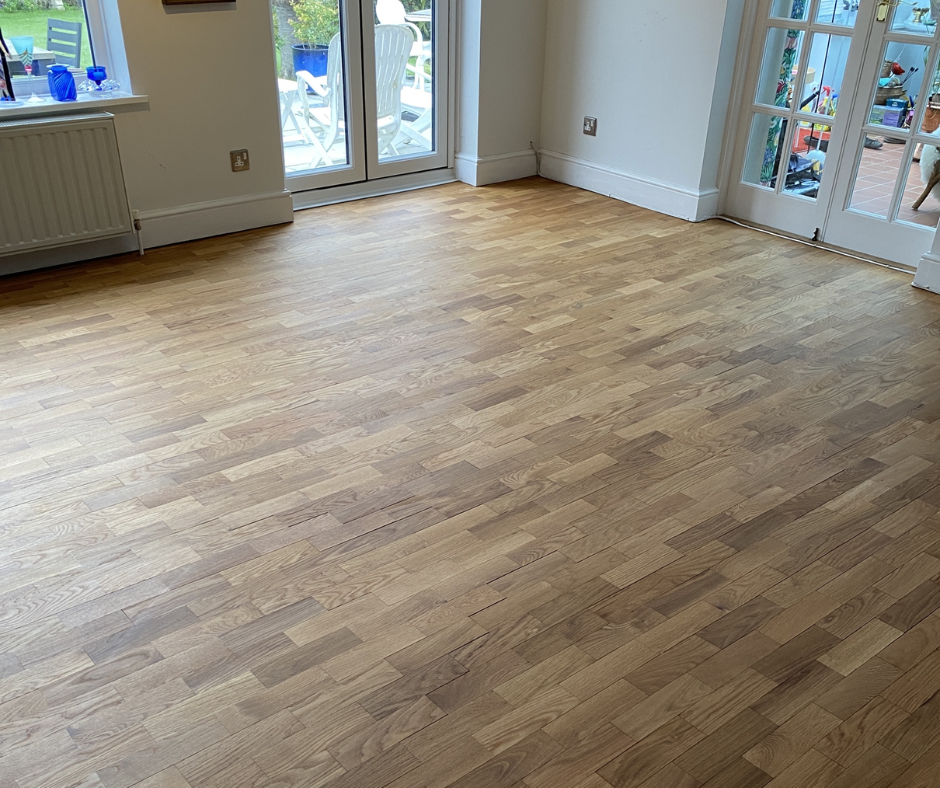
Choosing the right finish for a wooden floor is not only about the colour or the shine. In a busy home, the finish has to cope with how the room is really used.
For many family homes, a durable lacquer is often the most practical option because it gives strong surface protection and is straightforward to keep clean.
An oiled finish can give a warmer, more natural look and might be easier to maintain in small areas, but it usually needs a lot more regular care.
The right answer depends on the floor, the room, pets, shoes, cleaning habits, previous finishes and the look you want to live with every day.
For homes in and around Long Melford, this can be especially important.
The village has a wide mix of homes, from older period properties and cottages to more modern family houses.
Some floors need a finish that respects the property’s character.
Others simply need to stand up to muddy shoes, pets, children, kitchen spills and daily foot traffic.
This guide explains the main choices in plain English, so you can have a clearer conversation before you sand and finish your floor.
Why the right wood floor finish matters
A wood floor finish protects your floor’s surface. It affects how the floor looks, how easy it is to clean, how it wears, and how it may be maintained in the future.
A finish cannot make a wooden floor indestructible.
Grit, claws, dragged furniture, water and heavy wear can still mark the surface. But the right finish can make the floor much better suited to how your home is used.
A hallway in a busy family home needs a different conversation from a quiet spare bedroom.
A kitchen floor has to cope with more spills and cleaning.
A sitting room in an older Long Melford home may need a finish that looks natural and sympathetic, while still giving enough protection for everyday life.
That is why a good recommendation should start with the floor and the household, not just a product name.
Lacquered wood floors: practical protection for busy rooms
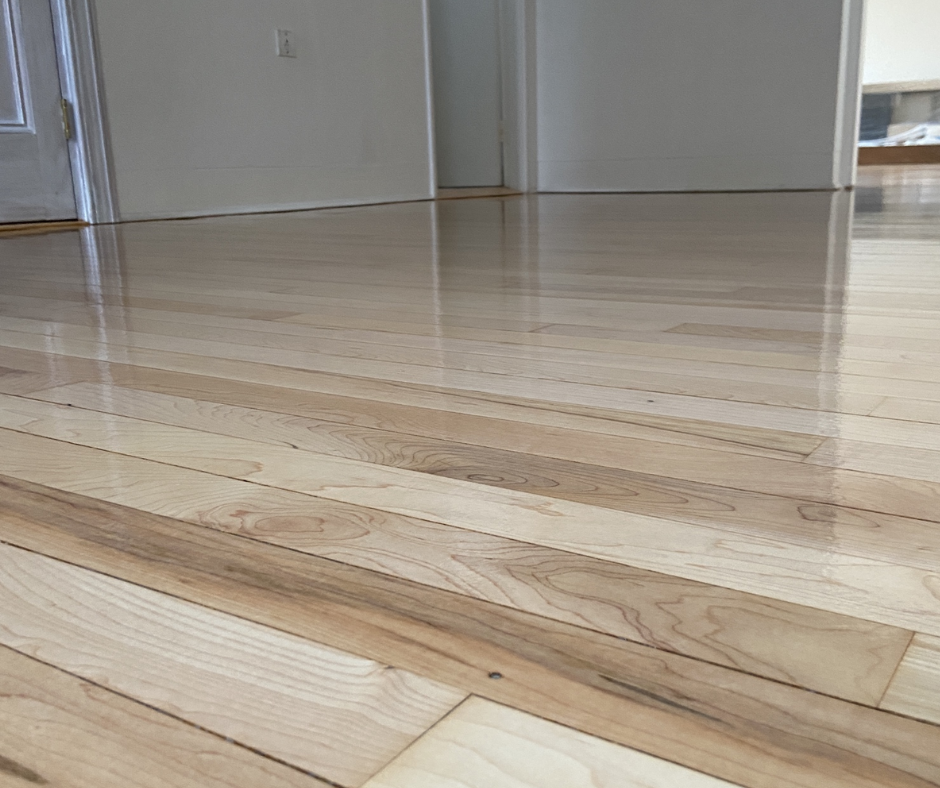
Lacquer sits on the wood’s surface and creates a protective coating. It is often a good option for busy areas because it resists everyday wear and makes routine cleaning easier.
A lacquered finish can work well for:
- hallways
- kitchens
- dining rooms
- family rooms
- homes with pets
- rooms where easier cleaning matters
Modern water-based lacquers are available in different sheen levels, including matt and satin finishes. This means a floor can still look natural without needing a very shiny appearance.
For many busy homes, lacquer is chosen for its practicality. It gives a clear protective layer over the timber and can help the floor cope with regular use.
It is not scratch-proof, and it still needs proper care, but it is often the lower-maintenance option when compared with oil.
If the lacquer eventually wears through in high-use areas, the floor may need professional attention.
In some cases, a recoat may be possible if the surface is suitable and has not been left too long. If the finish has worn through to bare timber, you may need to sand and refinish.
You can read more about durable options in our guide to best finishes for high-traffic wood floors.
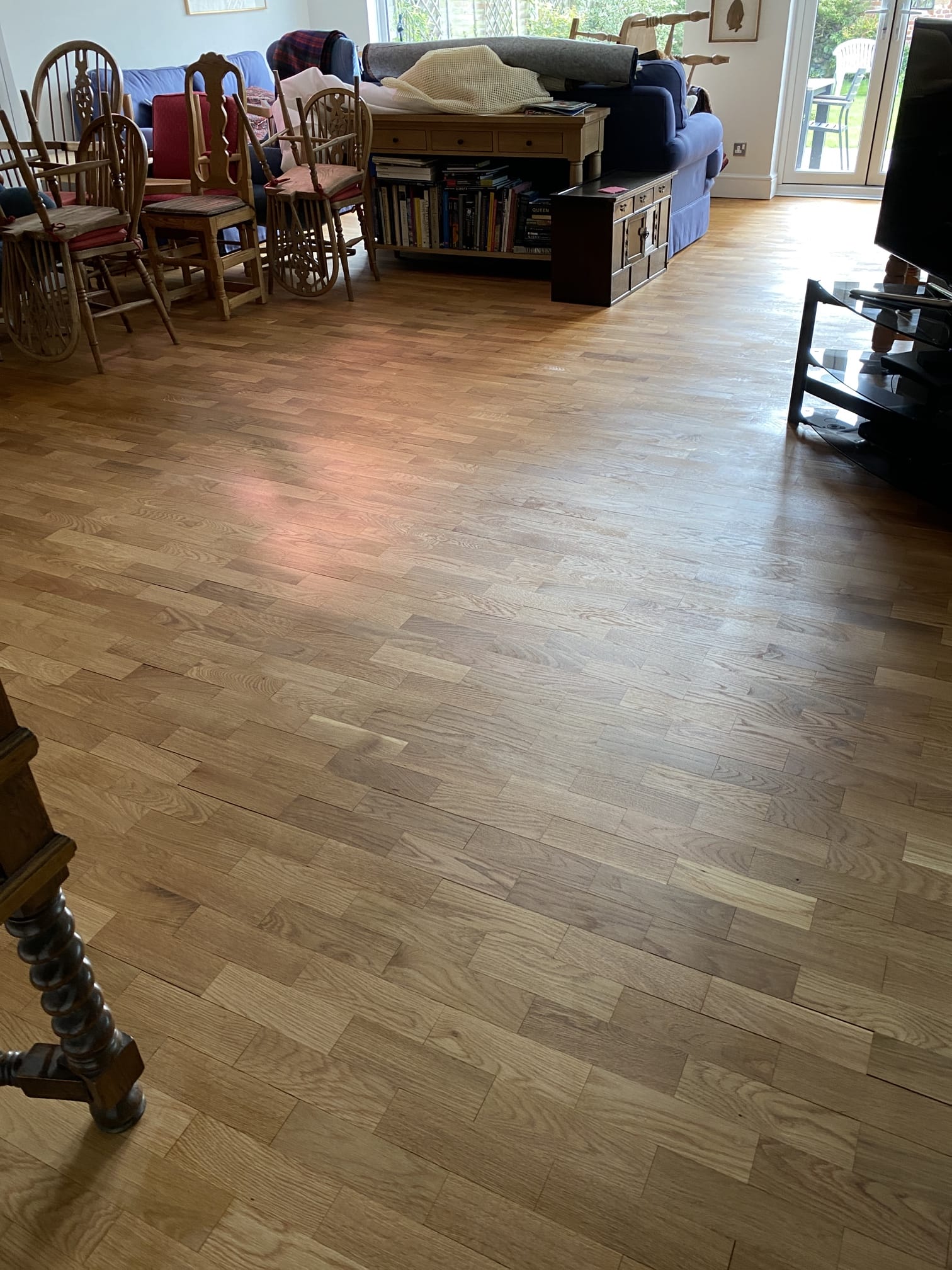
Oiled wood floors: natural-looking, but more maintenance-led
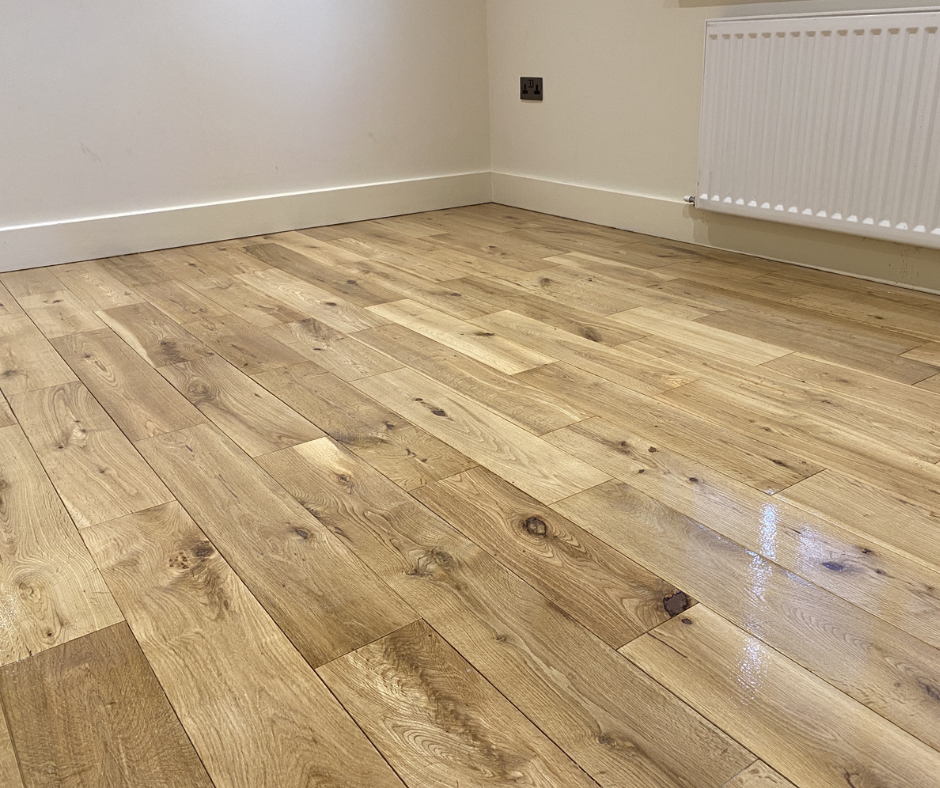
An oiled finish works differently. Rather than forming the same surface film as lacquer, oil is designed to bring out the wood’s natural character and create a softer, warmer appearance.
Many homeowners like oil because it can make a floor feel more natural. It can suit older boards, character floors and rooms where the look of the timber matters as much as surface protection.
Oil can also be easier to refresh in smaller areas, where suitable.
That does not mean it is maintenance-free. In fact, oiled floors usually need more regular care than lacquered floors.
They need the right cleaning products and may need maintenance oil over time to keep the surface protected.
An oiled floor may not be the best choice for every busy household. If a room has heavy foot traffic, pets, frequent spills or very low maintenance expectations, a lacquered finish may be more practical.
If you are considering this route, our [wood sanding and oiling] page gives more detail about how sanding and oiling can be used to restore and protect a wooden floor.
What about pets, children and heavy foot traffic?
Pets, children and busy daily routines do not mean you cannot have a wooden floor. They do mean the finish needs to be chosen carefully.
Claws can mark finishes. Grit from shoes can act like sandpaper. Chair legs can scuff the surface. Water bowls, plant pots and unnoticed spills can cause problems if moisture sits on the floor for too long.
This is where honest advice matters. A professional should ask how the room is used before recommending a finish. A floor in a quiet front room may not need the same protection as a kitchen, hallway or open-plan family space.
For busy homes, simple habits also make a big difference:
- Use good entrance mats to reduce grit.
- Fit felt pads under furniture.
- Wipe spills promptly.
- Avoid soaking the floor when cleaning.
- Do not use steam cleaners on wooden floors.
- Use a cleaner that suits the finish, rather than a general supermarket product that may leave residue or damage the surface.
These small things can help the finish last longer, whatever option you choose.
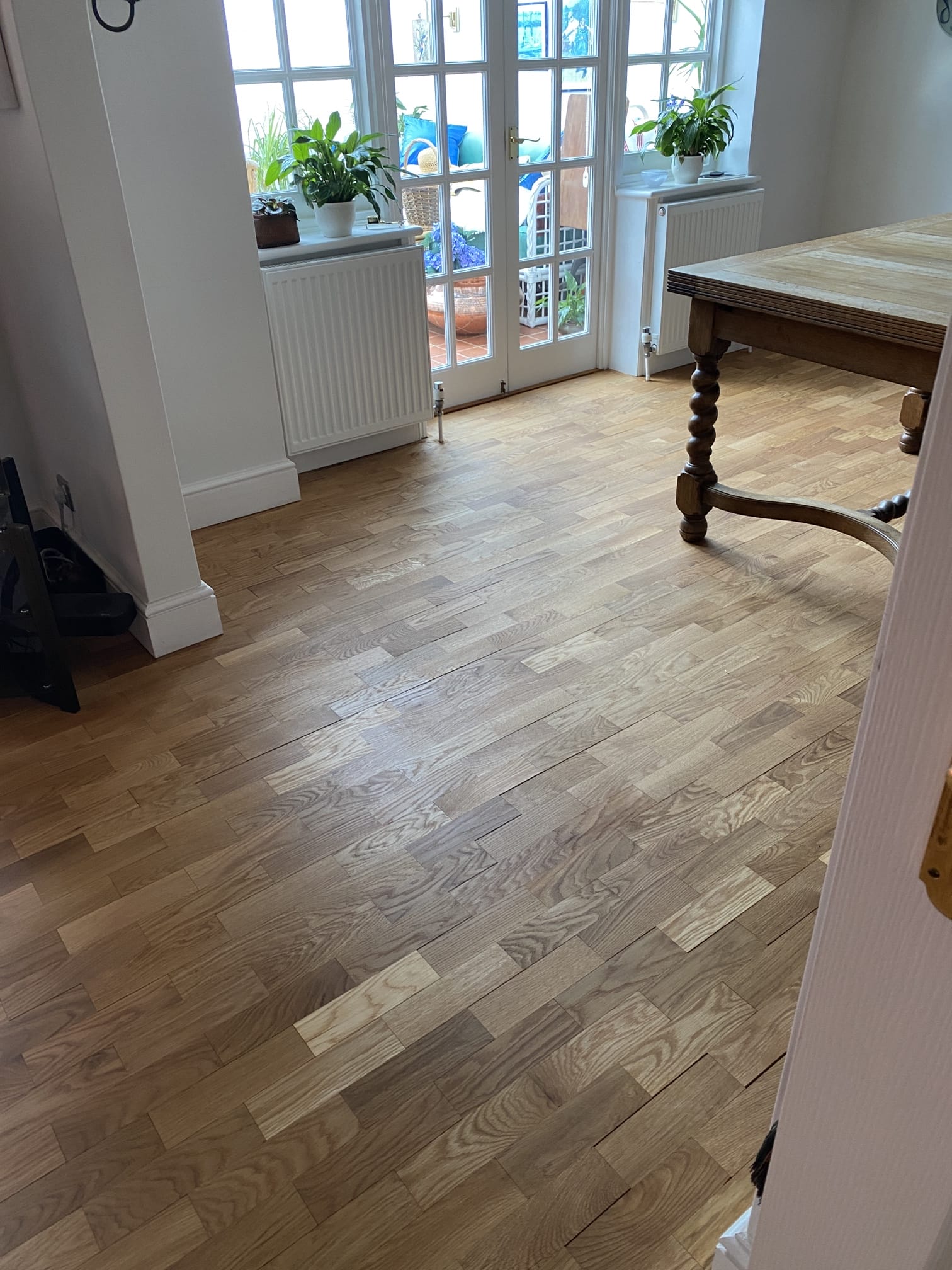
Does the age of the floor change the finish choice?
Yes, it can.
Older floors often have more character, but they can also have more unknowns.
Pine boards may have historic stains, gaps, movement, old nail holes or previous coatings.
Parquet may have loose blocks or old adhesive beneath it.
Engineered wood may have a limited wear layer, which affects how much sanding is possible.
In Long Melford, where many homes have character and age, this assessment stage matters.
A finish should not be chosen in isolation. The condition of the timber, previous sanding, repairs, moisture marks, and the result you are hoping for all need to be considered first.
Some older floors can be transformed beautifully.
Others can be improved, but will still keep signs of age.
That is not always a bad thing.
The aim is often to make the floor clean, usable, protected and attractive, not to make an old floor look like a brand-new board from a showroom.
If a floor has been sanded several times before, the remaining thickness matters.
If it is engineered wood, the wear layer needs checking.
If there are loose boards, damaged blocks or areas of movement, repairs may need to happen before sanding and finishing.
The finish is the final layer.
The preparation underneath is what helps it perform properly.
Oil or lacquer: which finish should you choose?
There is no single finish that is right for every wooden floor.
The best choice depends on the room, the timber and how much maintenance you are willing to do.
A lacquered finish is often worth considering if you want stronger surface protection and simpler routine cleaning.
It is usually a practical option for high-use rooms, family homes, kitchens and hallways.
An oiled finish may suit you if you prefer a warmer, more natural appearance and are happy to look after it with the right products and periodic maintenance.
It can be a lovely choice in the right setting, especially where the wood’s character is part of the room.
For pets and heavy foot traffic, a durable lacquer is often the more practical route, but this should still be decided after seeing the floor.
For older boards with character, either option may be suitable depending on the condition, colour expectations and how the room is used.
For engineered wood, the first question is not oil or lacquer. It is whether the floor can be safely sanded and refinished at all.
What should be checked before recommending a finish?
Before choosing a finish, a professional should look at more than the surface appearance.
A proper assessment should consider the type of wood, whether the floor is solid or engineered, how much wear layer is left, what finish is already on the floor, and whether there are repairs needed before sanding.
The room itself matters too.
Is it a hallway, kitchen, sitting room or bedroom?
Are there pets?
Will furniture need moving?
How quickly does the room need to be back in use?
Do you prefer a matt, satin or richer finish?
Are you happy to maintain an oiled floor, or do you want the simplest day-to-day cleaning option?
These questions help avoid disappointment… They also help make sure the finish suits the life of the home, not just the sample board.
If you are not sure what your floor needs, start with wood floor sanding and restoration services so the floor can be assessed before a finish is recommended.
How to look after the finish once the work is complete
The best finish still needs sensible aftercare.
After sanding and finishing, the floor usually needs time to fully cure.
Drying & curing times vary depending on the type of finish you use, the room conditions and the manufacturer’s guidance.
Follow the advice given after the work, especially before replacing rugs, moving heavy furniture back, or cleaning the floor.
For everyday care, remove grit regularly with a soft broom or suitable vacuum attachment.
Use felt pads under furniture.
Wipe up spills as soon as possible.
Avoid wet mopping, steam cleaners and harsh cleaning products.
If you are unsure which cleaner to use, ask before applying anything new.
Oiled floors may need more planned maintenance.
In some cases, a maintenance plan may help keep a suitable oiled floor in better condition over time.
You can read more about this in our guide to the wood floor maintenance plan.
Getting advice for a wood floor in Long Melford
If you are unsure whether oil, lacquer or another finish is right for your wooden floor, the safest next step is an assessment.
A few photos can help start the conversation, especially if they show the full room, close-ups of worn areas, any damage and the type of floor.
The final recommendation should be based on the floor itself, how the room is used and the result you want to live with.
A busy home does not need a perfect showroom floor.
It needs a finish that looks good, protects the timber where suitable and gives you realistic expectations from the start.