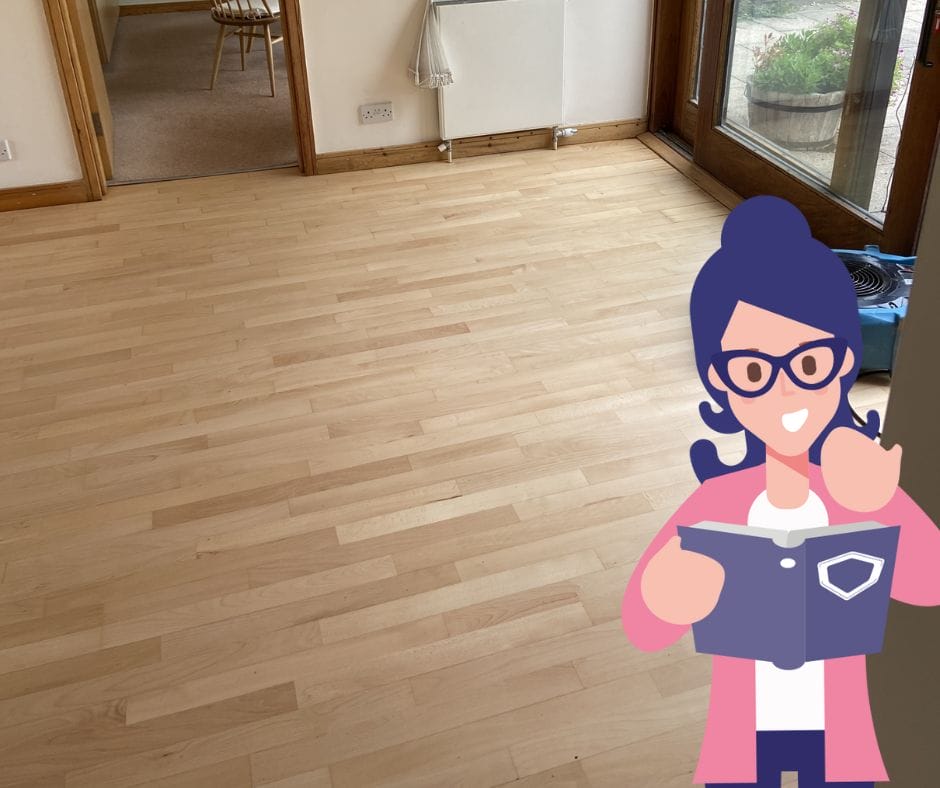
Beech wood floor restoration is one of those jobs that looks simple on paper, until you see how quickly beech shows every sanding mark, patch, and finish choice. That is the frustrating bit. The reassuring bit is that when it’s restored properly, beech comes up beautifully, clean, light, and quietly elegant, with a finish that actually suits real family life.
On the Floor Sanding Newmarket site, we use a low-dust system (our clean promise is 98% dust free) and aim to keep disruption minimal, so you are not living in a fog of grit and smell while the work is done.
Key takeaways
- Beech is unforgiving… it shows uneven sanding and patchy finishing more than some other wood floors we see.
- The best restorations start with assessment and repairs, not rushing straight to sanding.
- Oil and lacquer both work on beech, but they behave differently in busy homes.
- Drying and curing times matter, especially if you are trying to juggle school runs and pets.
- The right aftercare is what keeps the beech looking even, rather than tired and blotchy.
This is a typical wood floor restoration for us:
Why can beech wood floors look “worse” before they look better
Beech is a close-grained hardwood with a naturally pale tone. That sounds like an easy win, but it comes with a catch. Because it is light and uniform, any uneven sanding, burnishing, or lingering old finish can show up as shadows and patches under a clear finish. People often assume the finish is the problem when the real issue is what happened underneath it.
This is also why quick spot fixes can disappoint. A single sanded patch can look slightly different in beech, even when it is “the same wood”, because the surface has been cut differently, and light reflects differently. Therefore, good restoration is usually about consistent preparation across the whole area, even when only one section looks bad.
Signs your beech wood floor needs restoration, not just a clean
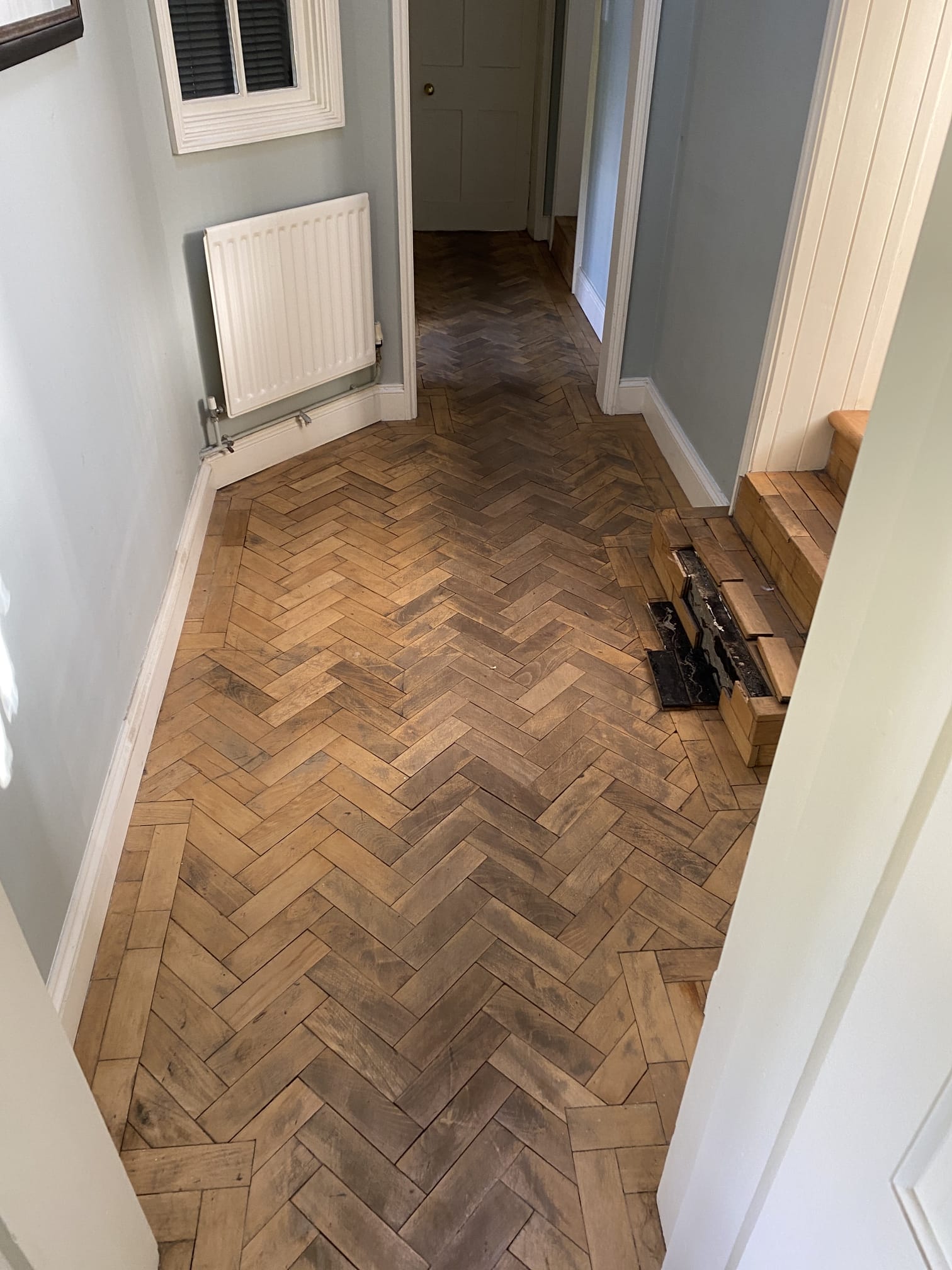
Sometimes, a beech floor is simply dull from everyday life. Other times, it has reached the point where cleaning will not bring it back evenly.
A clean and re-oil can be enough when the colour is still consistent, but the floor has gone matte and a bit dry looking. On the other hand, sanding and refinishing is usually the right call when you can see a clear “map” of wear, greyed traffic lanes, patchiness from older coatings, or visible sanding mistakes from a previous job. The Floor Sanding Newmarket approach includes a site survey before work begins, which matters because beech floors are not all laid the same way, and condition varies massively from home to home.
If you are unsure, the simplest question is this. Does the floor look uneven even after it is freshly cleaned, especially in daylight? If yes, it is usually a surface issue, not really a dirt issue.
What causes your beech wood floor to go patchy or blotchy
Patchiness usually comes from one of four reasons.
The first is uneven sanding, such as stopping at too coarse a grit, missing an intermediate step, or leaving edging marks that do not blend into the main field. Beech is known for showing sanding mistakes under clear lacquer, which is why technique and grit progression matter so much.
The second is old finish remnants. If an older varnish or seal is not fully removed, it can leave slightly darker or shinier zones that only appear once the new finish hits them.
The third is staining attempts. Beech can be tricky to stain evenly, and it is easy to end up with a “tide mark” look if the colour is not applied and blended correctly.
The fourth is cleaning and maintenance habits. Steam mops, harsh cleaners, or “miracle” sprays can dull a finish unevenly over time, so one area ends up looking washed out while another stays shiny.
The important thing to know is that patchiness is not a character flaw in your home, it is a surface and light problem. Once you treat it like that, the solution becomes much clearer.
How the professionals will carry out your beech wood floor restoration…
Most people want the same two things. A floor that looks even and fresh, and a process that does not take over the whole house for a week.
On the Floor Sanding Newmarket site, the service is designed around preparation, sanding, finishing, and repairs, with an emphasis on dust control and a full survey before work starts.
Here is what that looks like in real terms.
Step 1: An assessment and options
Beech floors can be solid wood strips, engineered boards, or even a beech-faced parquet. The thickness and past sanding history does reallymatter because it affects what is safe to remove.
A proper assessment also checks for movement, loose boards, proud nails, gaps, and any areas that need repair before sanding begins. The difference between an okay result and a beautiful one is often decided right here, because repairs that are done early sand down cleanly and disappear into the whole floor.
Step 2: Repairs first, so the sanding has a fair chance
Loose boards get secured, nails are set, and any damaged sections are addressed so the sanding process does not “catch” and cause chatter marks. Floor Sanding Newmarket describes this prep as part of the oiling and lacquering processes, including checking nails and securing loose boards before sanding begins.
With beech, this is also where you decide whether you want a seamless look or whether you are happy to keep small signs of age. A family home does not need to look like a showroom to feel beautifully finished.
Step 3: Sanding must be done evenly and progressively
This is the part most people picture, but the keyword is progressive. Beech responds best when the sanding steps are consistent, so you do not leave coarse scratches that only show later under the finish. It is also why dust extraction really does matter… fine dust will affect the finishing coats if it is not properly removed. Floor Sanding Newmarket highlights high filtration vacuuming and a dust-controlled system as part of the sanding process.
Step 4: Edges and details that match the main floor
In many homes, the most obvious “DIY” sign is along skirting boards and under radiators, where edge sanding looks slightly different to the rest. Beech makes that more visible. Getting the edges to blend is what makes the room feel calm again, because your eye stops catching on the perimeter.
Step 5: Finishing, choosing oil or lacquer for your real life
This is usually the decision point.
Floor Sanding Newmarket offers both oil and lacquer systems, and explains expected curing times for each, which is helpful when you are planning around daily routines.
If you want a natural look you can maintain easily, oil is often the calm choice
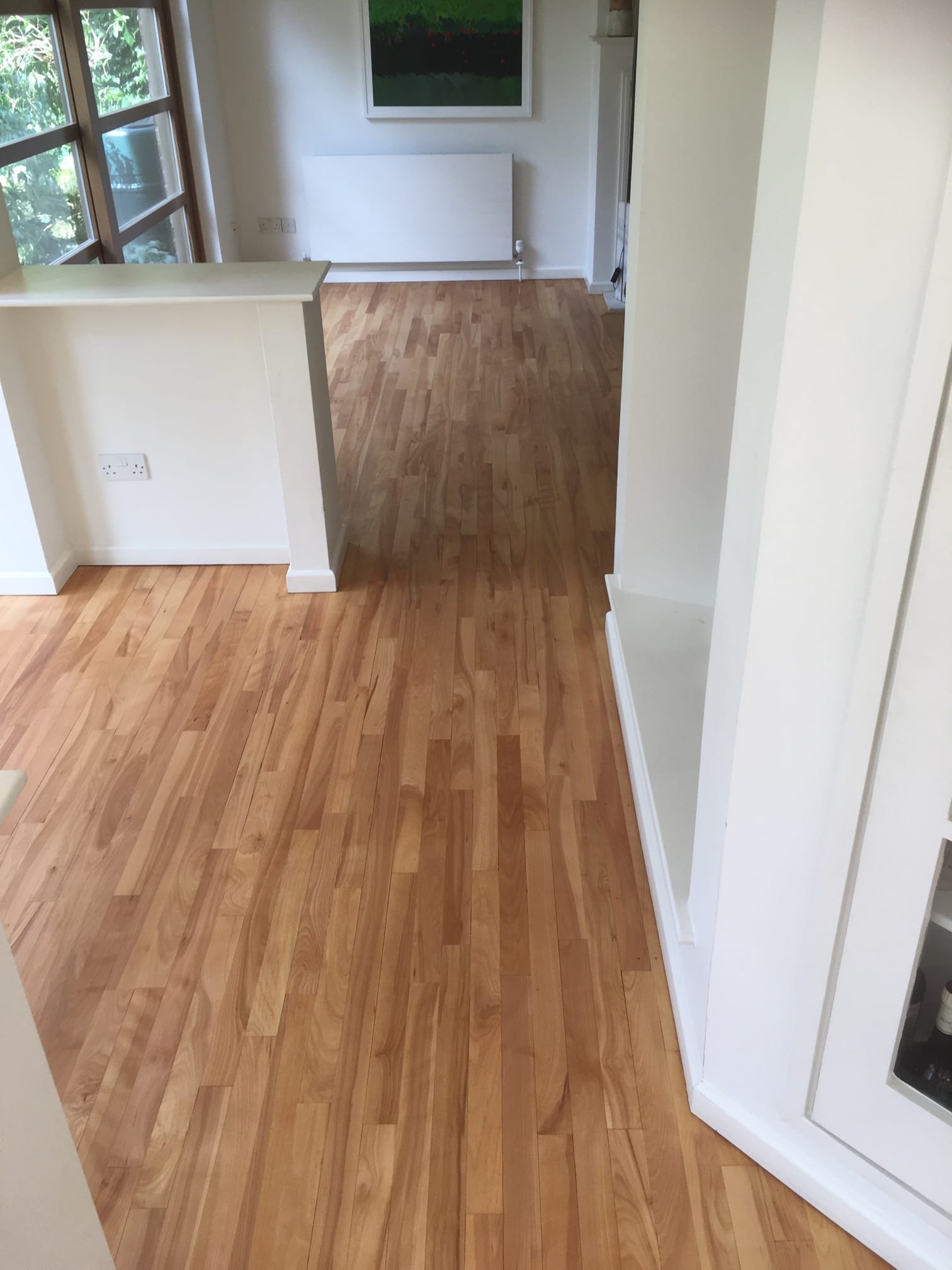
Oil penetrates the wood, giving a natural, low-maintenance look. One practical benefit is that wear can often be addressed locally rather than resanding the entire room, which suits busy households. Floor Sanding Newmarket describes oil benefits, including ease of repair and quick access compared to some alternatives.
They note that light foot traffic may be possible after a few hours, with furniture returning later, which helps with planning.
If you want a sealed surface with a consistent sheen, lacquer can be the right fit
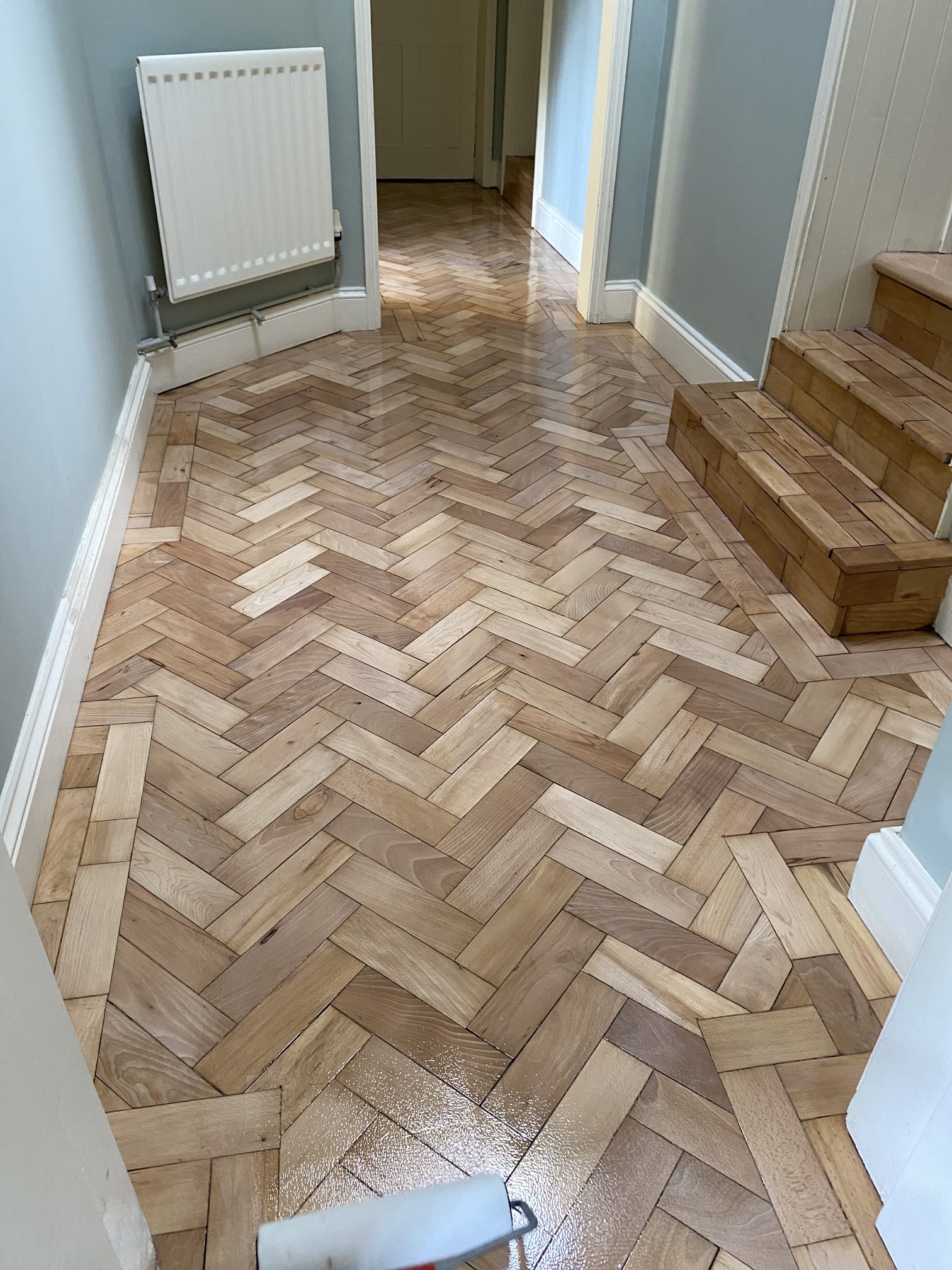
Water-based lacquer creates a sealed top layer, which many people like for hallways, kitchens, and high traffic zones because it is easy to wipe and keeps a more uniform surface. Floor Sanding Newmarket describes a primer and multiple coats, and notes that the curing time for light foot traffic can be longer than oil, depending on conditions.
Beech can look stunning under a good quality water-based lacquer when sanding is done properly, revealing the beautiful natural colour and grain without turning it that yellow colour.
How long does beech wood floor restoration take in a typical home?
Time will really depend on the size, condition, and finish you choose. The part that catches people out is not the sanding itself, it is the drying and curing window, plus the moving furniture, keeping pets off, and keeping little feet away from fresh coats.
Floor Sanding Newmarket will share typical access guidance for oil and lacquer, including light-foot-traffic windows and when furniture can return.
A good rule of thumb is to plan for the room to be out of use during the active work, then to follow the finish-specific curing guidance so you do not accidentally scuff a perfect surface on day one. Airflow and weather affect curing times too, which is why clear expectations matter.
If you are comparing quotes, here is what you need to check
Beech restoration is not the place to compare on price alone, because the risks are about finish quality and evenness, not just “did they sand it”.
Ask what preparation and repairs are included, and whether the quote is based on seeing the floor in person. Floor Sanding Newmarket highlights the importance of a site survey before work begins, which is a sensible safeguard.
Then check how dust is handled. This matters more than people realise, because it affects your home during the job and the final finish. The site describes a low-dust approach and a clean promise (98% dust free).
Finally, check the finish system, coat plan, and curing guidance. A “two coats and done” approach may not be like-for-like with a primer-and-multiple-coats system, and it will show in wear.
How much does your beech floor sanding and restoration cost in the UK?
Costs will vary by region, condition, repairs, and which finish you choose. UK guidance for professional sanding and refinishing is normally quoted per-square-metre, with pricing influenced by the wood type, floor condition, and location.
If you want a grounded starting point before you book a survey, Homebuilding notes a typical UK range for professional sanding that can run from lower-cost jobs up to higher-end rates, with a mid-range average cited as a guide.
The useful takeaway is this. The cheapest quote is rarely the cheapest outcome if it leaves you with patchiness, extra disruption, or a finish that needs redoing sooner than it should.
Aftercare that keeps the beech looking even (not tired)
Beech stays looking best when it is treated gently and consistently.
The temptation is to “deep clean” it with strong products, especially in busy family homes where spills and scuffs feel constant. But harsh chemistry and steam can dull finishes unevenly, which is one of the reasons floors start to look patchy again.
Instead, aim for simple habits, keep grit off the surface, use felt pads, lift rather than drag furniture, and use the right cleaner for the finish you have. If you want a longer-term support option, Floor Sanding Newmarket also offers a maintenance plan approach, designed to keep floors looking their best throughout the year.
When it’s better to restore than replace
People normally reach the replacement choice because the floor looks beyond saving. But most beech floors that feel “done” are actually just uneven at the surface. Once the old coatings and wear patterns are removed properly, the wood underneath is usually in far better condition than expected.
If your beech floor has enough thickness left, and the boards are stable, restoration is often the route that keeps the character of the home, avoids waste, and gives you the look you wanted when you chose wood in the first place.
FAQs
Is beech a good wood for floors?
Yes, beech is a strong hardwood and can look beautifully clean and modern. The main drawback is that it can show sanding and finishing inconsistencies more easily than some other species, so good preparation matters.
Why does my beech floor look patchy after refinishing?
Patchiness is normally caused by uneven sanding, remnants of old finish, or cleaning habits that dull the surface. Beech is known for showing sanding mistakes under clear finishes, which is why using a consistent grit process is very important.
Should I choose oil or lacquer for a family home?
Oil can be a great choice if you want a natural look and the ability to refresh worn areas without redoing the whole room. Lacquer can suit homes that want a sealed surface with a consistent sheen and easy wipe cleaning. Floor Sanding Newmarket outlines both finishes and typical curing guidance.
How soon can we walk on the floor after it’s finished?
It really does depend on the finish, airflow, and conditions. Floor Sanding Newmarket notes light foot traffic can be possible after a few hours for oil, and longer for lacquer, with furniture returning later in both cases. Always follow the specific guidance for your job.
Can a beech floor be stained darker?
It can, but beech can be tricky to stain evenly, and it can highlight blotching if the process is rushed. If you are considering a colour change, it is worth discussing options during the survey so you can see what is realistic for your floor.
Do you need to see the floor before quoting?
For beech floors especially, yes. Thickness, previous sanding, repairs, and the current finish all affect what is possible and what will look even at the end. Floor Sanding Newmarket describes a site visit before work begins for this reason.
If you’re looking at your beech floor and thinking, “I just want it to feel clean and even again”, that’s a sensible place to start. If you get in touch, we can talk through what you’re seeing and book a survey in the Newmarket area, then you will know whether you need a full restoration or a lighter refresh.