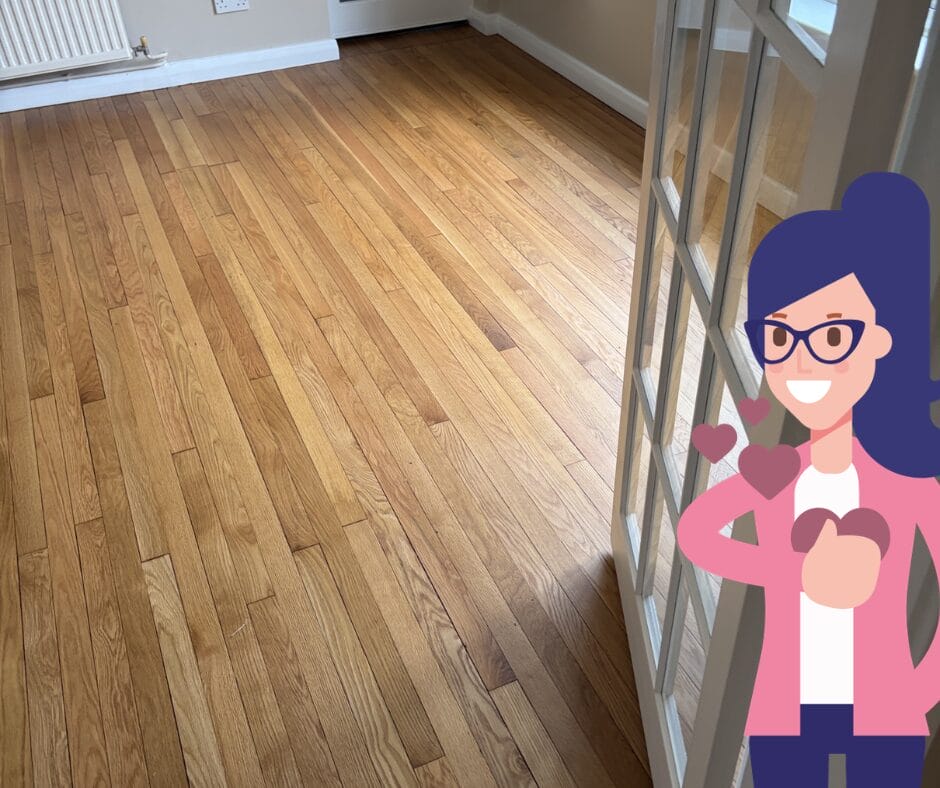
Some wood floors sand and refinish beautifully with very little drama. Others can look like they are “fighting back”, showing sanding marks, going patchy, or revealing dark stains you did not realise were there. The good news is that these issues are usually predictable once you know what timber you have and what it tends to do during restoration.
This guide explains why beech, oak and pine behave differently, what to watch for, and how to get a finish that looks even in real daylight, not just on day one.
If you have beech flooring, you’ll probably want our deeper beech guide too, it covers the common pitfalls in more detail: Beech wood floor restoration, what to expect (and why it goes wrong).
Quick answer
Beech, oak and pine “misbehave” for different reasons. Beech is more pale and unforgiving, so it shows any uneven sanding and patch repairs. Oak is far more forgiving, but it will react to moisture and make dark tannin stains. Pine is softer, so any dents, gaps, and movement are all part of its story. The best results come from a proper assessment (preferably from a professional), progressive sanding, repair first, and the right finish to suit all your family’s needs.
Key takeaways
- Beech shows everything, so consistent prep matters more than almost any other timber.
- Oak can stain black if moisture and metal react with tannins… it needs careful handling.
- Pine dents and gaps are normal… the goal is a calmer, protected surface, not “perfect”.
- Engineered wood depends on the wear layer thickness, so it needs to be checked before sanding.
- A good restoration plan reduces disruption and keeps the finish looking even for longer.
Why some woods “misbehave” during restoration
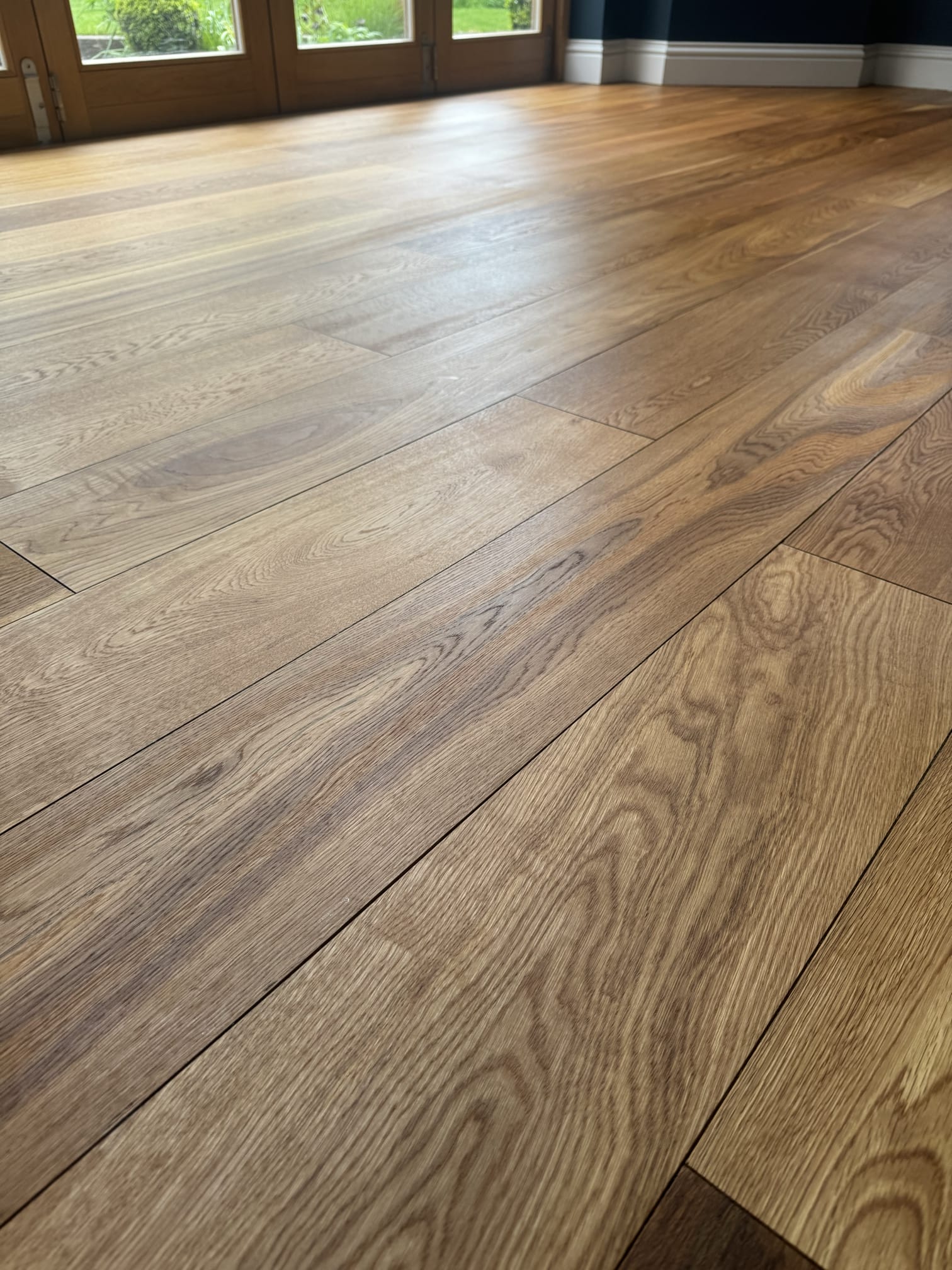
Most frustrations come down to one or all of these three things:
1) Colour & grain
The paler, more uniform woods show every sanding line and every transition.
2) Density & softness
The softer woods dent, move, and wear through faster in traffic lanes.
3) Chemistry & moisture
Some timbers react with water, cleaning products, and metal, which can create staining.
When you understand which of those is the problem, you can choose the right process instead of just hoping for the best.
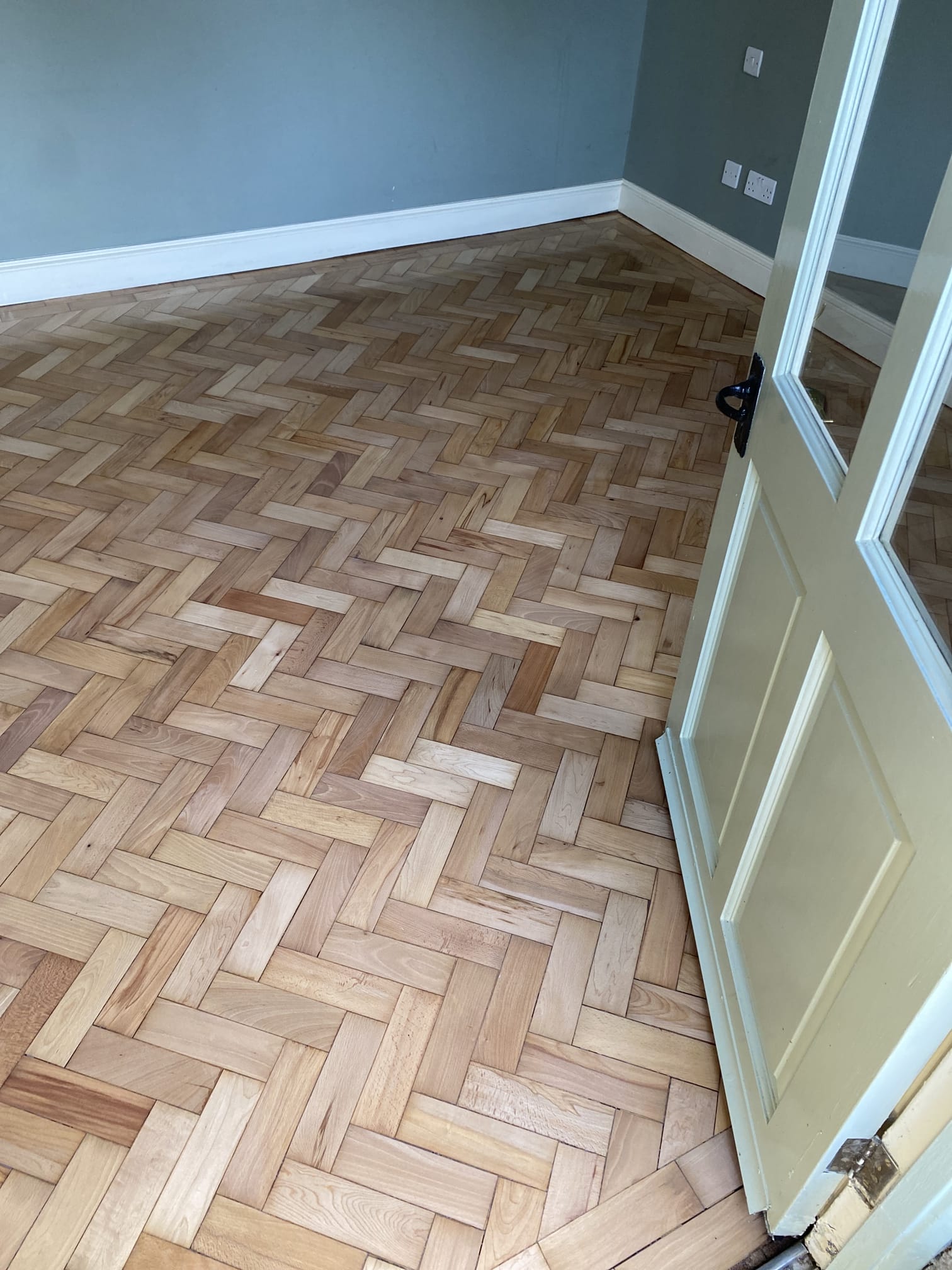
Beech wood floors: beautiful, light, and very honest
Beech often looks “easy” because it is light and consistent. In reality, that consistency is exactly why it can be tricky. Beech tends to reveal edging marks, uneven sanding pressure, and patch repairs more than many other floors.
If your beech floor has gone blotchy or looks like it has a “map” of wear, it is usually a preparation issue rather than a cleaning issue. That’s why our beech-specific blog exists… it explains what causes the patchiness and how to stop it: Beech wood floor restoration, what to expect (and why it goes wrong).
What homeowners usually want from beech restoration is simple… they want a floor that looks even in spring light, feels smooth underfoot, and doesn’t turn into a maintenance migraine. That comes from consistent prep and a choice of finish that will suit how you use the room.
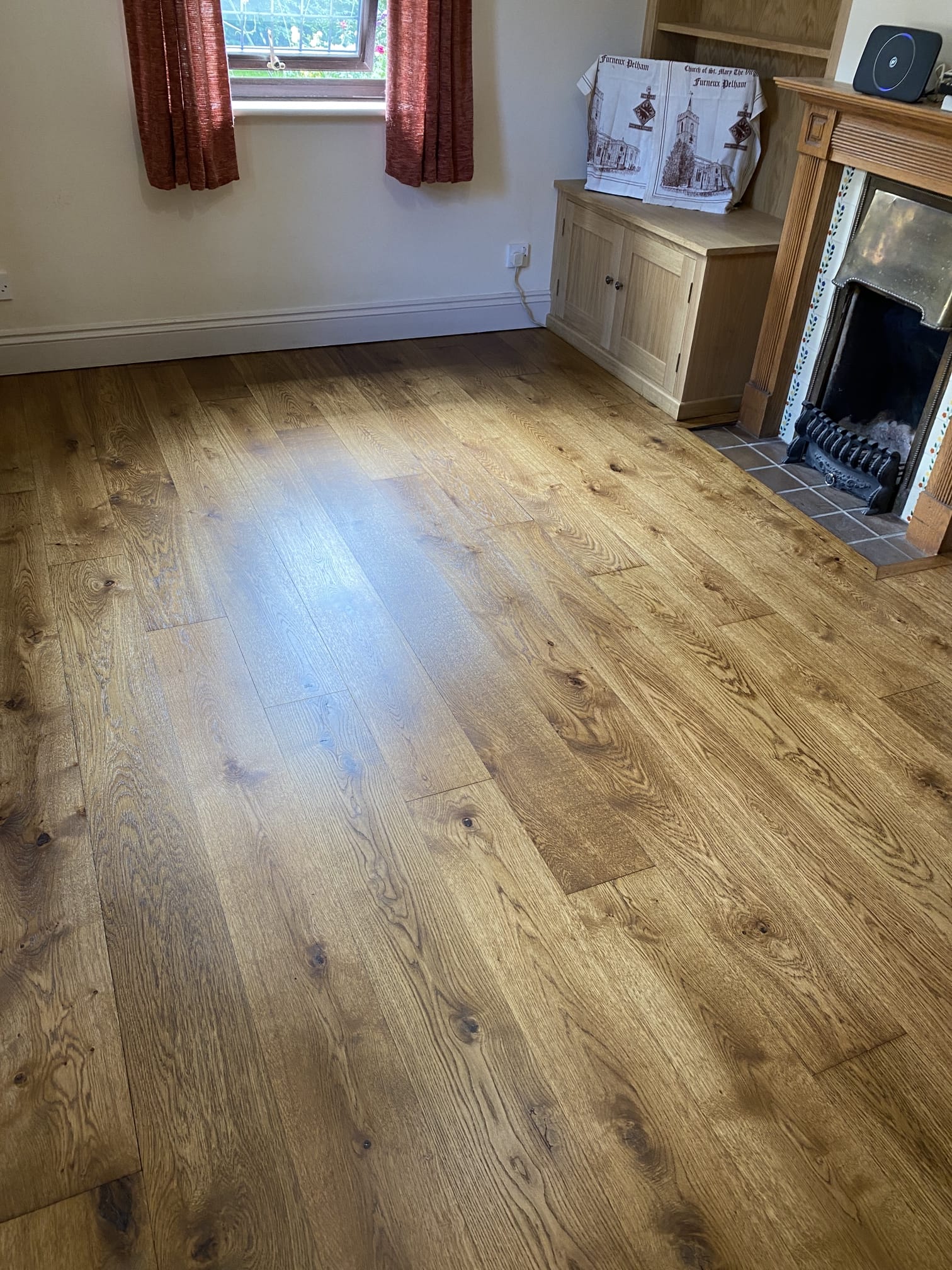
Oak wood floors: usually forgiving, sometimes reactive
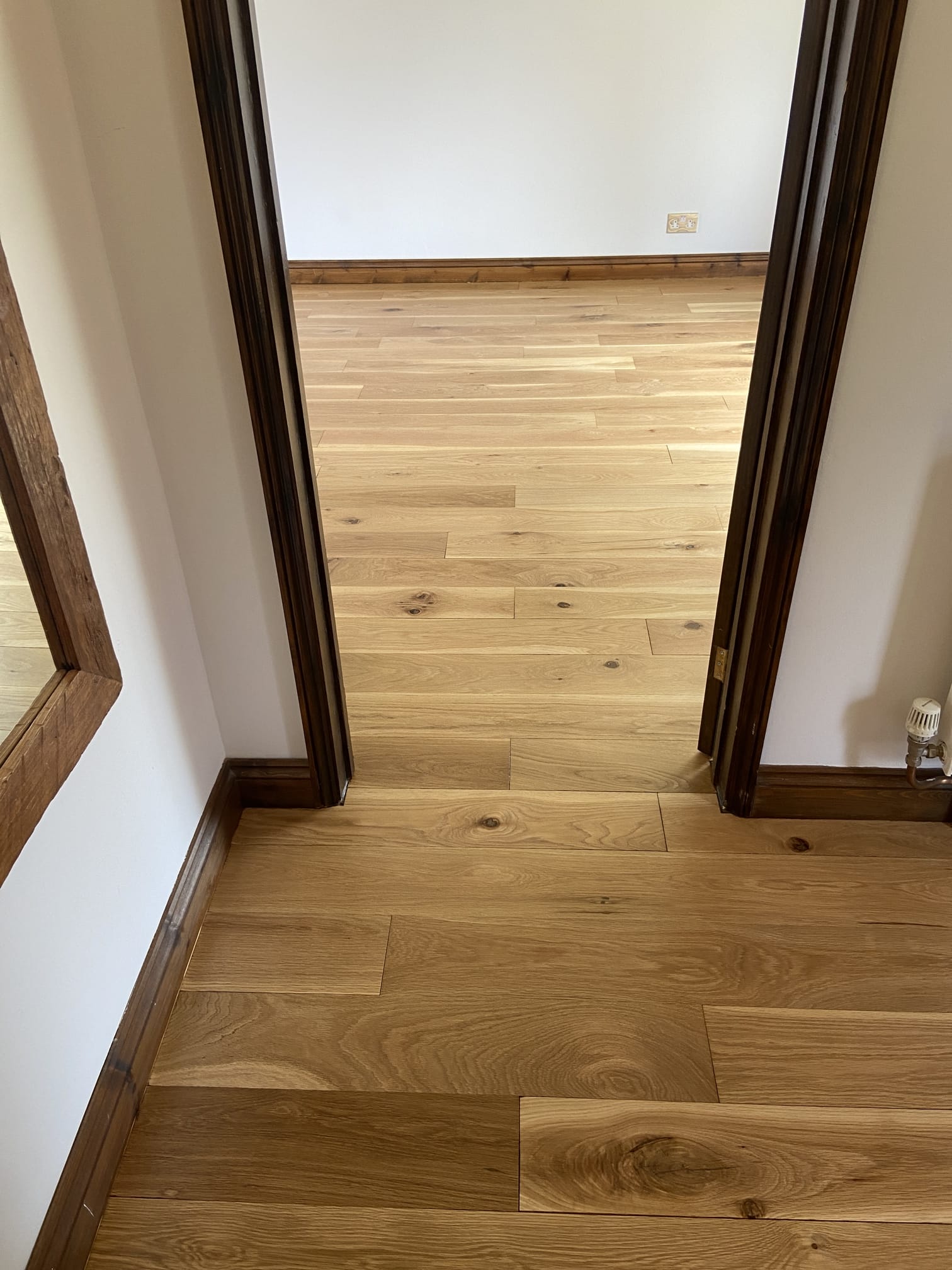
Oak is often easier to live with visually because the grain can disguise minor life marks. Where oak can catch people out is staining, especially dark patches caused by moisture and tannins, or water sitting in the same place repeatedly. Your Knowledge Centre post on black stains is useful background reading if you’ve seen this on your own floor.
What homeowners usually want from oak restoration is protection in busy zones without losing the warmth and grain. The key is addressing staining properly before finishing, then choosing a finish system that matches the traffic level in that space.
Pine wood floors… softer, warmer, and more movement
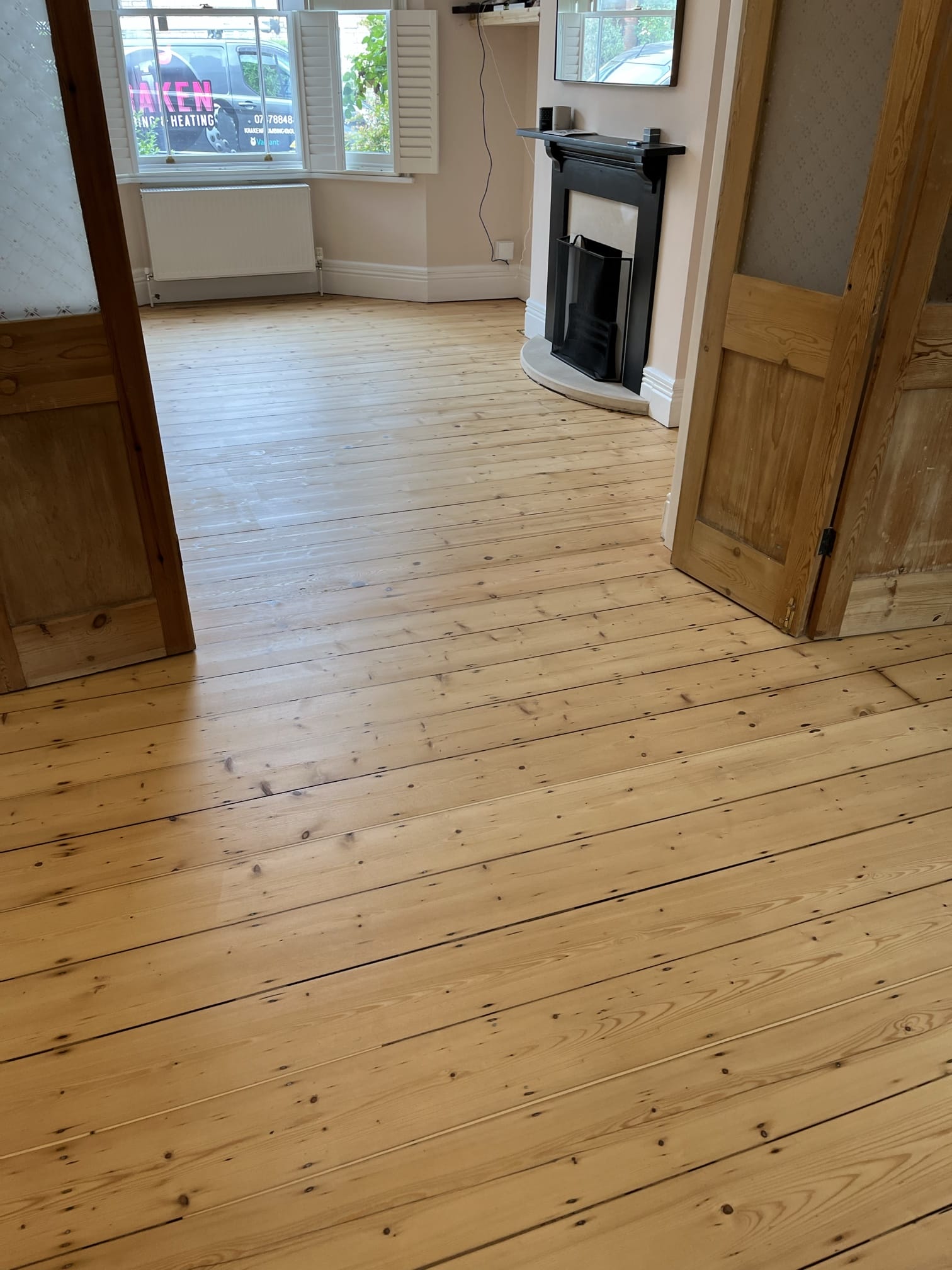
Pine floors can look stunning after restoration, especially in older homes, but they are soft. That means all the dents, compression marks, and seasonal movement are completely normal. The win is not having a showroom look… it’s having a floor that feels cleaner, smoother, less draughty, and far more easier to look.
If gaps are a big part of the problem, the prep stage matters just as much as sanding. Gap filling, securing loose boards, and setting nails properly can make the finish look calmer and last much longer.
Engineered wood floors… restoration depends a lot more on the wear layer
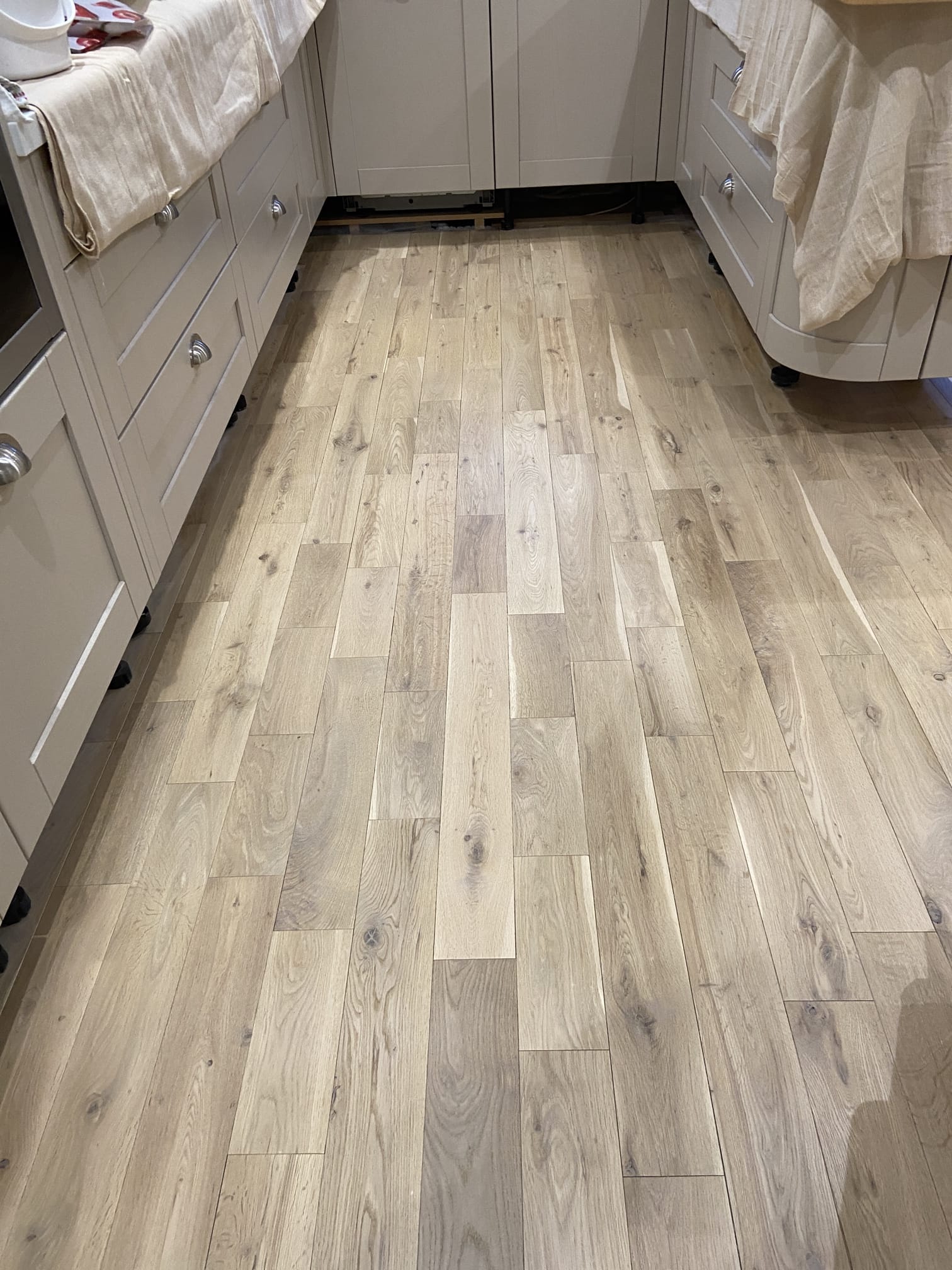
Engineered floors can often be refinished, but it depends on the thickness of the top layer. If the wear layer is thin, aggressive sanding is risky.
This is why a proper look at the floor before quoting matters… it sets expectations early and avoids “surprises” halfway through.
Comparison table: what to expect by wood type
| Beech | Patchiness, sanding marks, visible edging | Pale tone, uniform grain, inconsistent prep | Progressive sanding, consistent edge blending, and correct finish choice |
| Oak | Dark marks, water staining, occasional blotchy areas | Moisture, tannin reactions, and previous wear patterns | Stain assessment, correct prep, durable finish plan |
| Pine | Dents, gaps, and uneven wear in traffic lanes | Softwood, movement, historic repairs | Repairs and gap work first, realistic finish goals, aftercare routine |
| Engineered | Uneven results if over-sanded | Wear layer thickness varies | Confirm wear layer, choose the safest restoration method |
Choosing the right finish for real life
Everyone I have met gets stuck between wanting that beautiful, natural look and wanting durability. The easier decision is to start with your lifestyle.
If you want a more natural look that’s easier to touch up later, oil often suits, especially for those in lived-in family spaces. If you want a more sealed surface that wipes down easily in high-traffic areas, lacquer may be a better match.
You can check out both options here:
What happens next if you want a professional result
If you want the calmest route, start with the main service overview so you can see what’s included and what “restoration” really means: Wood Floor Restoration.
If you like to compare real examples before you book, this is a good next step: Case Studies.
And if you want a simple explanation of different service levels (especially helpful if you are comparing quotes), this page lays it out clearly: Art of Clean, Wood Floor Restoration service levels.
What’s your next step?… If you tell us what wood you think you have, and which room it’s in (hallway, lounge, dining room), we can advise whether it’s a maintenance refresh or a full restoration, and which finish will feel easiest to live with.
FAQs
Why does beech wood floor restoration sometimes look patchy?
Beech is pale and uniform, so it reflects light evenly and shows prep differences straight away. If sanding pressure, edging, or old finish removal is inconsistent in any way, the final coat can highlight it. The correct grit progression and careful edge blending is what will make a beech wood floor restoration look even.
Can you restore just one damaged patch on beech, oak or pine?
Sometimes, but patches can “flash” in daylight because the repaired area takes sanding and finish differently. Beech is the most likely to show a patch, while oak and pine can still show a change in sheen. If the room is already uneven, full wood floor restoration is often the cleaner-looking option.
What causes black stains on oak floors?
Oak contains tannins. When moisture sits on the surface or metal reacts with the wood, it can create dark staining that does not lift with normal cleaning. During oak wood floor restoration, those stains are assessed early, so the plan is realistic before finishing.
Is pine wood floor restoration worth it if the boards are dented?
Yes, as long as the goal is right. Pine is a softer timber, so dents and compression marks are part of daily life. Pine wood floor restoration is usually about removing tired coatings, smoothing the feel underfoot, reducing splintering, and protecting the boards so they are easier to maintain, rather than chasing a perfect, flat look.
Can engineered wood floors be sanded and restored?
Often, but it depends on the thickness of the top wear layer and whether it has been sanded before. A quick check first is important because engineered wood floor restoration has less margin for heavy sanding than solid wood.
Should I choose oil or lacquer for beech, oak and pine wood floor restoration?
It depends on how you use that space. Oil can suit a natural look and is way easier to touch up in the future. Lacquer normally suits busier areas where you want a more sealed surface that is straightforward to wipe over. The best finish is the one that matches the room’s traffic and your tolerance for patina.
How long does wood floor restoration usually take?
It depends on the size of the area, the condition of the boards, and the finish system chosen. Most projects follow the same stages, prep and repairs, sanding, then finishing and curing time. The key is allowing the finish to cure properly so it stays looking even, especially on lighter timbers like beech.
How do I know whether I need full restoration or just maintenance?
If the floor is dull but still sealed and even, maintenance may be enough. If you can see bare wood, patchy wear-through, or staining that has soaked in, full beech, oak and pine wood floor restoration is usually the longer lasting solution.